|
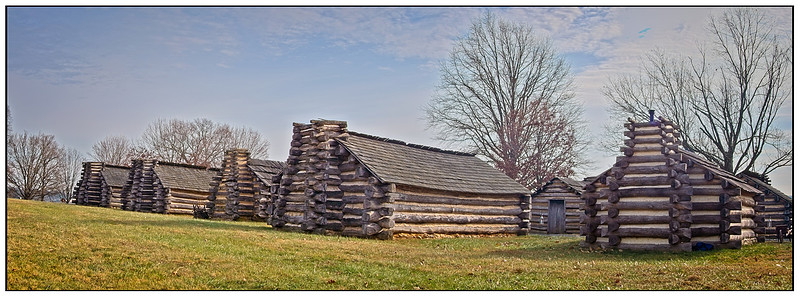
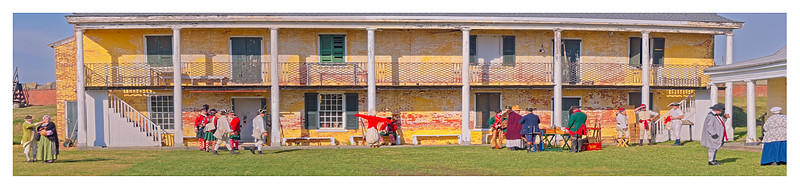
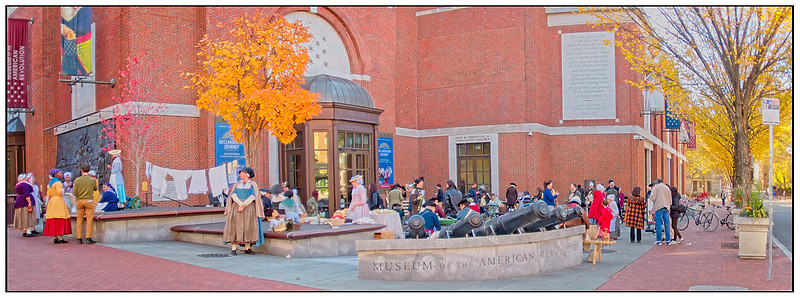
Welcome to my website! For years I've been trying to combine 2 of my interests-photography and studying the American Revolution. By photographing American Revolution reenactments, I can now combine both interests. I now live in the Philadelphia area, so I'm centrally located to photograph many of the reenactments in the Delaware Valley region. My future goal is to photograph every major American Revolution reenactment. Plus, it's fun, and all reenactors want to share stories; they're storytellers! Ken "It was a pleasure to exchange cards. We are out of Lebanon, CT and I have reviewed website and was truly moved by your art." Brown's Company March-In to Valley Forge 2025I'm fortunate to live only about 30 minutes from Valley Forge National Historical Park. I try to visit whenever it snows—the landscape becomes absolutely stunning—but I also make a point to attend the annual March‑In event at the Muhlenberg Brigade Huts. So, what is this event all about? Each year, the park commemorates the Continental Army's arrival at Valley Forge on December 19, 1777, marking the beginning of the grueling yet transformative six‑month winter encampment. As the park describes it: "Come to Valley Forge National Historical Park to commemorate the 248th anniversary of the Continental Army's arrival at Valley Forge on December 19, 1777, and the beginning of the transformative six-month encampment." Over the years, this event has taken several different forms. Sometimes it's held on December 19, the exact date Washington and his troops marched in. Other years it's been a night program or scheduled on the Saturday closest to the anniversary, like this time. In past events, the troops would march in, but this year they were already assembling when I arrived. Below is a panoramic photo of the Muhlenberg Brigade Huts, just a short walk from the visitor center. Most of the park's special events take place here.
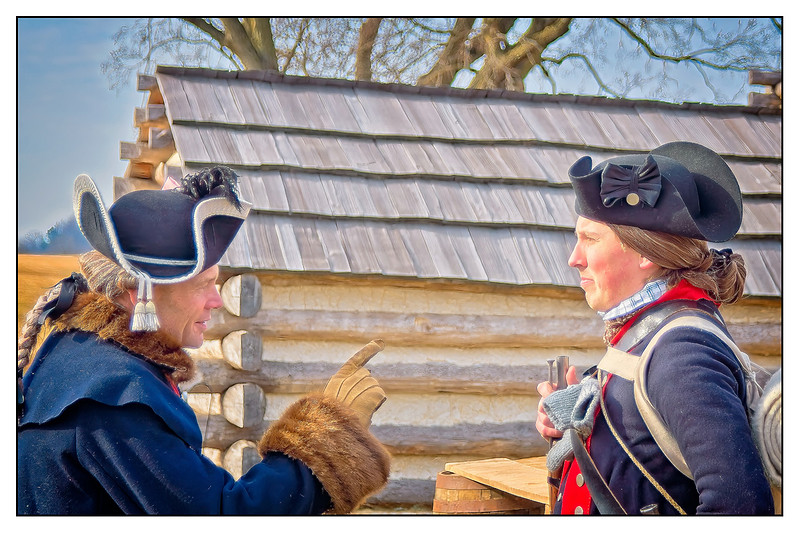
In this scene, the commander is reprimanding a soldier for an unspecified infraction. Situations like this can unfold at any time, completely unprompted. That’s exactly what makes photographing these events so much fun—you never know what’s going to happen next!
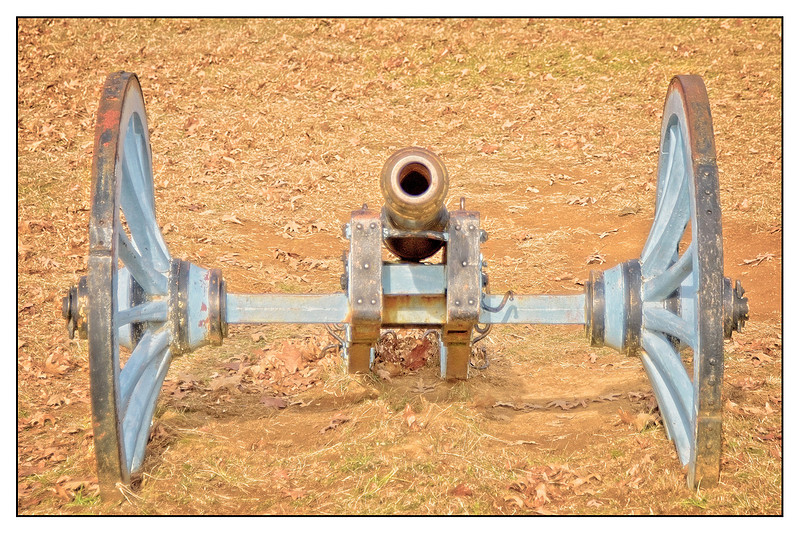
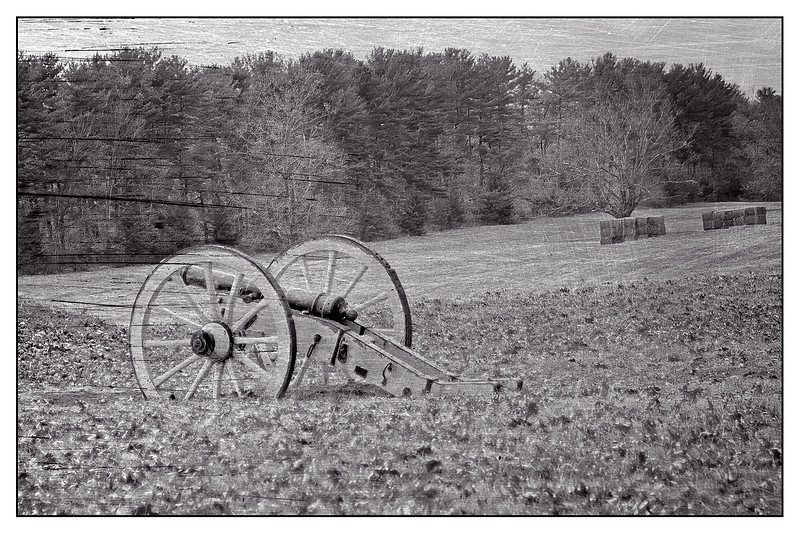
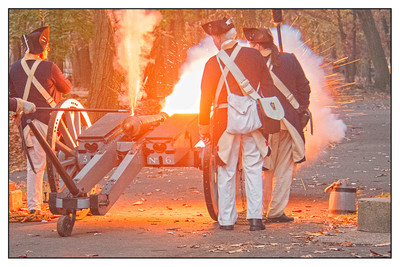
The cannon below is the same one I converted to black and white and chose as one of my favorite photos of 2025. I photographed it from every angle—high, low, and everything in between—experimenting with perspectives until it felt just right. I used filters in ON1 Software to give it an earthy, timeless feel. Looking at it now feels a bit surreal, because only a few weeks after I took this shot, the entire scene was buried under snow.
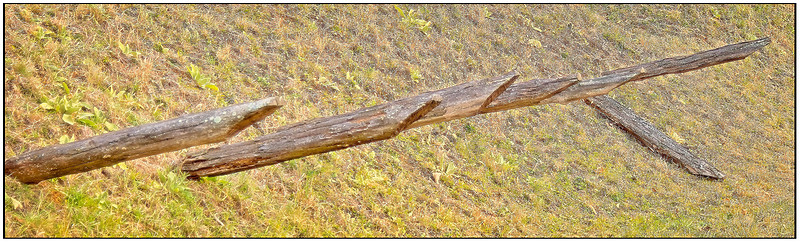
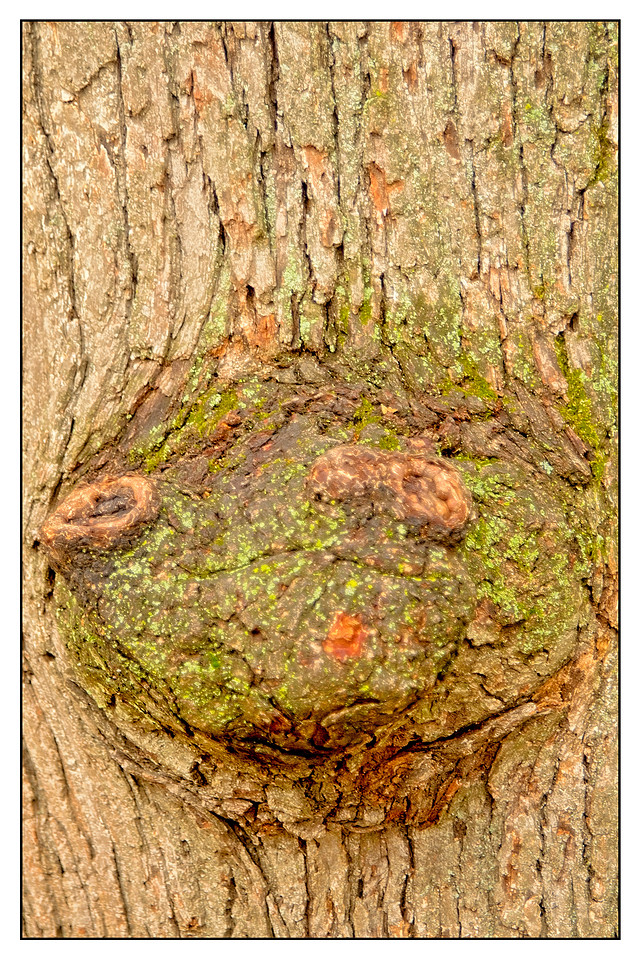
One of them had fallen, and from the angle I was viewing it, it instantly looked like a mouth. And once that thought popped in… my imagination took over. I’ll admit it: it reminded me of an alligator. Do you see it too, or is my imagination just running wild?
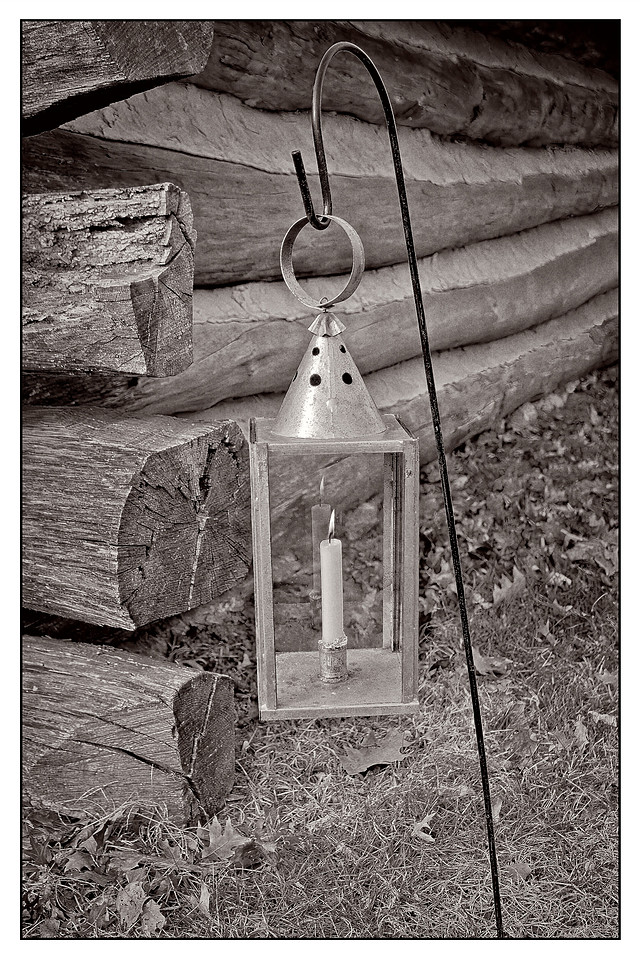
Lanterns like this are traditionally placed all around the huts during the March-Ins I’ve attended, scattered throughout the area like quiet sentinels marking the night. During evening events, their glow—along with the flicker of a few campfires—served as the only source of light. As darkness settled in, park rangers placed many more needed lanterns around the area. It’s such a simple image, yet I find myself viewing it longer than most of my photos. Something about the glow, the reflection, and the stillness makes it impossible to look away.
Click here for March-In to Valley Forge 2025 Photo Gallery! Thank you for reading! Blog #105 will be posted on March 1, 2026. Be safe & well! Huzzah, Ken Bohrer
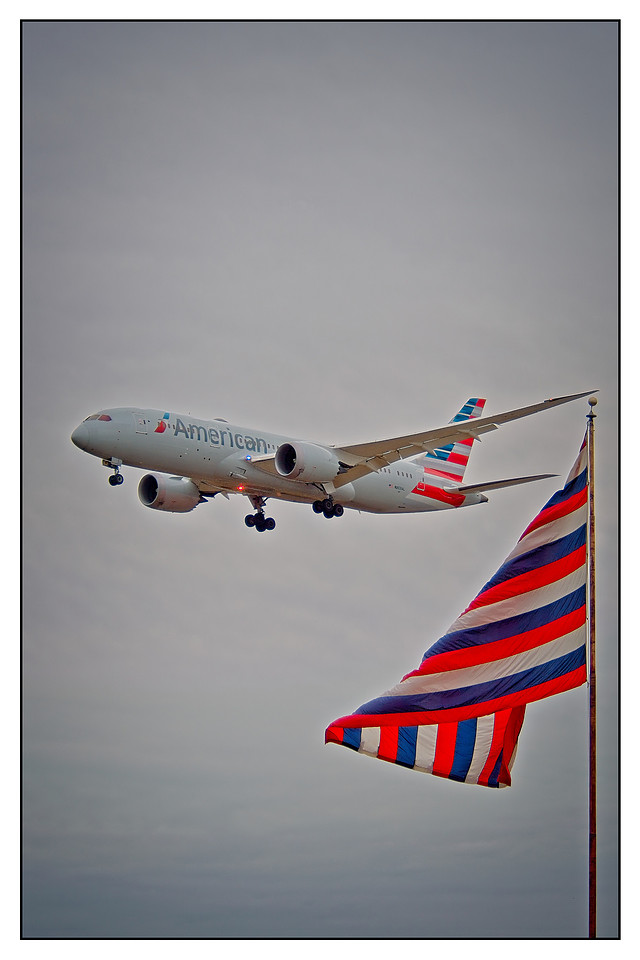
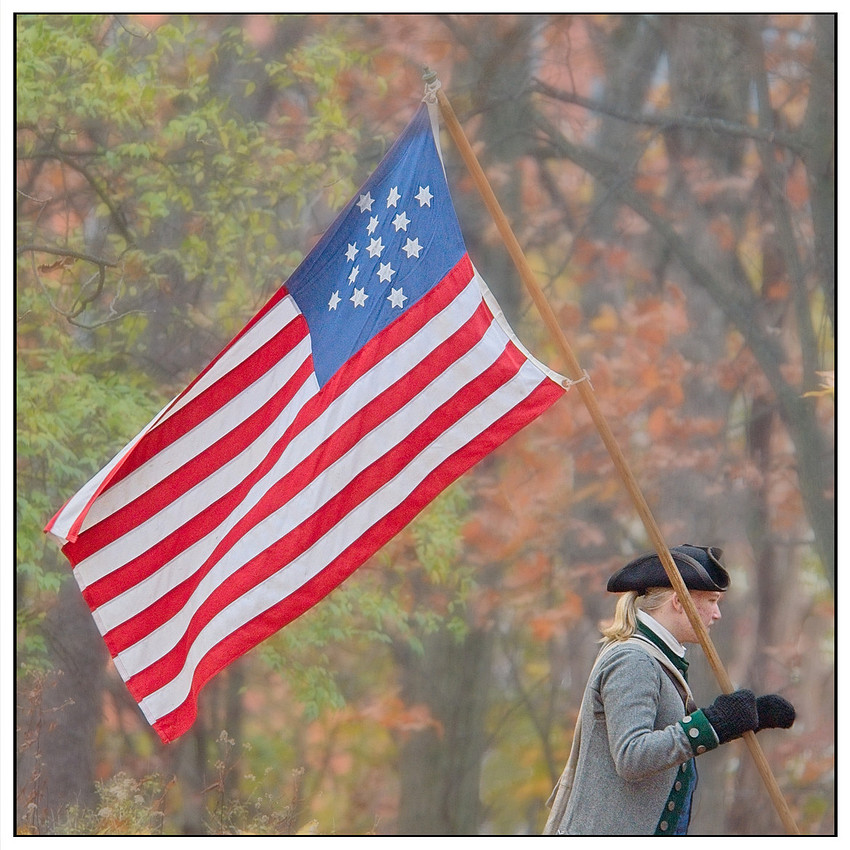
American Revolution Photos 2025 Photo Recap Favorite 10-2of 2In last month’s blog, I picked 5 of my favorite photos from 2025. And in this blog, I review my 5 other favorites. It wasn’t an easy task—over the year I posted 14 unique galleries and, for the first time ever, a record 1,323 photos on my site. After reflecting on that process, I realize these selections are simply my favorites of the year, not necessarily the “best” ones. That’s for others to decide. Photographers often wrestle with this distinction: is a photo strong because of its technical merits, or because of the memories and emotions tied to the moment it was taken? I know there are times when an image means far more to me than it might to someone simply viewing it for the first time. This flag photo is a perfect example of that. I took it and knew it would be good. Some photos just hit you—this one did for me. Simple but powerful, it instantly brought Neil Diamond’s 1980 patriotic song “America” to mind. It's a rousing song that will make you proud to be an American!
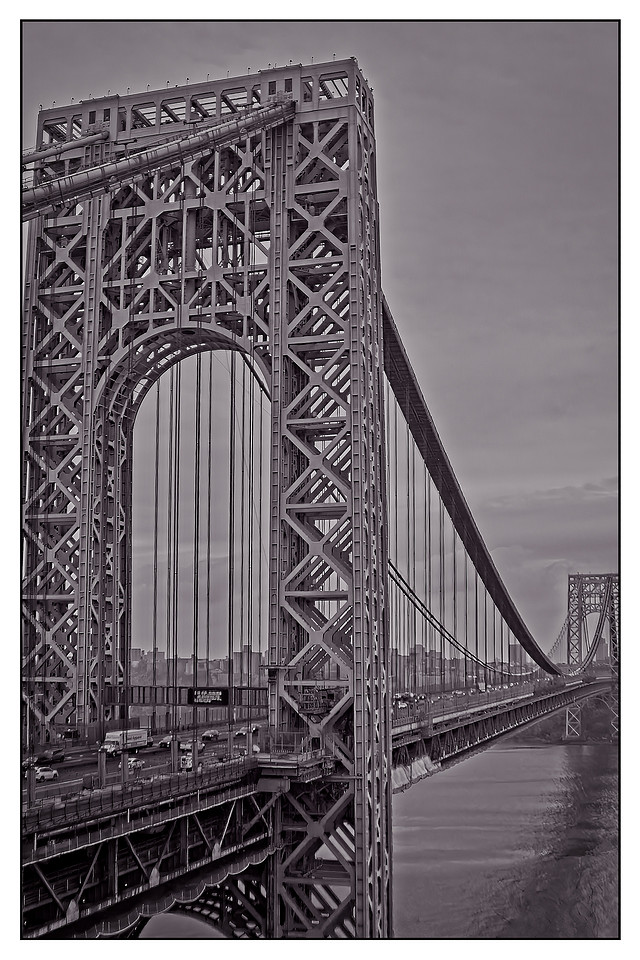
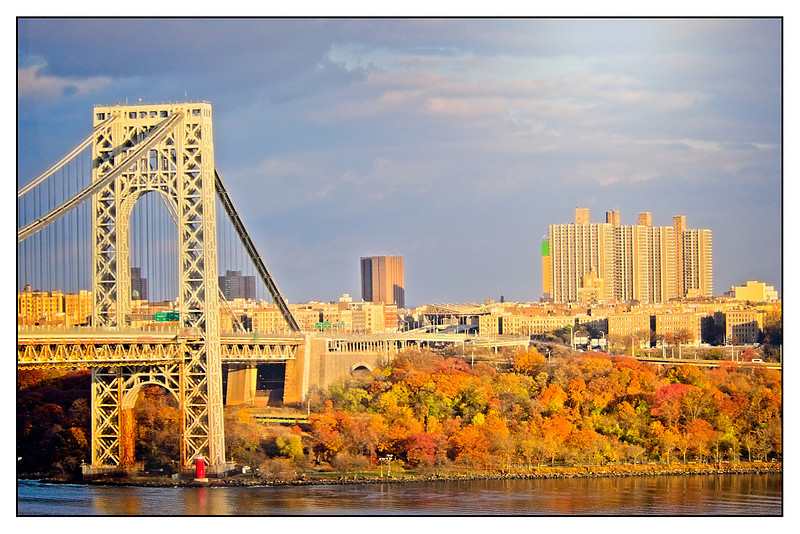
People often say the gear doesn’t matter; while that’s partly true, some shots—like this one—demand the right lens. During post‑processing in ON1 Software, the image felt stronger in black and white, giving it a timeless, nostalgic quality. I also cropped it to emphasize the leading lines: your eye begins in New Jersey, travels across to New York, and the shadow on the water pulls you back to where you started—a subtle, pleasing flow.
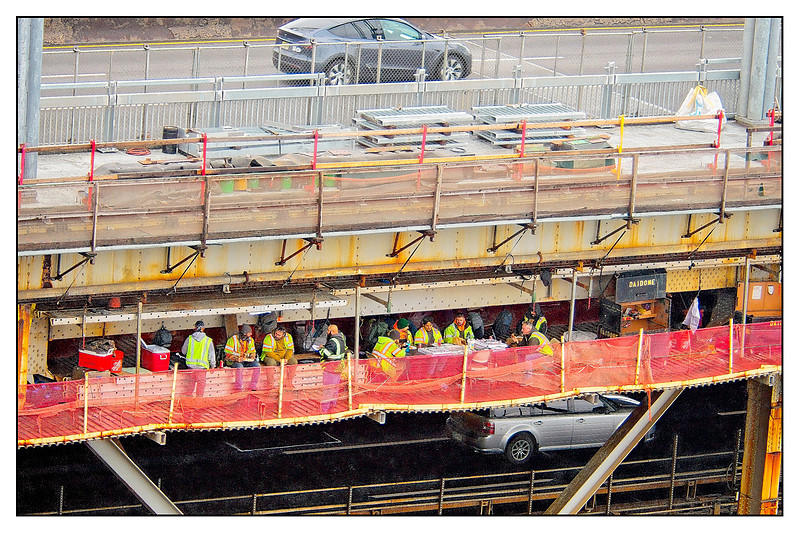
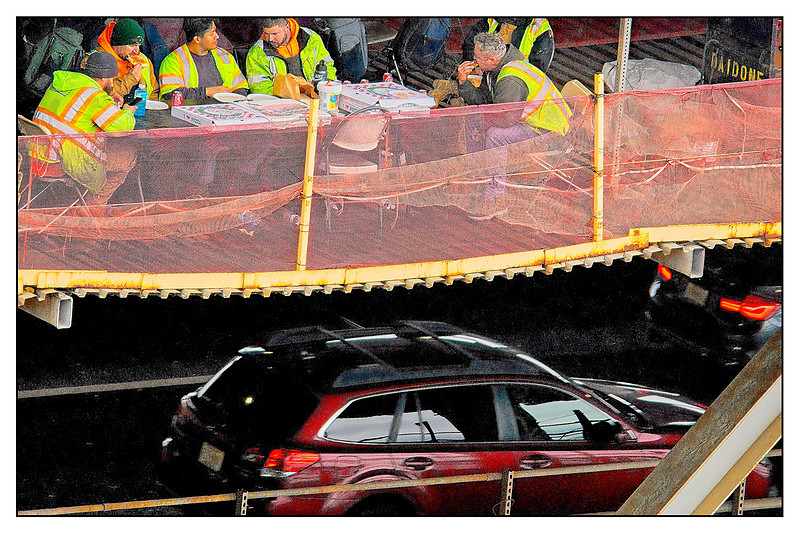
As a photographer, the goal is always to capture a truly unique image—something unexpected, something another photographer wouldn’t have taken before. Many of my photography pals have many excellent, similar reenactment photos. That’s exactly what happened here. I was strolling through the park at Fort Lee around noon, hoping to find a better vantage point of the George Washington Bridge. Then I spotted them: bridge construction workers casually eating lunch, “sandwiched” between the upper and lower decks of the span. What an opportunity! I quickly reached into my camera bag and swapped lenses, mounting my long Nikon 80–400mm f/4.5–5.6. From there, I fired off numerous shots from different angles and positions. What really makes this image stand out is the timing—catching a visible car on both the upper and lower levels at the same time. The noise from the traffic must have been deafening, but the workers didn’t seem fazed at all. Without the long lens, this moment would have been impossible to capture. And honestly, I doubt any other photographer at the reenactment could have taken this shot either—no one else that day was carrying a lens this long.
Back in ON1 Software, it became immediately clear that the image wanted to live in black and white. I envisioned the photo to be from another century. To add more antique techniques, I added grain (noise) and a subtle scratching overlay to give it an aged appearance. Of course, photography didn’t exist during the Revolutionary War; 1839 is widely recognized as the medium’s official “birth year. The Crimean War (1853–1856) was the first major conflict to feature widely seen photographs, and in the United States, the Civil War introduced the public to the stark realities of war through photographs. Mathew Brady (1822–1896), the pioneering photographer whose portraits and battlefield images transformed public understanding of conflict, comes to mind here. His work captures destruction and carnage that only a photo can.
Black and white has become a medium I truly love, not just in photography but also in films. I gravitate toward classic B&W films from the 1930s and ’40s—especially film noir (French for “dark film,” pronounced film nwär). Some of my favorites include The Narrow Margin, Double Indemnity, and The Maltese Falcon. If you haven’t seen them yet, they’re absolutely worth exploring.
Huzzah, Ken Bohrer
American Revolution Photos 2025 Photo Recap Favorite 10-1 of 2
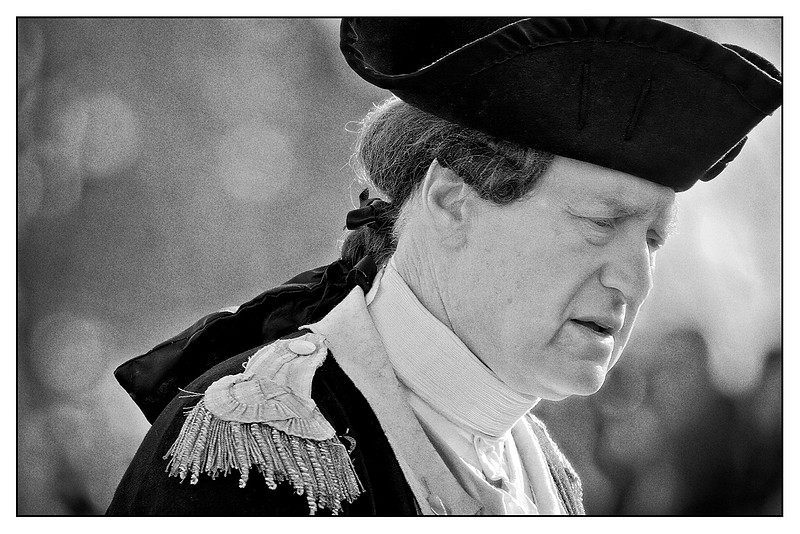
Wow, 2025 was an incredible American Revolution reenactment year for me! I attended 14 unique events and shared an amazing 1,323 photos on my site—the most I’ve ever posted in a single year! In this post, I’ll share my 5 favorite photos from the first half of 2025. Then in my next blog on February 1, I’ll feature my top 5 from the second half of the year. The highlight of my year was attending the two-day 250th anniversary of Bunker Hill in Gloucester, MA, located about 35 miles from Boston. Thanks to special access, I was able to capture one-of-a-kind images I’ll never forget. Interestingly, none of my favorite photos shows cannons or muskets firing. Instead, they’re simple, powerful images that tell a unique story. This shot, from Patriots Along the Perkiomen at Pennypacker Mills, shows a dragoon (mounted soldier on horseback) riding just feet from me. Focusing on his boot, I knew it would make a great photo—and I was right. Here is a photograph that resonates with me like a timeless song—much like hearing classic songs from the early 70s like My Sweet Lord (George Harrison) or Maggie May (Rod Stewart), time and again, always with enjoyment. After I converted it to black-and-white with ON1 Software, it became one of my favorites; the horse’s coat texture and direction hypnotize me. There’s a similar color version in the gallery, but this B&W rendition resonates more.
The 250th anniversary weekend of the Battle of Bunker Hill in June was one of my highlights in photography. It was a once-in-a-lifetime event and being there to document it made it truly special.
When you’re looking at the small screen on the back of your camera, you rarely know what you’ve truly captured. When I first saw this image, I laughed out loud. I keep saying it: luck, awareness of what’s unfolding, and having your finger ready to click are the keys to great photography. And of course, a little help from editing tools like ON1 software always helps.
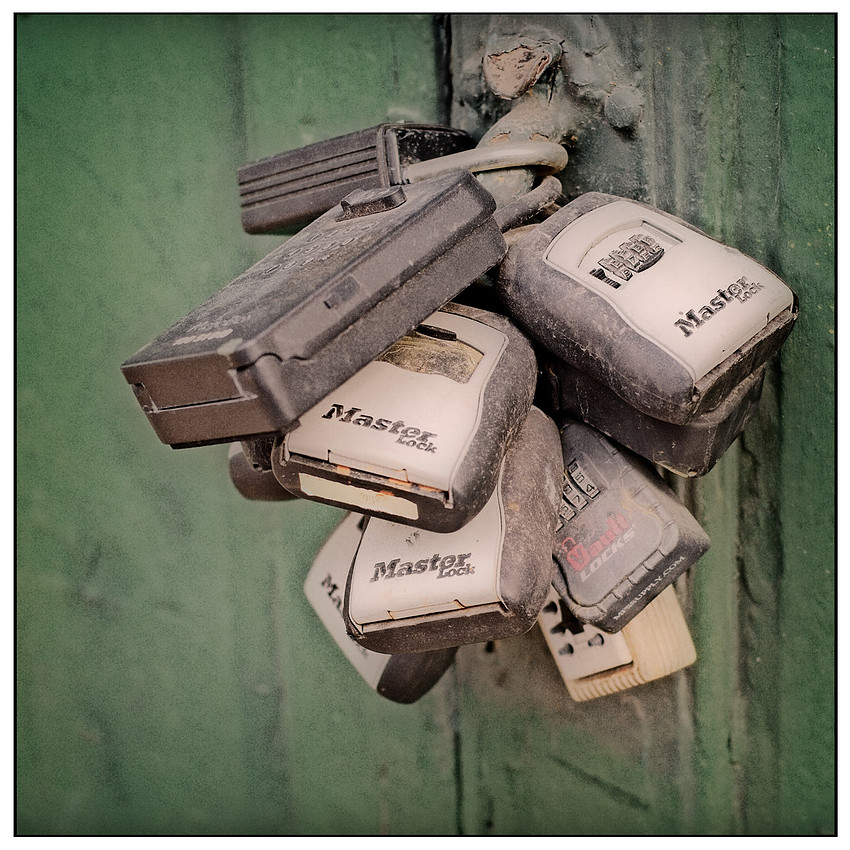
I stared for a few minutes, wondering why there were so many locks. As a photographer with my camera in hand, I knew this had potential. I experimented with different angles and compositions, shooting multiple frames, and ultimately realized a tight perspective would tell the best story. Later, in ON1 software, the magic happened. Photos should spark curiosity and invite stories—this one does. Why so many locks? Whose are they? When an image makes your imagination run wild, you know it’s a good photo.
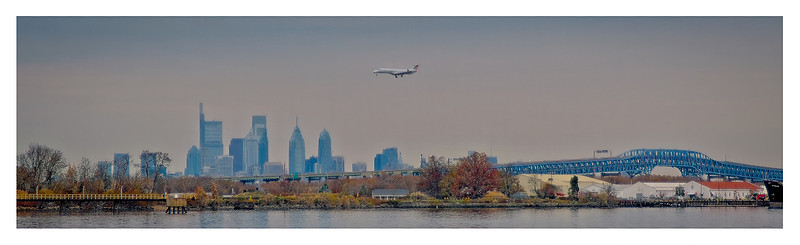
But then the photo gods stepped in. Just as the light softened, the wind picked up, the flag unfurled in full motion, and—almost unbelievably—a jet landing at Philadelphia’s International Airport with nearly the same color scheme lined up to land behind it. I fired off a quick burst of shots, and this one came together perfectly. Being at the right place at the right time!
In my recent blogs, you’ll notice more shout-outs to music artists. As a proud Baby Boomer, great music from my generation has been part of my life since childhood—and let’s face it, it never goes out of style! So, you’ll see more music references in future blogs. Thank you for reading! Blog #103 will be posted on February 1, 2026. My next blog will be my 2025 Photo Recap, part 2. Be safe & well! Wishing everyone a healthy and prosperous 2026!! Huzzah, Ken Bohrer
Visiting Again-Ft Lee 2025
It’s hard to believe it’s been since 2018—there was snow on the ground that year—since I last attended this event at Fort Lee. I even had to double-check because I couldn’t believe it had been that long. One of my favorite cannon shots was taken here back in 2017, and you can see it pictured just below. Why is Ft Lee remembered? "Fort Lee Historic Park, a 33‑acre cliff‑top site in Fort Lee, New Jersey, offers scenic overlooks of the Hudson River, the George Washington Bridge, and a visitor center alongside a reconstructed Revolutionary War encampment featuring a blockhouse, battery, and soldier quarters. Originally fortified in July 1776 as “Fort Constitution” (later renamed Fort Lee in honor of General Charles Lee), it formed a key defensive position opposite Fort Washington (located on the northern end of Manhattan Island) to prevent British ships from sailing up the Hudson during the American Revolution."
The drive from my home in Media, PA, to Fort Lee, NJ, via the PA Turnpike and NJ Turnpike (immortalized by Simon and Garfunkel's song "America" in 1968) took about 2½ hours—roughly 125 miles—just as expected. That’s about the maximum round trip I can comfortably handle these days. The route is straightforward: enter the PA Turnpike near Philadelphia, head east toward the Delaware River, cross into New Jersey to join the NJ Turnpike northbound, and continue toward the George Washington Bridge, then into Fort Lee. I hadn’t driven this route in quite some time, so my main goal was simple: exit before crossing the George Washington Bridge. Excellent plan—except it didn’t happen. I missed the last exit and ended up going over the bridge, only to turn around on the other side. Ahhhh! I now consider it a small “donation” to the Port Authority of New York and New Jersey. The day itself was perfect—cool but not frigid. In the past, when photographing reenactments or festivals, I focused solely on the event itself. Now, I make a point to capture anything that might make an interesting subject—like the George Washington Bridge. When I reviewed this photo later, I felt it would look best in black and white. I processed it in On1 Software, and for me, that choice gave the image a timeless, old-style feel. Did you know:
This is something you don’t see every day! When I was at the section of the park closest to the bridge, I spotted a group of construction workers casually enjoying lunch, perched between the upper and lower sections of the bridge. It struck me as such a unique moment—so relaxed, as if balancing high above the river was no big deal. I can’t help but wonder how loud it must be up there with all that traffic rumbling by. Photographing them wasn’t too difficult thanks to my Nikon 80–400mm f/4.5–5.6 lens, which let me zoom in tight. Since my Nikon D500 has a crop sensor, that lens effectively behaves like a 120–600mm lens on a full-frame camera. How can this help? The average person's eyes see around 50mm! So, I can see more up close. Plus, these shots were handheld, no tripod. Sweet, for moments like this!
Simple is better—especially at reenactments. That’s why this flag shot caught my attention immediately. I’ve always been drawn to flags; I've shared this in my blogs before. I grew up in a newly built Long Island neighborhood in Suffolk County, where most homes sat on quarter‑acre lots with fenced‑in backyards. Ours had around an eight‑foot fence made of rough bark, almost like the walls of a frontier fort. To me, it was my fort even making my own flag: I found a sturdy four‑foot stick, painted an American flag onto a piece of cloth, and proudly mounted it on my backyard stronghold. I thought it looked amazing. So at this event, even with all the dramatic shots—many good musket and cannon blasts with bright orange flashes—this simple American flag image resonated with me the most. It brought me back to my childhood memories. You never know what will catch your eye at a reenactment, and sometimes the quietest moments are the ones that stay with you.
Something happened that had never occurred before. The reenactment was slowly progressing toward the far end of the park when I turned around—and suddenly, the bridge stood in full view, unobstructed by trees. Instinctively, I spun around, pivoting horizontally, and fired off three quick shots. Then, without missing a beat, I returned my focus to the unfolding scene in front of me. The results exceeded my expectations. It was later in the day, and the setting sun cast a warm, golden glow—the lighting was absolutely perfect. Moments like these remind me that you never know when a great photo opportunity will appear, even in the midst of a reenactment!
Click here for the Fort Lee Photo Gallery! Thank you for reading! Blog #102 will be posted on January 1, 2026. My next blog will be my 2025 Photo Recap. Be safe & well! Wishing everyone a healthy and prosperous New Year!! Huzzah, Ken Bohrer
Fun at Ft Mifflin 2025
Siege Weekend at Fort Mifflin is one of my favorite annual traditions—a living-history experience just 15 minutes from home that combines rich storytelling, photography, and community. Each year, I reconnect with old friends, from long-time reenactors to fellow photographers, and meet new folks, while exploring the rugged beauty of this historic stone fort and capturing dramatic reenactments and period life. This year brought a new perspective: a one-hour sail aboard the Schooner North Wind on the Delaware River, retracing the approach of British forces during the 1777 siege. Fort Mifflin commemorates its heroic stand in the American Revolution, when its defenders delayed British reinforcements long enough to alter the course of history, earning it the title “The Fort That Saved America.” "For nearly six weeks in the fall of 1777, American troops in Fort Mifflin and Fort Mercer frustrated British naval attempts to re-supply their occupying forces in Philadelphia. Early in the morning on November 10, 1777, the British took definitive action to reach Philadelphia via the Delaware. Daybreak brought a rain of cannon fire upon Fort Mifflin beginning the largest bombardment of the Revolutionary War."
This panorama captures the Officer’s Quarters inside Fort Mifflin—a space steeped in history. The stone walls and main structures you see today largely date back to the Revolutionary War era of the 1770s, though the fort underwent later modifications during the War of 1812 and the Civil War. Every visit brings me back to childhood memories of exploring Fort Ticonderoga. There’s something magical about a fort—the imposing stone walls and even the moat you cross when entering. Walking through Fort Mifflin feels like stepping into another time, and for a moment, I’m a kid again, wide-eyed and ready for adventure.
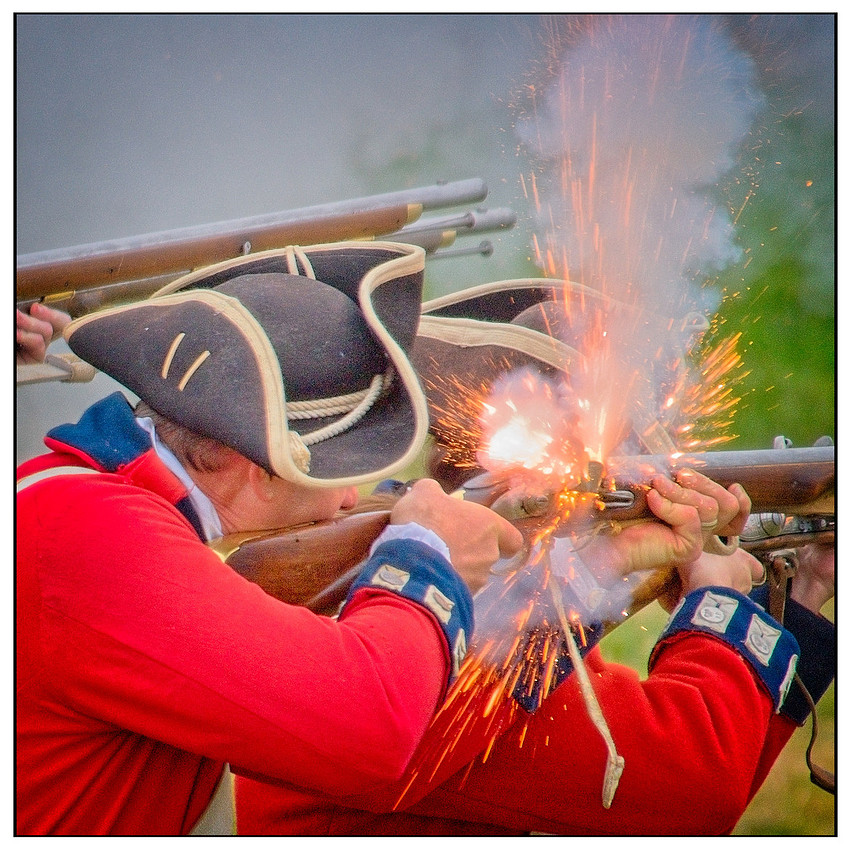
Whenever I’m at an event with musket firings, I’m on the lookout for those dramatic moments—and this time, I captured more than usual. Out of all the shots, this one stands out as the best. What makes it so compelling is the sheer intensity of the flash: bright orange sparks and a vivid burst of flame erupting from the flash pan as the gunpowder ignites. The blast feels alive—glowing particles scatter outward, creating a sense of motion and raw power. Black powder doesn’t burn cleanly; its carbon-rich mix produces smoke and fiery orange hues, adding to the drama. That imperfection is what makes photos like this spectacular—a fleeting explosion frozen in time.
I shared this photo with my colleagues at work, and one of them commented that she liked it. Her question was: Did you enhance the photo? My answer was yes—and I explained how. The truth is, all photos are enhanced to some degree, even those taken with a phone camera. JPEG images, for example, have built-in corrections that are automatically applied to make them look good. I shoot in RAW format, which means the image comes straight from the sensor with no adjustments. That’s where post-processing comes in. Using ON1 software, I bring out the best in the photo—that’s where the magic happens. In my last blog, I mentioned a question many people are asking these days: with the sophistication of modern cameras and editing tools, are photographers today photographers or artists? For me, the answer doesn’t matter. My goal is simple: to create the most appealing images possible!
This flag is impressive in its own right. It’s a replica of the original Continental Navy Jack hoisted on Siege Day, featuring 13 horizontal stripes in alternating red, white, and blue, ending with red. Today’s version flying over the fort is an exact reproduction of the one that flew in the fall of 1777, though only a quarter the size of the massive garrison flag that once dominated the skyline and could be seen from Philadelphia, more than seven miles away. Then, near the end of the day, the wind finally picked up. I was in the perfect spot when I noticed a plane approaching for landing at Philadelphia International Airport. The fort sits directly in the landing path, so planes pass overhead every few minutes. With the flag now flying and the plane closing in, I fired off six continuous shots. Here’s the amazing part: look closely at the design on the plane’s tail. Its colors almost mirror the flag's stripes. Talk about perfect timing—and a little bit of luck!
Click here for here for Fun at Ft Mifflin 2025 Photo Gallery. Thank you for reading! Blog #102 will be posted on December 31, 2025. Be safe & well! Huzzah, Ken Bohrer
Revolutionary Philadelphia 1775 2025
It’s hard to believe this is my 100th blog post! When I started, I worried about running out of topics to write about each month. But the opposite happened—now I have so much to share that I post twice a month, on the 1st and 15th. Thanks to you, my readers, for making this endeavor possible! Today, my website has welcomed over 150,000 visitors, and it's growing expeditiously. I’m genuinely grateful. Last year at this time, the Museum of the American Revolution hosted Occupied Philadelphia, an immersive event that explored the fall of 1777 when Philadelphia—the Revolutionary capital—was seized by the British and occupied for nine long months. My favorite photo of 2024, here, came from that experience.
"By 1775, Philadelphia is home to 30,000 British subjects of King George III. These people hail from all over the world. Each one of them has their own perspective on the events of the day. For some, this new rebellion is the culmination of years of resistance. For others, it is a horrifying spectacle of chaos that threatens their work, their family, and their faith.
A photographer is constantly scanning the world for something compelling to photograph. Usually, it takes me about 15 minutes to walk to the museum, but this time, my constant stopping slowed me down—I arrived much later than planned because I kept finding subjects that demanded attention. One image in particular stood out: a door covered in locks. My first thought was, Why so many? And then I noticed their condition—rusted, worn, and full of character. In post-processing, using ON1 Software, I applied filters to give the photo a nostalgic feel. That brings me to a question I’ve seen debated on photography forums: With today’s advanced cameras and editing tools, are photographers becoming more like artists? After reflecting on my own work, I think so. I’m not always trying to capture a scene exactly as it is—I’m aiming to create something visually appealing, something that evokes emotion. This lock photo looks very different from the original shot, but I love the final version. It feels like art.
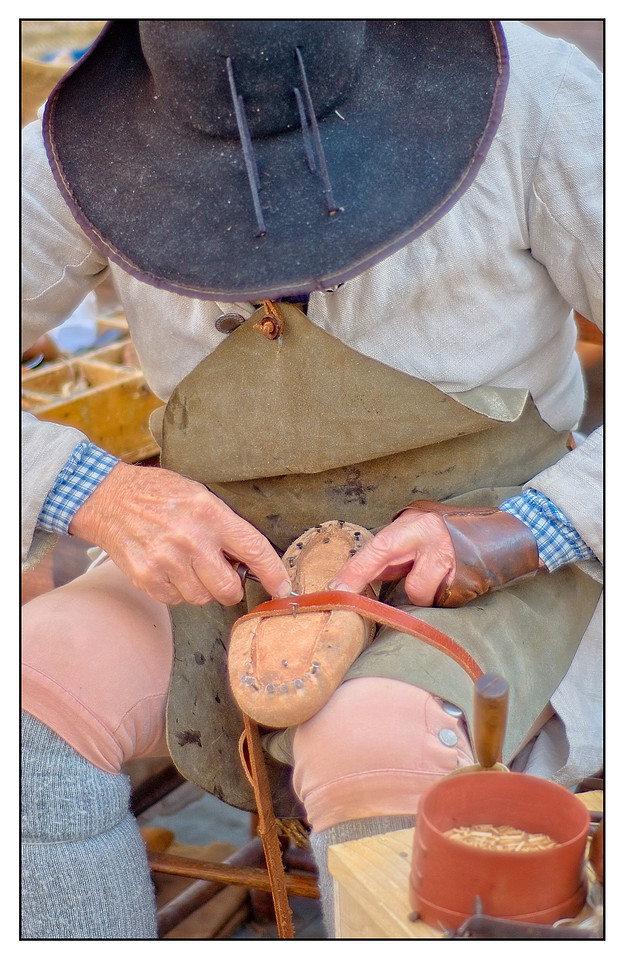
This composition naturally draws the eye to the stitching process at the center, making it the focal point. It’s always exciting to visualize an image in your mind and then bring that vision to life through careful framing.
One of the joys of attending American Revolution reenactment events and festivals is that I’m always learning something new. And I’m not alone—spectators often meet reenactors (living historians) who are eager to share their knowledge of the colonial period. This photo captures the excitement of discovery and makes me smile every time I see it!
Click here for here for Revolutionary Philadelphia 1775 2025 Photo Gallery. Thank you for reading! Blog #101 will be posted on December 15, 2025. Be safe & well! Huzzah, Ken Bohrer
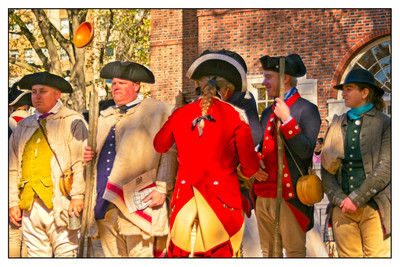
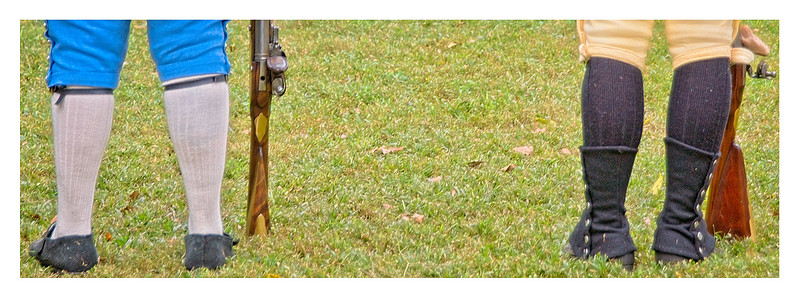
Back to Revolutionary War Day at Belmont Hall EventI was thrilled to return to Belmont Hall, DE after missing last year’s event. This stately Georgian mansion, built in 1773, is one of Delaware’s most treasured historic homes—nestled among towering trees, sweeping lawns, and beautifully tended gardens. Located about 40 miles south of Wilmington, the estate sits in Smyrna, making my drive from the Philly suburbs a manageable 80-minute highway trip. The day began with light showers that lingered, casting a misty atmosphere over the grounds that somehow added to the historic ambiance. My first visit two years ago was memorable, especially with several photo friends in attendance—though bittersweet now, as one of them sadly passed away last year. The annual Revolutionary War Day reenactment honors Belmont Hall’s role as a Patriot headquarters during the Revolution, featuring living history camps, musket demonstrations, period dancing, and skirmish reenactments involving the Smyrna Militia, all set against the backdrop of Governor Thomas Collins’ historic home. As the reenactors lined up in formation, it was unusual for me to see those portraying British troops at other events wearing striking red uniforms, now outfitted in homespun clothing.
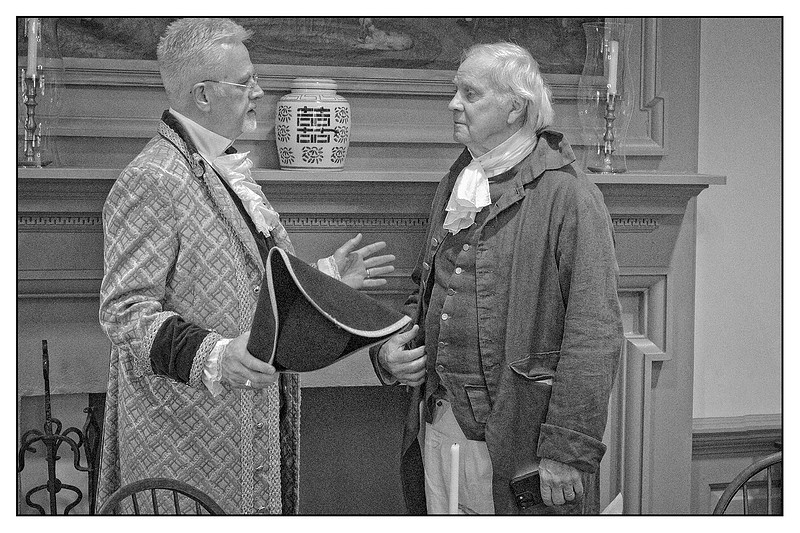
The gentleman on the right represents Allen McLane, a distinguished officer in the Continental Army celebrated for his daring service. This image captures these historic figures in conversation within the west parlor, a room noted for its elegant woodwork and fireplace. To evoke a sense of nostalgia and authenticity, I converted it to black and white using ON1 software, giving it a timeless, historic feel.
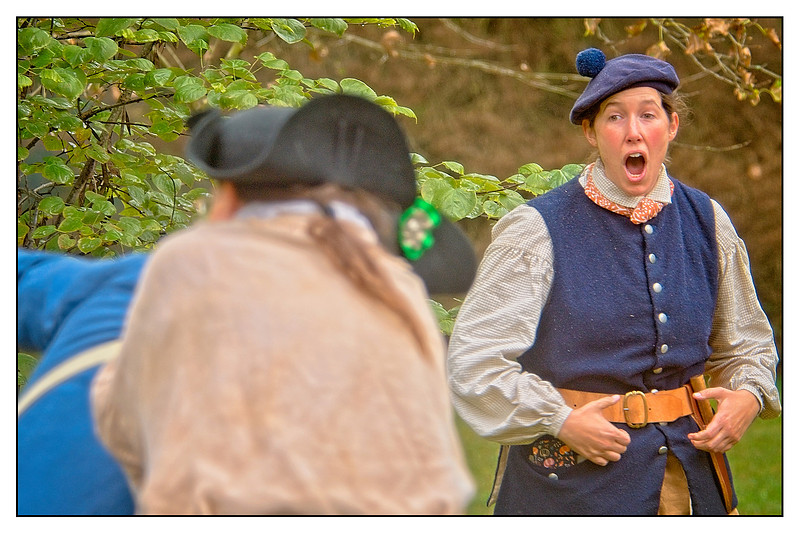
In 1777, British troops attempting to capture Brigadier General Thomas Collins—who would later become governor of Delaware—shot and killed a sentry stationed on the widow’s walk of Belmont Hall. This tragic moment became a flashpoint in local Revolutionary War history. During the reenactment, the performers staged a dramatic skit where loyalists and patriots clashed over their allegiance to King George. Tensions escalated from heated words to physical confrontation. This photo captures the exact moment when the action erupted—faces full of shock, defiance, and raw energy. Priceless!
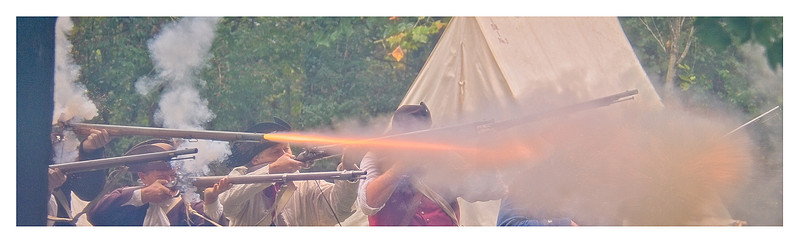
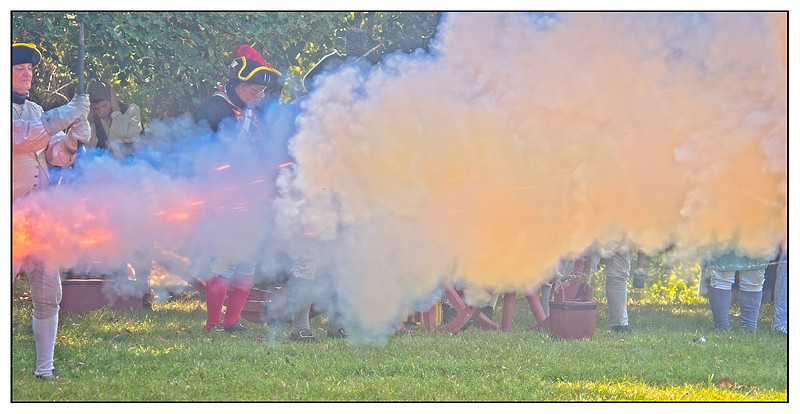
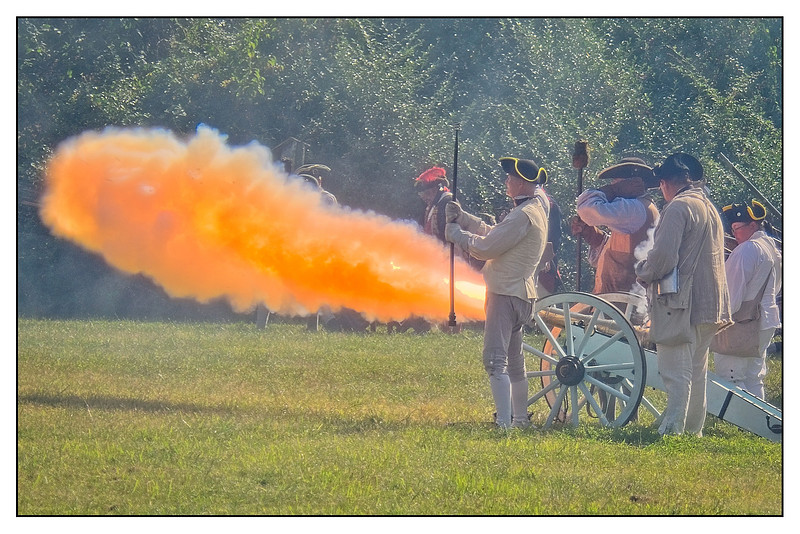
The blast stands out more clearly because the reenactors here weren't in direct sunlight but positioned under the trees, in the shade. That contrast makes a big difference. Many reenactments take place in open fields during the harshest time of day for photography—early afternoon—when the light tends to wash out colors. While I can recover some of that in post-processing, shaded conditions are ideal for capturing the blast's vivid orange flash.
Thank you for reading! Blog #100 will be posted on November 15, 2025. Be safe & well! Huzzah, Ken Bohrer
Fun Time at Mount Harmon Rev War & Colonial Festival 2025Mt. Harmon Plantation in Earleville, Maryland, is an event I return to almost every year. This beautifully restored 18th-century colonial-era tobacco plantation features a stately Georgian manor house, formal gardens, a plantation kitchen, smokehouse, and replica slave quarters—all set on a scenic 200-acre waterfront nature preserve. Although I live just outside Philadelphia, the drive is an easy and enjoyable 80-minute cruise through the countryside. On this visit, the weather couldn’t have been better—low 70s, sunny with a few clouds drifting by. It was the kind of mild day that makes you grateful to be outdoors. Surprisingly, my best photos this time weren’t from the reenactment itself. The American and British camps were set up about 50 yards apart, with the British encamped closer to the mansion. Just beside the mansion sits the colonial kitchen, where I found the interpreter and meal preparer, a high school history teacher I’ve met before. He was outside working over his outdoor grill, adding a layer of authenticity to the scene. This photo in particular stood out to me. The composition draws your eye along the walkway leading to the kitchen door, and through the open doorway, you can glimpse the interior. It’s a quiet, candid moment that captures both the setting and the spirit of the day.
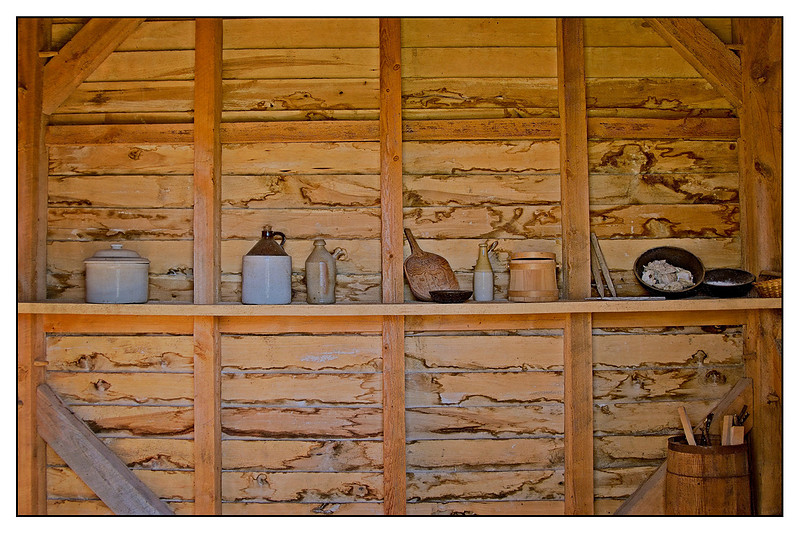
What caught my eye was the wall—an unmistakable example of 18th-century kitchen construction. Its rustic, utilitarian design features exposed wooden framing with vertical and diagonal beams, likely hand-hewn, lending the structure a sturdy yet simple character. Between the beams, horizontal wooden planks with chinking fill the gaps—a traditional technique used for insulation and sealing. A wooden shelf runs across the middle section, displaying an assortment of period-appropriate items: a large ceramic storage jar, stoneware jugs and bottles, a woven basket, and a shallow bowl. On the lower right, a wooden bucket filled with utensils—possibly cooking tools or wooden spoons—adds to the sense of daily functionality. Despite not using a tripod, I managed to capture the shot and later enhanced it using filters and adjustments in ON1 software. I like simple photos like this—quiet scenes that speak volumes.
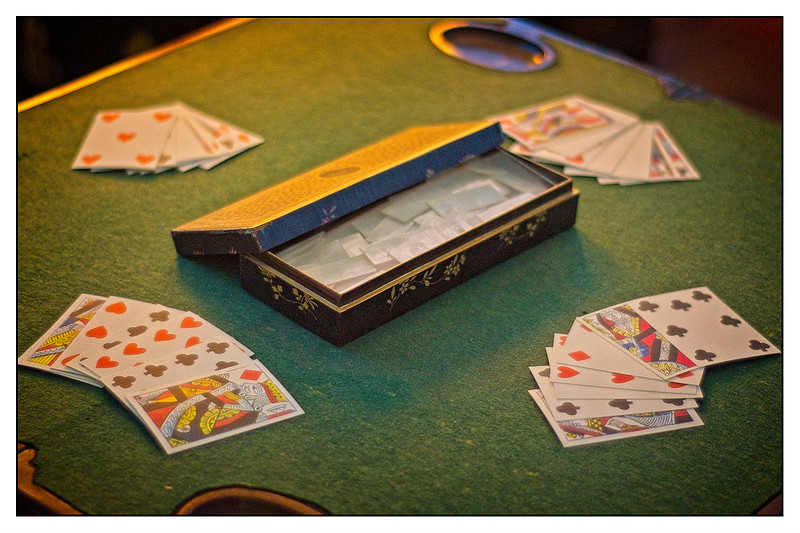
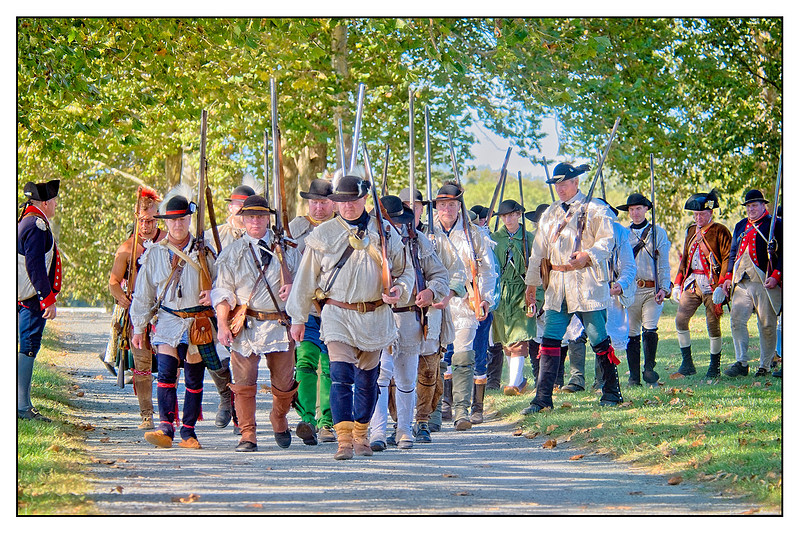
I chose my Nikon 50mm prime lens, setting the aperture to f/1.8 to embrace shallow depth of field. My focus centered on the ornate storage box. The cards behind it faded into a blur. The result was an intimate composition that captured a wistful mood. Here are the American troops marching into battle (reenactment). I’ve captured many similar moments at other reenactments, but this one stood out. It was late in the day—around 3 p.m.—and the soft, warped light brought out the richness of the scene. What first caught my eye were the colorful leggings, vivid against the shaded backdrop. That contrast made the colors pop, adding a striking visual element to the solemn march.
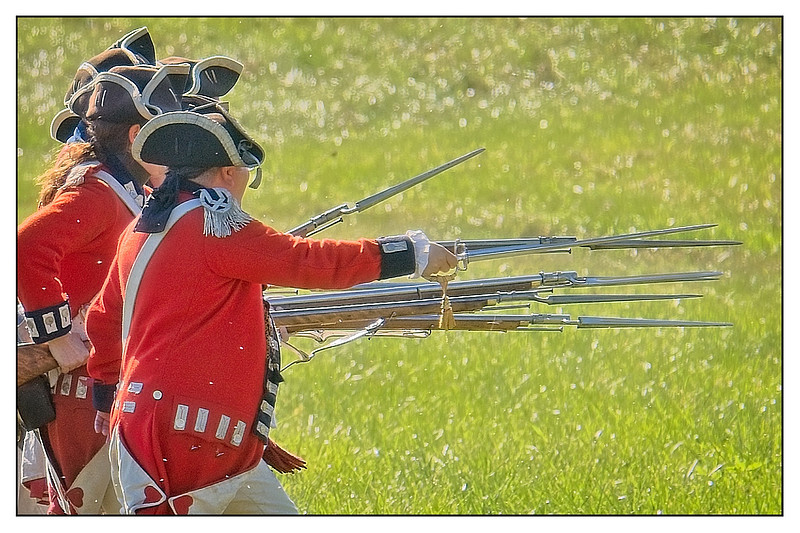
First, at reenactments, the action is fast-paced and constantly shifting. There’s simply no time to compose and crop in-camera when everything is continually in motion. Second, I often don’t determine the most compelling elements of the photo until I review it later. This photo is a perfect example. I was shooting from about 25 yards away as a long line of British troops advanced in a bayonet charge—visually dramatic, but not unusual. During post-processing, however, I noticed something striking: the alignment of the bayonets and the officer’s sword created a visual illusion, appearing as one continuous weapon. By cropping in tightly, I was able to emphasize that moment. The final image has far more impact than the original.
Thank you for reading! Blog #99 will be posted on November 15, 2025. Be safe & well! Huzzah, Ken Bohrer
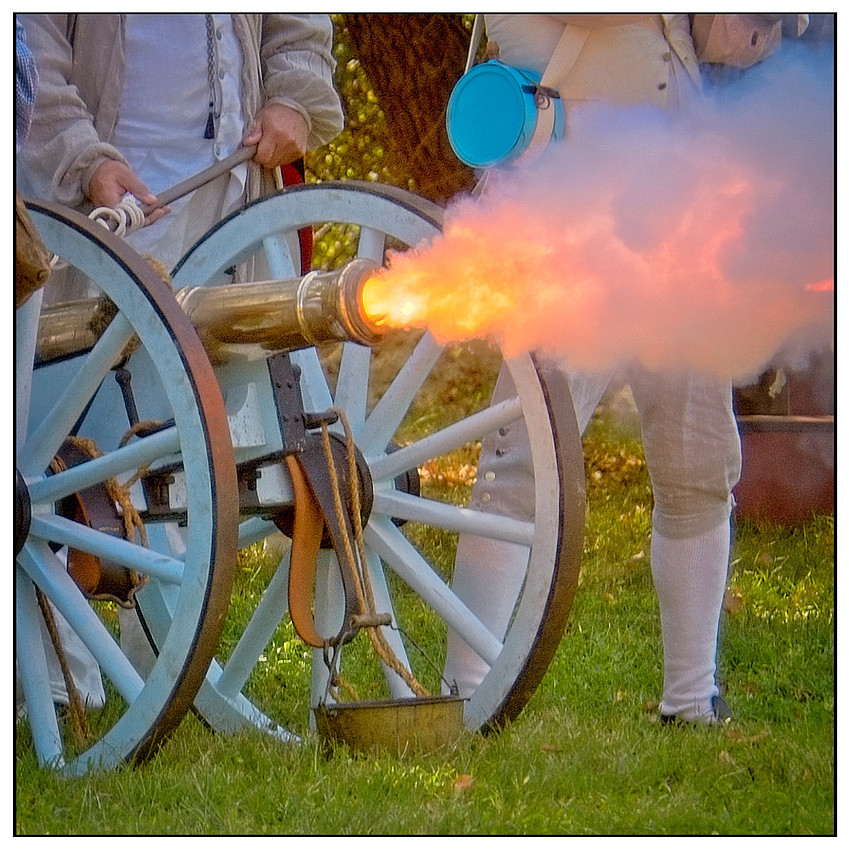
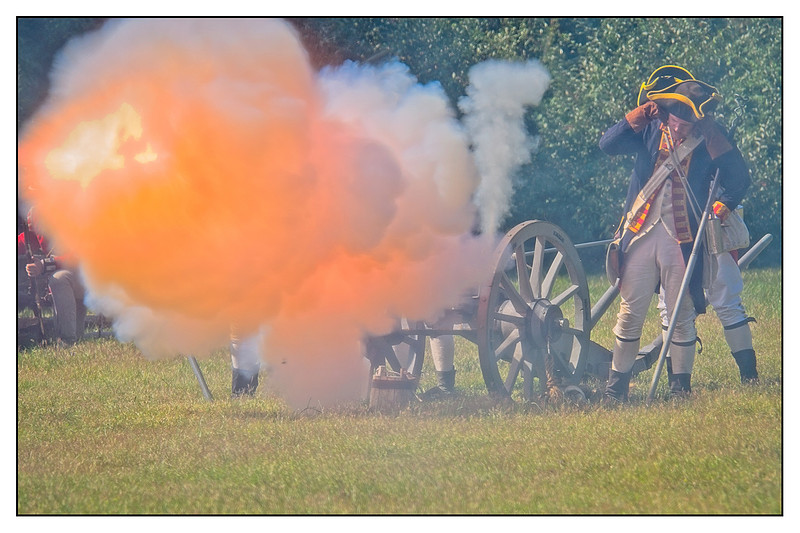
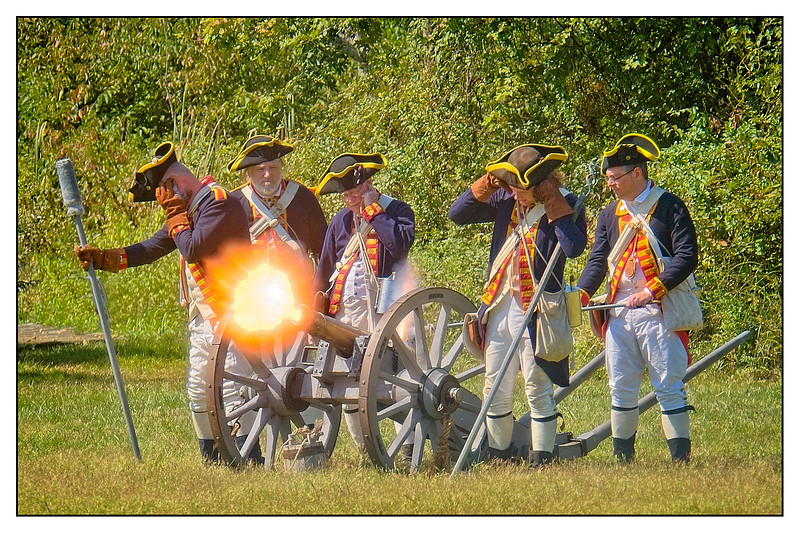
Favorite Cannon Blasts from Chadds Ford 2025Among my reenactment photo friends, there’s an unspoken rule: if there’s a cannon at the event, it’s only truly successful if we capture at least one good blast. At the recent Battle of Chadds Ford, I was fortunate to get more than a few—several excellent shots, in fact. One friend mentioned before heading out that he’d managed to catch five solid blasts in a row. I hadn’t checked my own photos until I got home—and I was amazed at how many great ones I had too. This event is the closest to home for me, just a 20-minute drive away. The day couldn’t have been better: temperatures in the high 70s, clear skies, and a great turnout. I reconnected with many old friends and met some new faces as well. The event commemorates the Battle of Brandywine, considered the largest battle of the American Revolutionary War in terms of geographic area—spanning roughly 10 square miles (approximately 35,000 acres). Despite George Washington’s defensive positioning along Brandywine Creek, General Howe executed a successful flanking maneuver, overwhelming the American forces and forcing a retreat. The outcome mirrored Washington’s earlier defeat at the Battle of Long Island in 1776. It was also one of the most protracted single-day battles of the war, with 11 hours of continuous fighting. What fascinates me most is how no two cannon blasts ever look the same. Each has its own character—its own shape, energy, and timing. As I often do, I zoom in tight to catch the flame at the moment of ignition—that fiery burst that makes each photo feel alive.
I had the honor of interviewing Noah back in April 2022 for a blog post. His mission, as shared on his website, resonates deeply: "I am blessed to have the opportunity to continue with this tribute, and to aid in helping others to appreciate the contribution we Black people made to the freedom of all Americans. There is a part of me that hopes the souls of these amazing contributors to our freedom will rest more peaceful by giving them the honor they were denied for so many years." At this recent reenactment event, Noah shared exciting news—his book is in the process of being published! I can't wait to read it and see how he brings Ned Hector's legacy to life.
Its distinctive nickname came from the way its handspikes jutted out from the carriage, resembling insect legs, and from its tendency to "hop" backward from recoil when fired. Operated by a small crew, it could be repositioned and reloaded quickly, making it ideal for close infantry support.
Thank you for reading! Blog #98 will be posted on November 1, 2025. Be safe & well! Huzzah, Ken Bohrer
More Photos from 250th Battle of Bunker Hill 2025As I shared in Blogs #94 and #95, the 250th anniversary of the Battle of Bunker Hill, held in Gloucester, MA, I posted over 500 photos across two galleries—more than I've ever shared from any event in over 15 years of attending reenactments. This event was one of the special events I've photographed. And I still have more photos to share! The image you see here captures a sea of tents, a powerful visual that reflects the scale of the event. Approximately 1,000 reenactors participated, which is truly impressive. In this scene, the militia units were situated in the foreground, while the British troops were further back near the tree line.
Positioned just 50 yards from the heart of the reenactment, I had a front-row seat to the chaos. The militia kept firing their muskets in rapid succession, and soon the battlefield was engulfed in thick, swirling smoke. It became nearly impossible to distinguish individual figures through the haze. The atmosphere was so immersive and visceral that I found myself instinctively bracing for incoming fire—it felt that real. The combination of proximity, gear, and timing allowed me to capture not just an image, but the raw intensity of the moment. It’s a reminder of how photography can capture a fleeting moment that tells a much larger story.
In this photo, you can see the militia positioned on the rocky shoreline, harassing the incoming troops as they attempted to land. The tension was palpable, and the visual contrast between the disciplined landing and the rugged defense added a cinematic quality to the moment. I couldn’t help but imagine how thrilling it must have been to watch this unfold from one of the spectator pleasure crafts floating near the tall ships—an unmatched vantage point for such a dynamic and immersive experience.
In this photo, I aimed to capture the unwavering grit and determination of the British troops as they advanced on the militia's well-fortified position. To heighten the drama and convey a sense of motion, I applied a radial blur filter from On1 Software. This effect draws the viewer's eye toward the central figure—a British soldier pressing forward with resolve—while creating a dynamic sense of movement around him. The result is striking: the longer I look at the image, the more it seems to come alive, as if the scene is still unfolding before me.
The intensity of the British charge at the redoubts was relentless, building to a fever pitch until the final breach. The militia’s resistance was fierce and visceral—it felt undeniably real. Look at this militiaman hurling stones (albeit fake) at the advancing troops. Of course, it wasn’t truly happening, but in the moment, it felt authentic. The tension, the chaos, the raw emotion—it all came alive.
Click here for Bunker Hill Day 1 2025 Photo Gallery. Click here for Bunker Hill Day 2 2025 Photo Gallery. Thank you for reading! Blog #97 will be posted on October 15, 2025. Be safe & well! Huzzah, Ken Bohrer
250th Battle of Bunker Hill-Day 2 2025In Blog #94, I shared my adventure at the 250th Bunker Hill reenactment, held about thirty-five miles from the original battlefield in Boston, at Stage Fort Park in Gloucester, MA. At the end of day 1, I was excited about what I had just experienced and incredibly tired. I had reserved a lovely cottage in town, but a few weeks before, it was not available because of renovations. Too bad! The closest hotel I could find was about 40 minutes away in NH. That's okay. It was a comfortable room, and I slept soundly. Early the next morning, I was up early, got breakfast, and was on the road again around 7 am. I knew it was going to be a long day because, immediately after the event concluded, I would be heading home, about a 5-hour drive. This location provided the perfect setting to recreate both the land and maritime aspects of the historic battle. What made this event truly special, both days, was the presence of multiple ships and a dramatic British beach landing—a rare sight in Revolutionary War reenactments. Unfortunately, due to the high tide, the press didn't have access to the beach during the landing so that I couldn't capture that moment—no one could. Thankfully, I had taken many shots the day before that offered that unique perspective. Very few Revolutionary War reenactments include ships at all, and none have allowed me to capture a photo quite like this one before!
Though I was too far away to catch their words, the energy was unmistakable: laughter echoed across the field, playful gestures passed between comrades, and their relaxed postures spoke volumes. In the two photos below, their expressions and body language tell the story and even a few mock salutes. It was as if they were defying fear with humor, transforming the tension of impending combat into a moment of camaraderie and levity. But perhaps the figure is meant to represent General Israel Putnam, known affectionately as “Old Put.” A veteran of the French and Indian War, Putnam was one of the senior officers present at Bunker Hill and helped oversee the fortification of Breed’s Hill, where most of the fighting occurred. He was widely admired for his courage and battlefield presence, often seen riding along the lines to rally the troops. American popular culture famously attributed the line “Don’t fire until you see the whites of their eyes!” to Putnam. While modern historians debate whether he actually said it, the phrase became a symbol of American resolve and tactical discipline. In this portrayal, the commander seems to be mocking the British, daring them to attack—a gesture that captures the defiant spirit of the patriots that day.
This battle, held only a few months after Lexington and Concord, was a pivotal early clash in the American Revolutionary War. Incredibly, Abigail Adams (her husband John was in Philadelphia) and her seven-year-old son, future President John Quincy, climbed a hill near their home, 10 miles away, to observe the battle. Although technically a British victory, it came at a high cost: British forces suffered over 1,000 casualties (including 226 killed), while American militia incurred around 450 casualties (with 140 killed). Approximately 2,300–3,000 British troops engaged about 1,500–2,400 colonial fighters, primarily on Breed’s Hill in Charlestown, Massachusetts. The fierce resistance demonstrated the resolve and capability of the American forces, boosting morale and support for independence despite their eventual retreat.
The drive home was long and uneventful, but it gave me time to reflect. I’d forgotten just how frustrating traffic can be on I-95 near NYC—Connecticut doesn’t disappoint in that regard. I took it slow, letting the memories of the weekend settle in. The energy, the people, the sheer scale of the event—it all stayed with me. Over the course of two days, I posted more than 500 photos. That’s a personal record for a single event. It’s taken me weeks to get them all online, but every image tells a story, captures a moment, and preserves a piece of something truly extraordinary. Click here for Bunker Hill Day 1 2025 Photo Gallery. Click here for Bunker Hill Day 2 2025 Photo Gallery. Thank you for reading! Blog #96 will be posted on October 1, 2025. Be safe & well! Huzzah, Ken Bohrer
250th Battle of Bunker Hill-Day 1 2025Capturing the Bunker Hill 250th reenactment was an absolute joy. This event was one of the special events I've attended. Everything was perfect; Every moment unfolded with precision and passion. The reenactors were deeply engaged, and the atmosphere was electric with a sense of historical reverence. It felt like history came alive through my lens, and every shot told a story worth preserving. I left my home in Media, PA, around 4 AM on Friday, wanting to get a good start and avoid the traffic in the NYC region for my approximately 6-hour car journey to Gloucester, MA. The drive was good, and I arrived in the early afternoon. Thirty-five miles from Boston, Gloucester's Stage Fort Park offered ideal terrain for reenacting both the land and maritime components of the battle. The park's beaches allowed for a realistic recreation of the British landing, and its natural elevation provided space for building a redoubt similar to the one used in the actual battle. When I arrived in town early in the afternoon, I went to the event site to get my credential pass. As you can tell from this photo, the wind was strong around the boardwalk area in Gloucester, MA, which is best known as the HarborWalk.
Additionally, I added noise (grainy or speckled areas) and muted the colors using On1 software, which gives the appearance of a photo taken with film. The way he's not cradling his musket like most soldiers would do, but instead he's carrying it nonchalantly, like being out for a stroll instead of preparing to fight a battle. These minor changes make the final photo nostalgic, which I like. One of my favorite photos of the day!
One of the highlights and unique features of this event was the ships and boat landings by British troops. There have been only a few events with ships, so this was special. On the beach, close to the rocks, there was a designated area for the press. This unique vantage point allowed me to catch images that the general public couldn't get. Plus, it was the only time this happened. We couldn't have known that on Day 2, the tide would have been too high for us to be allowed on the beach. There are a few times at other events and this one too, where I've captured a reenactor jumping from the landing craft, but this one was special. He must be the Basketball Hall-of-Famer Air Michael Jordan of reenactor jumpers. He had no running start, so when he jumped, I was amazed at how high and far he was able to fly. You can see it in the photo. Luckily, I had my camera ready to catch this unique shot.
By the third charge, it didn't feel like a reenactment anymore—it felt like I was witnessing the real battle unfold. My camera was firing as fast as I could press the shutter, and I found myself muttering, 'I can't believe what I'm seeing.' I was so close to the action that I could see the intensity in the reenactors' faces. It was as if both sides had slipped into the past and were living the moment for real. This photo captures the moment just before the militia's defense began to collapse under the pressure of that final charge. You can almost feel the desperation. What do you think, were those real bricks and rocks flying at the British lines? It sure looked and felt like it.
For this photo, I zoomed in tightly on the British troops to capture just a slice of the enormity of the event. Redcoats stretched across the landscape—marching, maneuvering, and engaging in battle formations. Everywhere I turned, there were British troops—an overwhelming presence that brought the 18th-century battle vividly to life.
Click here for Bunker Hill Day 1 2025 Photo Gallery. Click here for Bunker Hill Day 2 2025 Photo Gallery. Thank you for reading! Blog #95 on Bunker Hill Day 2 will be posted on September 15, 2025. Be safe & well! Huzzah, Ken Bohrer
My Favorite Published American Revolution Reenactment Photos-2of 2In my last blog #92, I shared the thrill and excitement of having many of my photos published in books and magazines. These validate my continued efforts and serve as a source of personal pride and motivation to create even better images. It has enhanced my professional reputation and signals to others that my work meets high standards. In this blog, I'll share some of my other published photos. The thumbnail cover photo below of the Battle of Lexington and Concord by John Hamilton is a concise 32-page book aimed at young readers. Someone changed the cover photo from originally horizontal to vertical and B&W, and looks great. This photo depicts the Minutemen marching across the North Bridge on April 19, 1775. It is from the Lexington and Concord event in 2011. There were three unique events I attended celebrating Patriots' Day, both times over a decade ago. The first was the Battle of Lexington, fought on April 19, 1775, that marked the beginning of the American Revolutionary War when British troops clashed with colonial militia in Massachusetts—often referred to as "the shot heard 'round the world." This brief skirmish ignited a larger conflict between Britain and its American colonies. The second confrontation was the Battle of North Bridge in Concord, where 400 militia engaged roughly 90 British troops at this site. This skirmish marked the first organized resistance by colonial militia against British troops. Militiamen confronted and forced British soldiers to retreat, signaling the start of the Revolutionary War. This clash demonstrated the colonists' willingness to fight for their rights and independence. The photo above shows the crossing of the North Bridge, dispersing the British troops. But the most realistic and haunting spectacle is the depiction of Battle Road when the British troops were retreating to Boston, seen below. "Battle Road Trail is a five-mile trail connecting historic sites from Meriam's Corner in Concord to the eastern boundary of the park in Lexington. Much of the trail follows the original remnants of the Battle Road, where thousands of Colonial Militia and British Regulars fought a bloody engagement on April 19, 1775." This photo shows the British troops marching back to Boston. But there was a surprise waiting for them on this trek. Patriots' Day weekend, held around the day of the engagement, April 19th, should be on everyone's bucket list. It is one of the most exciting reenactment events I've attended.
In October 2023, I received this unexpected and exciting e-mail- I work as an educator for the outreach branch of the North Carolina Museum of History, a part of the state’s Department of Natural and Cultural Resources. One resource our section produces is the Tar Heel Junior Historian magazine. It is a free resource for 4th-12th grade students and educators who are members of free Tar Heel Junior Historian clubs across the state. The Fall 23 and Spring 24 issues focus on the buildup to the American Revolution as part of work we are doing for the upcoming 250th anniversary of those times called It’s Revolutionary! What an honor! The museum used many of my photos in the publication; two are below. One of my favorite reenactments each year is The Battle at Monmouth in NJ. I have so many memorable photos, including this one from that event in 2018. This photo was the cover photo of the Tar Heel Junior Historian Vol 63, Num 2, which explores a theme tied to North Carolina’s rich history and culture, offering engaging stories and educational insights for young readers. I remember taking this photo that day. Immediately, I knew that, with the American flag fluttering in the breeze, this would make a great image. I photographed many similar pictures at that time, but this is the best one. It became the cover photo of the magazine with some cropping and also changing it from a horizontal photo to vertical!
When the North Carolina museum selected the necessary photos, they reviewed my entire site. That's a lot of galleries to review since there are over 10,000 images to consider. Funny how they selected numerous photos I've forgotten about over time, including the one below from The Battle of Guilford Courthouse in 2011. I've only attended that event, unfortunately, only two times, and it occurred years ago now. I need to go back again! I always liked this photo. It reminds me of ants scurrying in synchronized chaos here and there. At this event, as I recall, it wasn't possible to get close to the action. Some events are like that. Luckily, I have a long lens, Nikon 80-400 4.5-5.6 VR, to photograph events like this.
Thank you for reading! Blog #94 will be posted on September 1, 2025. Be safe & well! Huzzah, Ken Bohrer
My Favorite Published American Revolution Reenactment Photos-1 of 2It's hard to believe sometimes, but I started photographing American Revolution reenactments in 2007. In that time, I've posted over 10,000 photos on my site. I'm proud that many of my images have been displayed in numerous books, magazines, and websites. Seeing your work in print or online has been incredibly rewarding for me. It validates my efforts and serves as a source of personal pride and motivation to create even better images. It has enhanced my professional reputation and signals to others that my work meets high standards that respected professionals value. That is a reason I enjoy attending the Jockey Hollow encampment in NJ as often as possible. Why? The book, "Where a Forgotten Army Persevered to Win America's Freedom," by Rosalie Lauerman, which is displayed prominently in the Visitor's Center at Jockey Hollow, features three of my photos, two of them below. I am reminded of the importance of showcasing my work. As a photographer, it is an incredible honor to have writers select your work for their book. In total, I've had photos published in seven different books and magazines. This photo from the Battle of Monmouth in 2014 is one of my favorites, and I selected it as one of my top 25 photos, as featured in my September 2020 blog. The image is also on the back of my business card. Below, I caught the musket blasts all at the same time. It's one of those yes, I got it photos.
This photo is from the Washington's Crossing event in 2009, an event I attend most years, either on the practice day (about two weeks before) or on Christmas Day. This particular day was special with snow on the ground, making the day feel more authentic, just like when Washington led a daring and dangerous crossing of the icy Delaware River with his Continental Army. In the first few years, I photographed from the NJ shoreline. That's how I was able to get this shot, because the boat is close to landing. Now I stay on the PA side of the Delaware River. You know that this Durham boat has George Washington in it because his flag has 13 Stars (representing the 13 original colonies) on a blue field.
For much of its 80-year print run, Popular Photography magazine was widely recognized as the world's #1 print photography magazine in the US. In 2014, I was selected, along with two other photographers, for an article entitled "In the Picturing History," which featured an interview with us about photographing reenactments. Below is the magazine cover, along with the article's main page. I've posted here two of the three photos from the article. I was hoping one of my photos would be the article's first page; unfortunately, that didn't happen. But, what an honor! When the magazine issue was released, I purchased three copies. The powder horn photo I took at the Battle of Bushy Run reenactment in 2013 was the only time I attended this event. It isn't a Revolutionary War battlefield, but rather a French and Indian War battle that took place in August 1763. It's about an hour east of Pittsburgh, PA. That was a fun weekend. I was also able to attend a Pirates game. They were a good team that year, and PNC Park is one of the best stadiums in Major League Baseball to experience "America's pastime."
Thank you for reading! Blog #93 will be posted on August 15, 2025, my birthday. Be safe & well! Huzzah, Ken Bohrer
Shooting Film in 2024 & 2025In a world dominated by instant gratification and digital perfection, shooting film now romanticizes, at least in my mind, the beauty and simplicity of a bygone era. That was my thought last year when I learned, by accident, that my Nikon 2020 film camera still works; it just needed new batteries. My idea was to start shooting one roll of film at every event to remind myself when I first started in photography. My first foray back to film was early last year; the results were okay. But this time not as good. Now, I'm rethinking how and when I'll continue shooting film? My initial thought was that shooting film was supposed to bring me back to a time when every click of the shutter held a promise, a whisper of magic yet to be revealed. You never know what your photos will look like or if anything came out of the roll due to my error, which recently occurred, or a mistake made by the lab where it was processed. I double-exposed one roll, meaning I exposed the same frame of film twice, creating a single image with two superimposed exposures. Not what you want! Here is my friend Ron Mehalko, sutler (vendor), founder of Get Revolution Wear, from the Chadds Ford 2024 event. I've known him for around 15 years. In August 2019, I conducted a blog interview. For this image, I cropped him in tight and adjusted the highlights and shadows, a simple process.
This photo is from the Mt Vernon-Revolutionary War Encampment event. I took a similar, more cropped-in photo immediately before this one. With my Nikon 500 digital camera, I can customize the color palette, saturation, color temperature, and even noise. I enjoy the rich, bold colors that I can achieve in post-processing. I think of this when comparing the picture quality of TVs from the 1960s to today. TVs in the 1960s had low resolution, often black-and-white images with frequent signal issues. In contrast, today's TVs offer ultra-high-definition resolution, vibrant colors with HDR, and consistent digital signals, providing a vastly superior viewing experience. The quality of digital cameras is the same. Maybe you can't go back in time? Although this is a nice photo, it appears to be a RAW image before I post-process it in On1 Software. I don't like the film version as much. Film photography is an intimate dance with light and shadow, where imperfections become cherished memories and every frame tells a story. It's the art of patience, the joy of discovery, and the beauty of the unexpected. This black and white image from last year's Battle at Chadds Ford event is a good example of the photo opportunities you can discover at reenactments. I like the contrast throughout, but especially the detail in the Hessian's helmet.
Shooting film is not just about capturing images; it's about capturing emotions, moments, and the essence of life itself. It's a love letter to the past, a celebration of the present, and a timeless gift to the future. However, something I had forgotten about was how expensive it is to shoot film. Let's break it down—a roll of 400 ISO 36 exposures, whether in black and white or color, costs approximately $9 each. For two rolls of black and white film and one roll of color film, the shipping cost was $14 round-trip. One of my rolls was, as I later learned, double exposed; I'm not sure how I managed that. For each roll from a professional lab, developing was $7, and scanning the film $9. My total sum was approximately $60 for three rolls of film! Additionally, at most, five images were decent photos, and none were better than the ones I took with my digital camera. This color image from the recent Mt. Vernon-Revolutionary War Encampment is good, but to me, it doesn't have the same emotional impact as my digital ones. It looks like one of my RAW unedited shots. This photo is nice; the black and white makes it feel more historic. In post processing, the most significant change was darkening the bushes.
So, will I continue shooting film? Not for a while. The results weren't impressive, and the expense was also a concern. Additionally, I probably won't use color film, but instead focus on B&W, so I can develop and process them as I did years ago. Thank you for reading! Blog #92 will be posted on August 1, 2025. Be safe & well! Huzzah, Ken Bohrer
|