
Fun at Ft Mifflin 2025



Siege Weekend at Fort Mifflin is one of my favorite annual traditions—a living-history experience just 15 minutes from home that combines rich storytelling, photography, and community. Each year, I reconnect with old friends, from long-time reenactors to fellow photographers, and meet new folks, while exploring the rugged beauty of this historic stone fort and capturing dramatic reenactments and period life. This year brought a new perspective: a one-hour sail aboard the Schooner North Wind on the Delaware River, retracing the approach of British forces during the 1777 siege. Fort Mifflin commemorates its heroic stand in the American Revolution, when its defenders delayed British reinforcements long enough to alter the course of history, earning it the title “The Fort That Saved America.”
"For nearly six weeks in the fall of 1777, American troops in Fort Mifflin and Fort Mercer frustrated British naval attempts to re-supply their occupying forces in Philadelphia. Early in the morning on November 10, 1777, the British took definitive action to reach Philadelphia via the Delaware. Daybreak brought a rain of cannon fire upon Fort Mifflin beginning the largest bombardment of the Revolutionary War."
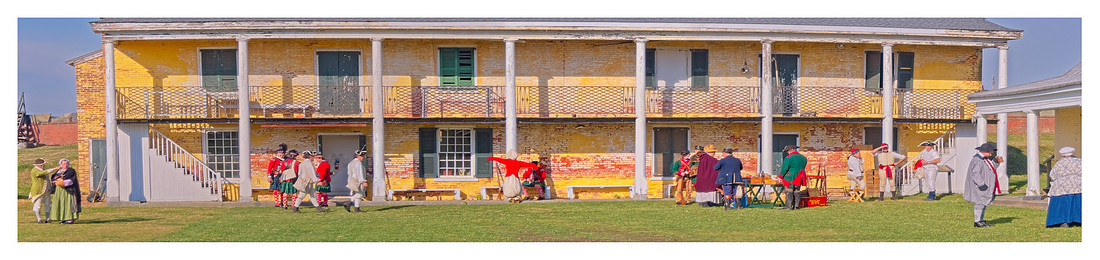
This panorama captures the Officer’s Quarters inside Fort Mifflin—a space steeped in history. The stone walls and main structures you see today largely date back to the Revolutionary War era of the 1770s, though the fort underwent later modifications during the War of 1812 and the Civil War.
Every visit brings me back to childhood memories of exploring Fort Ticonderoga. There’s something magical about a fort—the imposing stone walls and even the moat you cross when entering. Walking through Fort Mifflin feels like stepping into another time, and for a moment, I’m a kid again, wide-eyed and ready for adventure.
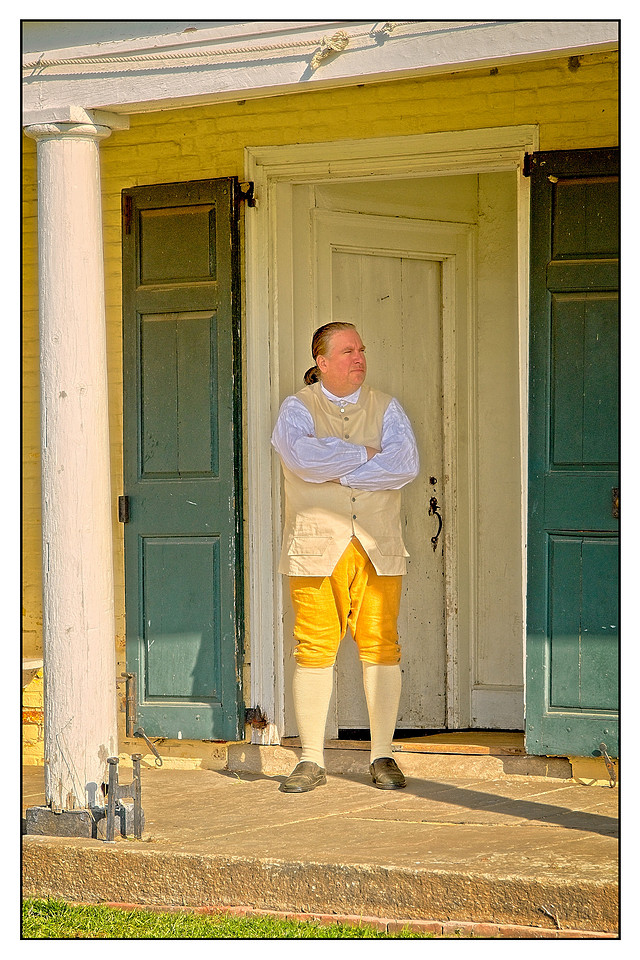
 At any event, I’m always on the move, searching for those perfect photo opportunities. The best shots happen when reenactors truly blend into their surroundings—like this moment. His profile feels as if it stepped straight out of the 18th century, and the historic building behind him completes the illusion. It’s history coming alive through the lens!
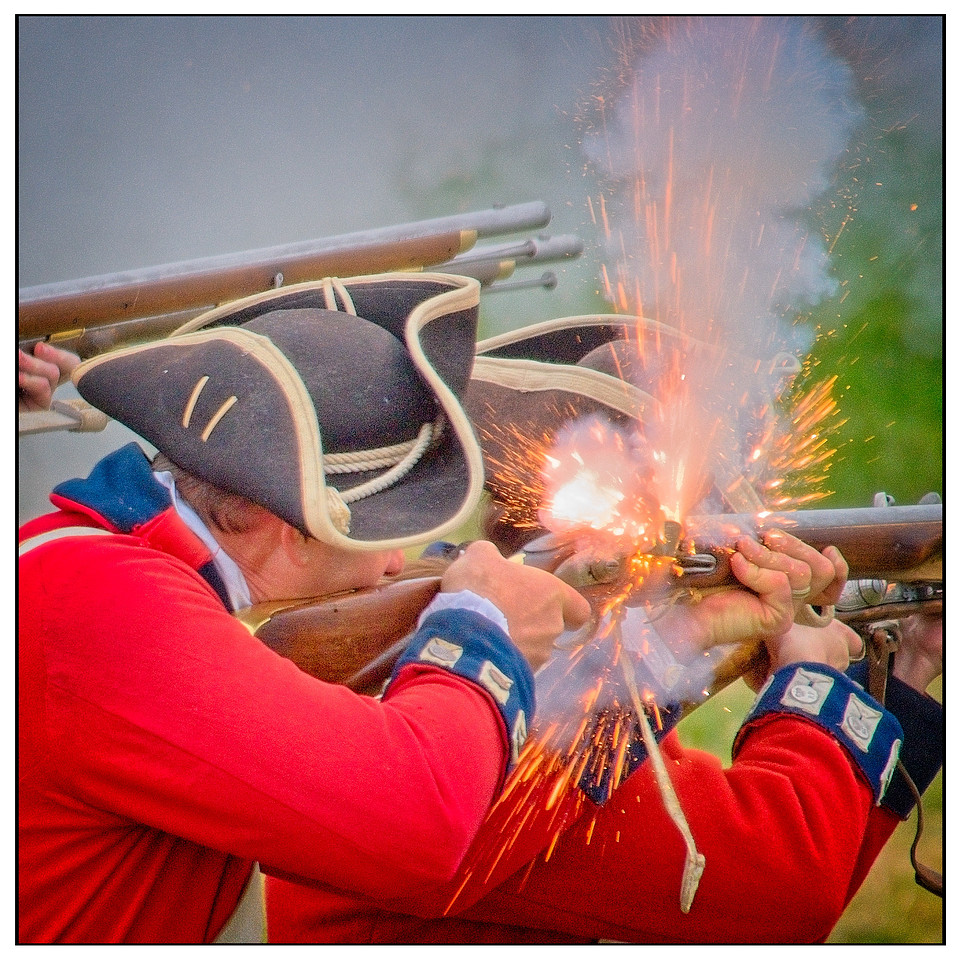
Whenever I’m at an event with musket firings, I’m on the lookout for those dramatic moments—and this time, I captured more than usual. Out of all the shots, this one stands out as the best.
What makes it so compelling is the sheer intensity of the flash: bright orange sparks and a vivid burst of flame erupting from the flash pan as the gunpowder ignites. The blast feels alive—glowing particles scatter outward, creating a sense of motion and raw power. Black powder doesn’t burn cleanly; its carbon-rich mix produces smoke and fiery orange hues, adding to the drama. That imperfection is what makes photos like this spectacular—a fleeting explosion frozen in time.
I shared this photo with my colleagues at work, and one of them commented that she liked it. Her question was: Did you enhance the photo?
My answer was yes—and I explained how. The truth is, all photos are enhanced to some degree, even those taken with a phone camera. JPEG images, for example, have built-in corrections that are automatically applied to make them look good.
I shoot in RAW format, which means the image comes straight from the sensor with no adjustments. That’s where post-processing comes in. Using ON1 software, I bring out the best in the photo—that’s where the magic happens.
In my last blog, I mentioned a question many people are asking these days: with the sophistication of modern cameras and editing tools, are photographers today photographers or artists?
For me, the answer doesn’t matter. My goal is simple: to create the most appealing images possible!
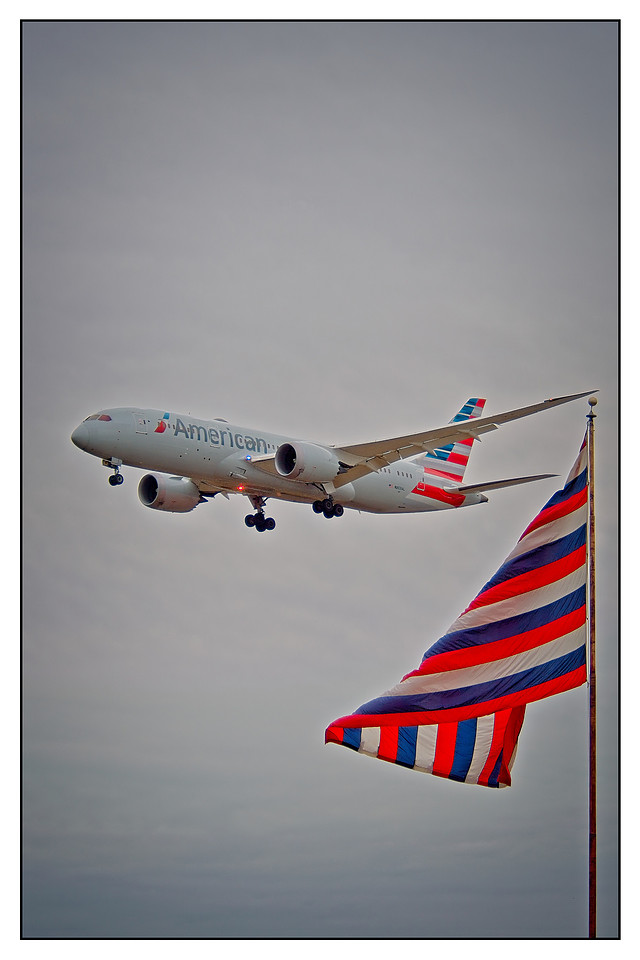
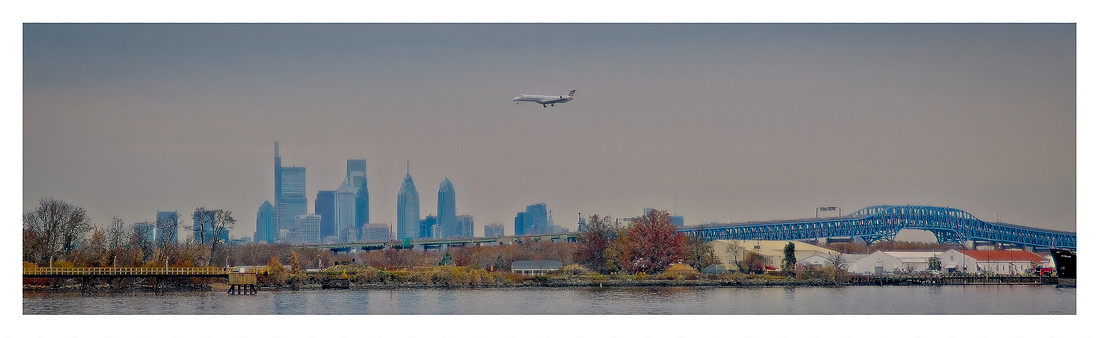 I’ve mentioned in previous blogs that sometimes getting a great photo is just plain luck—and that’s exactly what happened here. For most of the day, there was almost no wind. The flag barely moved, a rare sight compared to my usual visits when it’s flapping proudly.
This flag is impressive in its own right. It’s a replica of the original Continental Navy Jack hoisted on Siege Day, featuring 13 horizontal stripes in alternating red, white, and blue, ending with red. Today’s version flying over the fort is an exact reproduction of the one that flew in the fall of 1777, though only a quarter the size of the massive garrison flag that once dominated the skyline and could be seen from Philadelphia, more than seven miles away.
Then, near the end of the day, the wind finally picked up. I was in the perfect spot when I noticed a plane approaching for landing at Philadelphia International Airport. The fort sits directly in the landing path, so planes pass overhead every few minutes. With the flag now flying and the plane closing in, I fired off six continuous shots.
Here’s the amazing part: look closely at the design on the plane’s tail. Its colors almost mirror the flag's stripes. Talk about perfect timing—and a little bit of luck!
Click here for here for Fun at Ft Mifflin 2025 Photo Gallery.
Thank you for reading! Blog #102 will be posted on December 31, 2025. Be safe & well!
Huzzah,
Ken Bohrer

