Some of my Favorite American Revolution Reenactment Dragoon (Cavalry) Photos
 Photos&layout=none&ref=https://www.americanrevolutionphotos.com/blog/2026/10/some-of-my-favorite-american-revolution-reenactment-dragoon-cavalry-photos)
One highlight of any American Revolution reenactment is when dragoons are part of the event. Why do I say dragoons instead of cavalry?
During the American Revolution, mounted soldiers were often called dragoons because they were trained to use horses mainly for mobility, while also being able to fight on foot as mounted infantry. As military tactics evolved in the late 18th and 19th centuries, these units increasingly fought from horseback and took on the more traditional role of horse soldiers. Over time, the broader term cavalry gradually replaced dragoon in common military usage.
For this I selected some of my favorite dragoon photos. One of my favorite overall reenactment photos happened completely by accident. A dragoon was slowly riding his horse near the walkway where I was standing. I turned around, raised my camera, and took a few quick shots. Sometimes the best photographs are the ones you never plan.
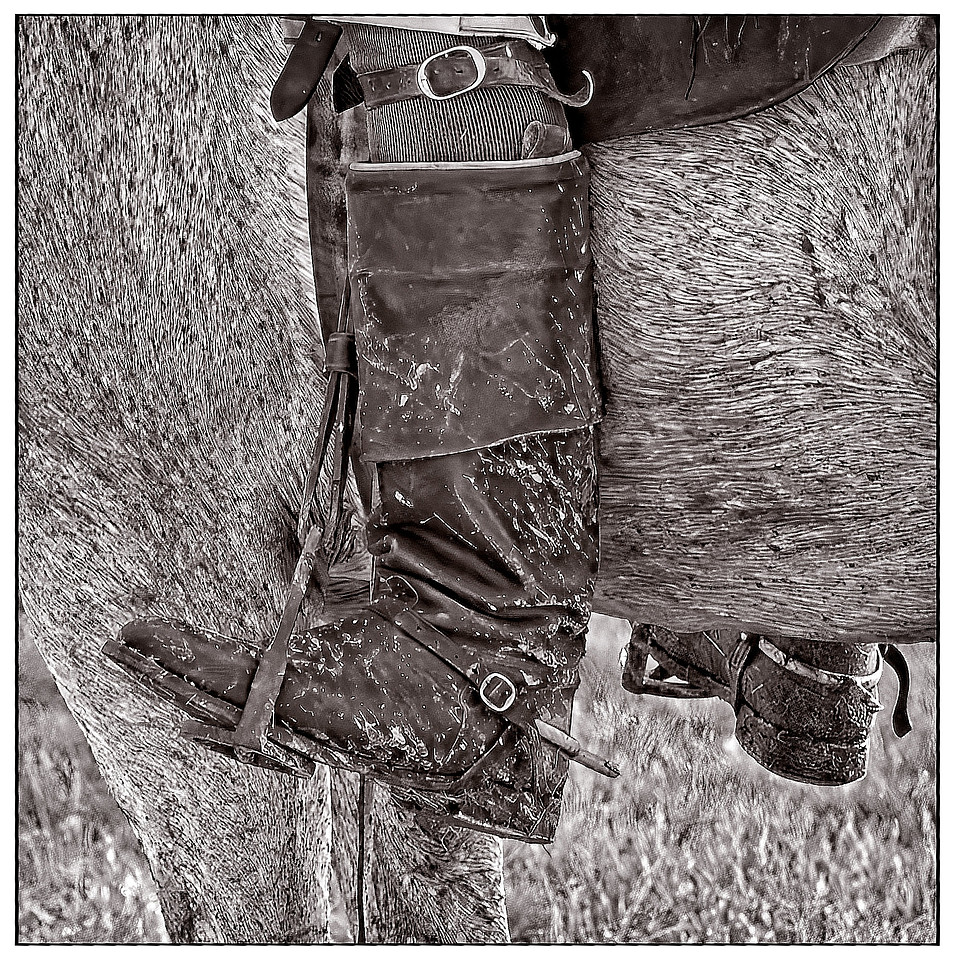
I previously posted a color version of another similar image, but for this one I decided to convert it to black and white. The change emphasizes the horse's remarkable coat pattern and texture. If you spend a few moments studying it, the swirling tones and markings can become mesmerizing, almost hypnotic. Try it and see if you experience the same effect.
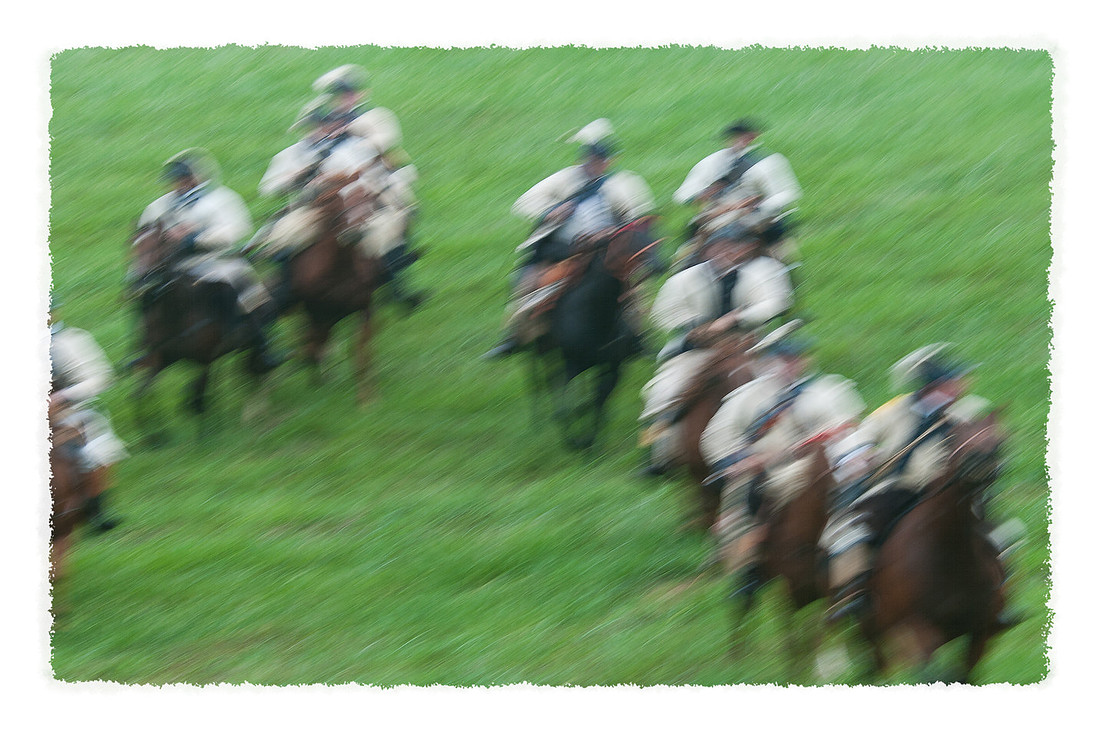
 Here is an older photo from Mt. Harmon in 2011. I still vividly remember taking it. The dragoons were galloping over a small hill straight toward me, and I was using an older Tamron 200-400mm zoom lens then.
That lens operated differently from most modern zoom lenses. Instead of rotating a zoom ring to change the focal length, you zoomed by pushing and pulling the lens barrel. Looking back, I can't remember whether I pulled the barrel forward or backward to capture this image.
I didn't use any blur filter. The motion blur effect was created in-camera, a technique that sometimes produces great results and other times misses the mark. In this case, it worked perfectly.
The blur adds a sense of speed, action, and drama that a perfectly sharp image might not have conveyed. What really makes the photo for me is the way the dragoons appear to be moving in different directions, some to the left and others to the right.
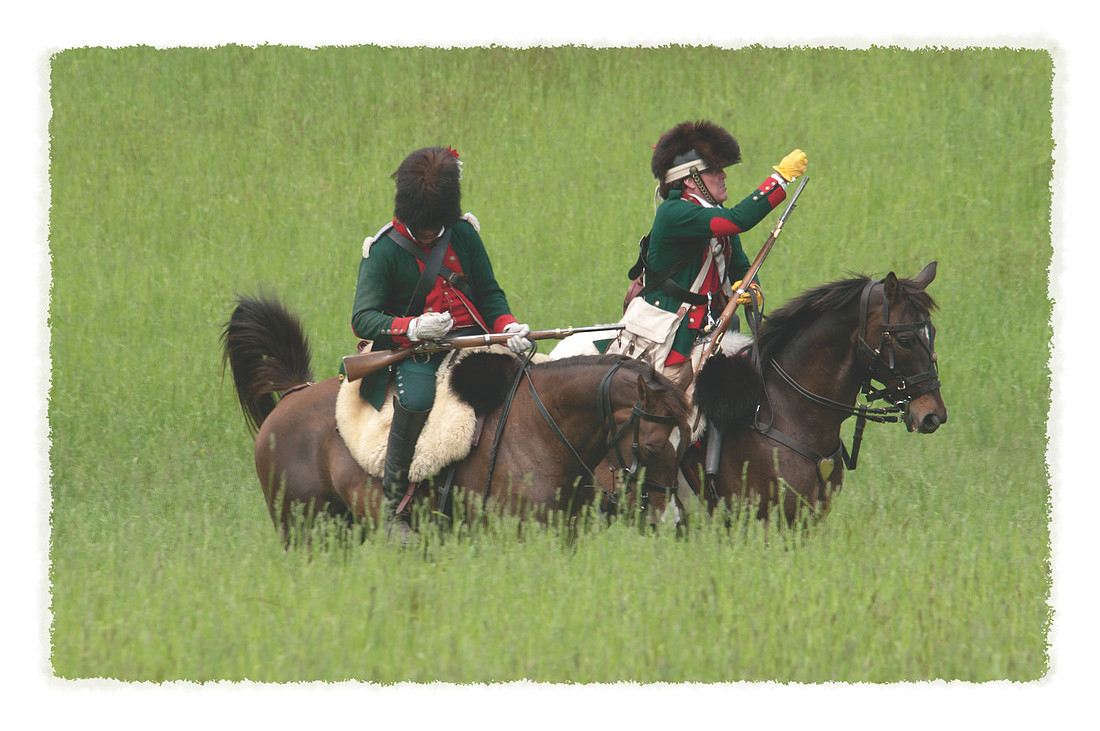
 At most American Revolution reenactments, the action is nonstop and constantly moving. This image, however, conveys something entirely different. To me, it is a scene of calm and relaxation, with no worries and no sense of hurry. I'm especially proud that this photograph, taken at the 2014 Battle of Monmouth reenactment, was published in the February 2015 issue of Early American Life magazine.
On the surface, it's a simple photograph: two dragoons, or cavalrymen, loading their muskets. What draws me to the image is the striking color contrast. The rider in green stands beside a rider in red, and because green and red are complementary colors, they create a strong visual tension when placed next to each other.
Beyond the historical subject matter, it is this interplay of color, combined with the quiet, unhurried moment, that makes the photograph memorable to me.
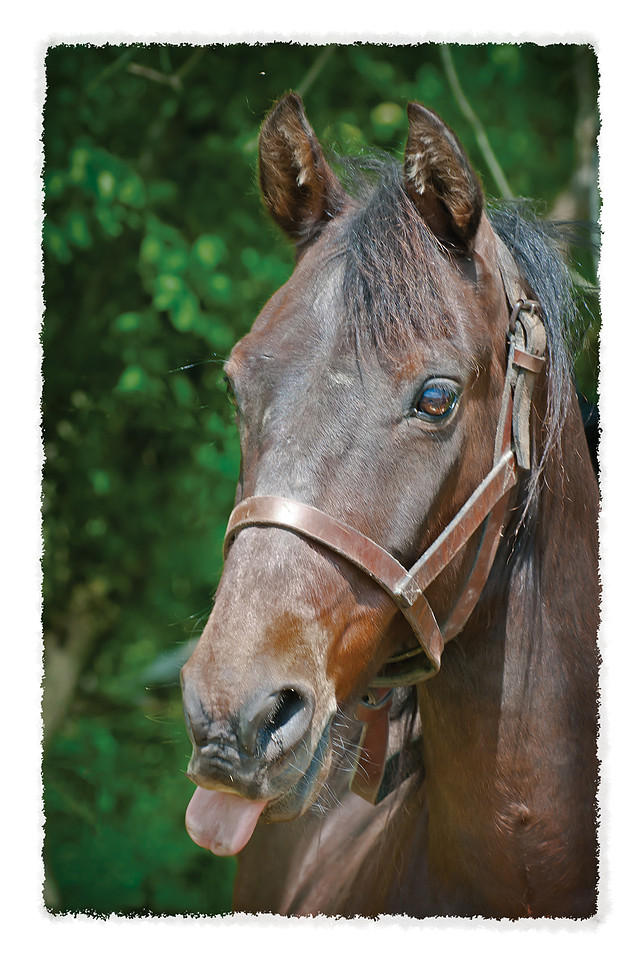
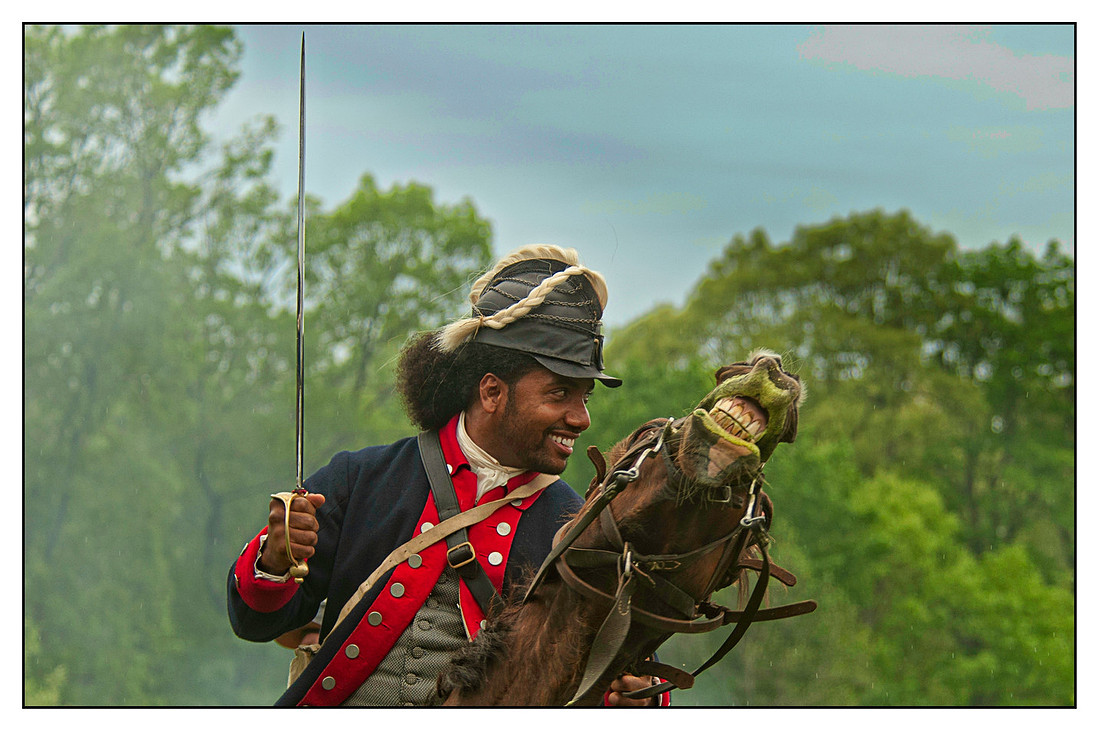
 Photographing animals can be challenging. It often takes patience, persistence, and perfect timing to capture the right expression. This horse was hitched to a line tied to a tree, contentedly grazing and relaxing. With my camera in hand, I walked around quietly, waiting for that special moment.
This horse eventually became frustrated with me lingering nearby and decided to make its feelings known. The expression it gave was priceless. What a look of frustration! It still makes me laugh every time I see it.
Sometimes, you never know what reactions you'll capture from reenactors, or even the animals that take part in these events. This photo was taken during Revolutionary War Weekend at Mount Vernon in 2018, when Continental and British dragoons engaged in a spirited mounted skirmish, exchanging pistol fire and saber attacks. As this dragoon guided his horse through a sharp turn in the heat of the action, I captured the horse's expression at just the right moment. Judging by its expression, the horse seemed less than thrilled with the maneuver!
 With horses as a theme, it was easy to think of a related classic rock anthem. In 1972, a new hit galloped onto the airwaves and quickly became a timeless favorite: "A Horse with No Name" by America, a trio of American musicians living in England. Released in late 1971, the song reached#1 on the Billboard chart, cementing its place as one of the most recognizable folk-rock songs of the era.
Thank you for reading! Blog #120 will be posted on October 15, 2026.
Huzzah,
Ken Bohrer


I’ve enjoyed using ON1 Software on my photos since I began photographing American Revolution reenactments in 2007. Every image on my site is processed with this program. It’s an essential part of my workflow, and I often feature it on my blog because I truly depend on it. I personally edit every photo here, and ON1 remains a reliable post-processing tool. Interested in ON1 Software? Click the image below and enter code AFFILIATE20 to save 20%. Try it—you won’t be disappointed!