Interview with Joe DeCello Quartermaster-43rd Regiment of Foot/2nd PA Regiment Part 1 of 2

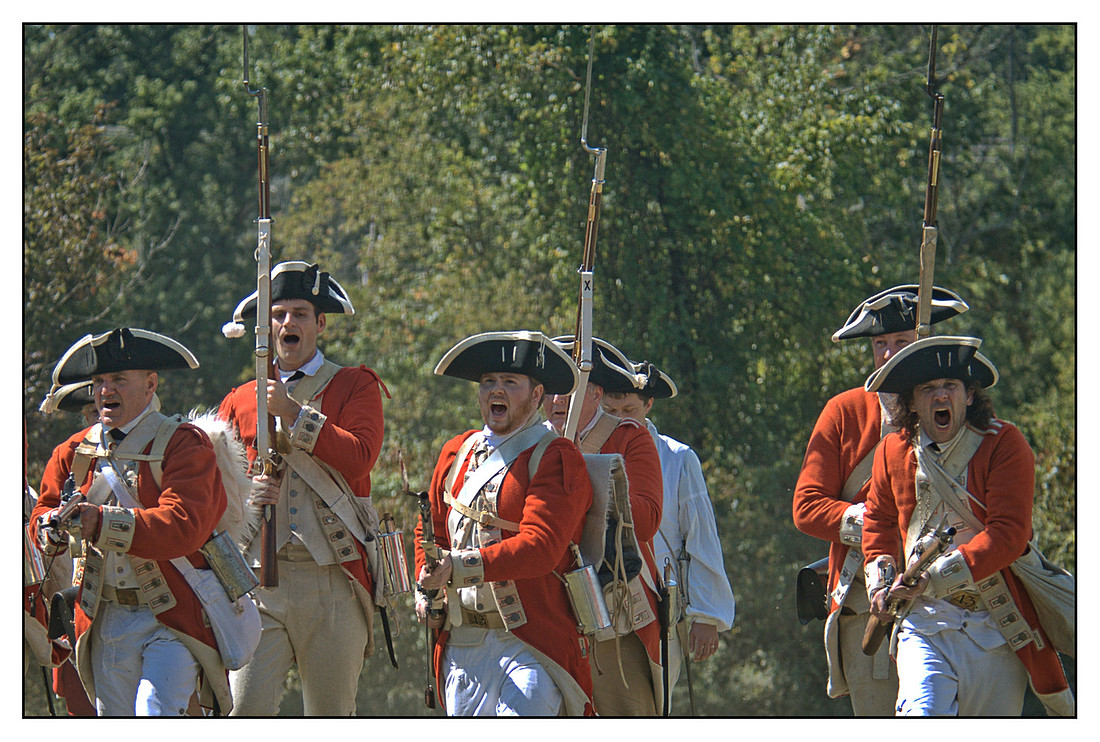
At most of the reenactments and encampments I've photographed over the years, I've been fortunate to capture some powerful candid portraits. Yet this image has always stood out as one of my very best and personal favorites. The dedication and focus in his eyes are unforgettable. Their intensity immediately draws you in and leaves a lasting impression. I captured this photograph during the Skirmish at Indian King Tavern 2025.
What makes this photo even more remarkable is the story behind it. While scouting for a good vantage point at the Battle of Monmouth reenactment in 2025, I turned right and spotted this reenactor, Joe DeCello, Quartermaster, 43rd Regiment of Foot/2nd PA Regiment, chatting with a friend. I did a double take. After introducing myself, I pulled out my phone and showed him this photograph. Curious about the intensity I had captured, I asked him about it. Before Joe could answer, his friend laughed and said, "He's always like that!"
Then, at the most recent Chadds Ford event, as I sat in my car at the end of the day, I spotted Joe again. We chatted for a few minutes, and during our conversation, I thought of featuring him in this blog. When I asked if he would be willing to do an interview, he graciously agreed.
This will be a 2-blog interview. In this blog, I asked 5 questions, and on 11/15 I’ll finish with 5 more questions. Joe's insights and perspective are remarkable. In a rare time that I've known Joe, he's wearing a three-cornered hat and portraying a soldier from the 2nd PA Regiment below. Most of the time, he’s in a British uniform. We can all change!
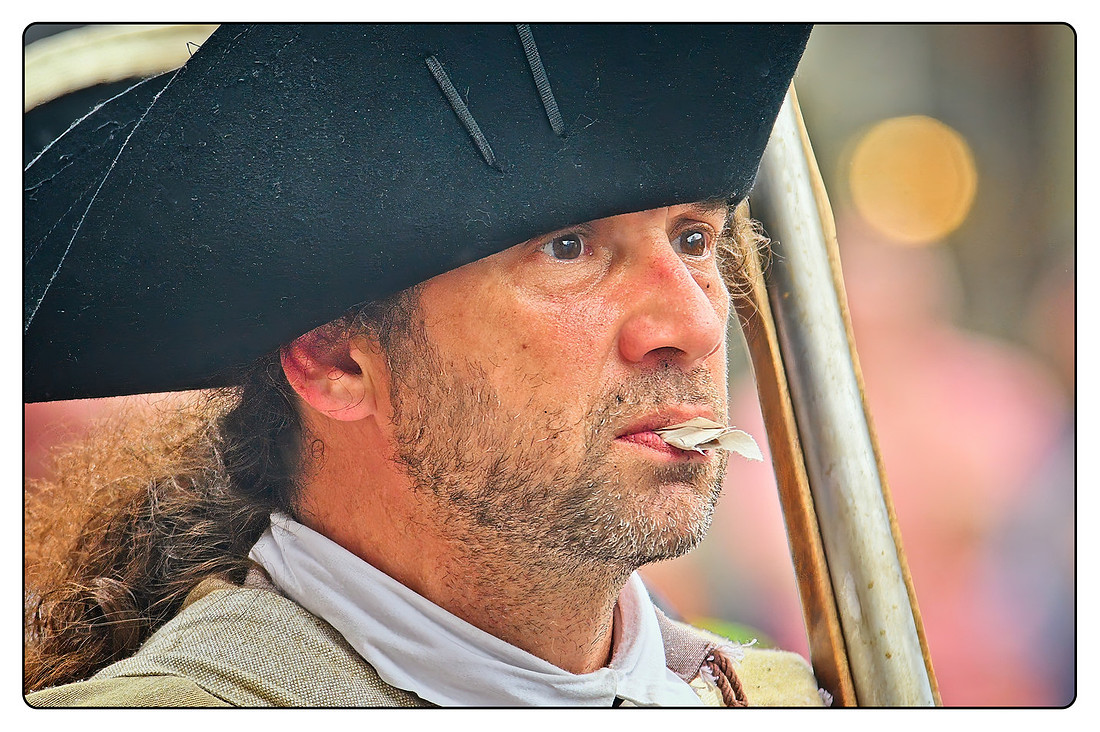
 1) What first inspired you to become an American Revolution reenactor and why did you choose to portray a British soldier?
The first time I had ever considered being a war reenactor was so random and almost melancholic in the way it happened. In 2016, I was a firearm enthusiast and went out to different gun ranges to try out various weapons systems and learn how they work. Around that time, I had gone to a range with my best friend and his father who was a reenactor. He brought a Brown Bess and I fired a few blanks. It was a great day, but I was curious about the firelock and wanted to know more. So, the very next Monday, I was at work and instead of reviewing the normal credit risk guidelines (per my job), I was looking up flintlock rifles. A colleague had walked past and saw my “research”. He stopped, chuckled and said, “flintlocks, eh?”. I told him it was a newer interest of mine, and he recruited me to the 43rd Regiment of Foot / 2nd Pennsylvania Regiment right away. He painted a great picture of a weekend out in uniform, drilling and firing a lot of black powder. Then he told me they have a period accurate, 3-pound field gun and that hooked me. He told me we dressed in both British and Continental uniforms and that enticed me even further. World History has always been a passion since I took a few courses in college. I probably should’ve been a History major but I took long enough to graduate.
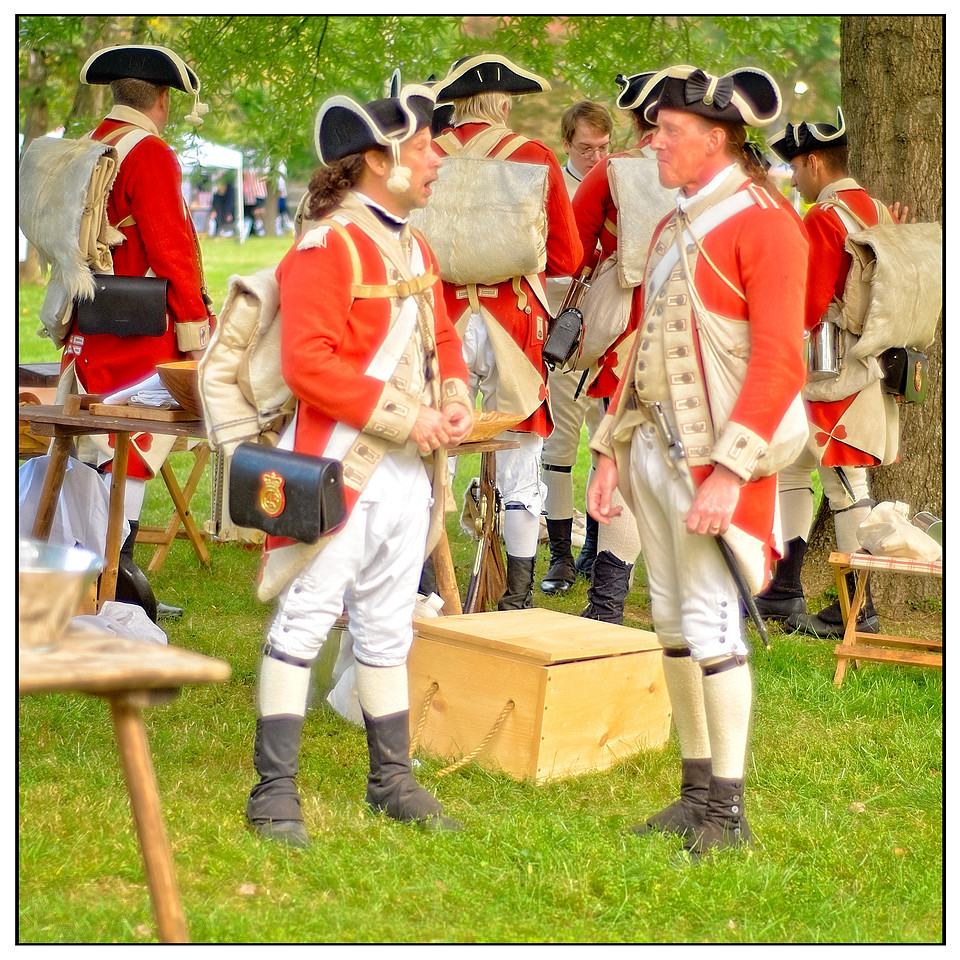 Anyway, there wouldn’t be a story without an antagonist, so I chose a British unit for a chance to tell their side. The story of our liberation and the formation of this country is so unique. It was quite an extraordinary feat breaking away from the largest, most powerful empire at the time. My first event dressing as a British soldier was difficult. I had to learn how to dress myself in the 18th century manner. After I was finally put together enough to get in line, I fumbled my way through the drill. I walked into that event completely oblivious to an entire Manual of Arms that outlined basic movements and details a soldier in the British army would know. King George III rattled his tomb when I wore that uniform that day. Although my performance was painful, it was not stressful or a bad experience at all. Quite the opposite, it was a great experience. The guys in line were patient, the Commanders were “correcting” me and making light of the new guy in line. My Sergeant at the time was hysterical. He is a former Marine, so the jibes and insults were high level comedy. After taking my lumps during the morning drill, I was consoled by camp followers spooning split-pea soup into my chipped wooden bowl while a member of the artillery crew broke down every one of my mistakes in detail. Thinking back, I never thanked that guy for his feedback. One thing was clear, the 43rd became a fast family and I wanted to stick around. It’s been eight years since my first event, I love this hobby and the 43rd / 2nd PA.
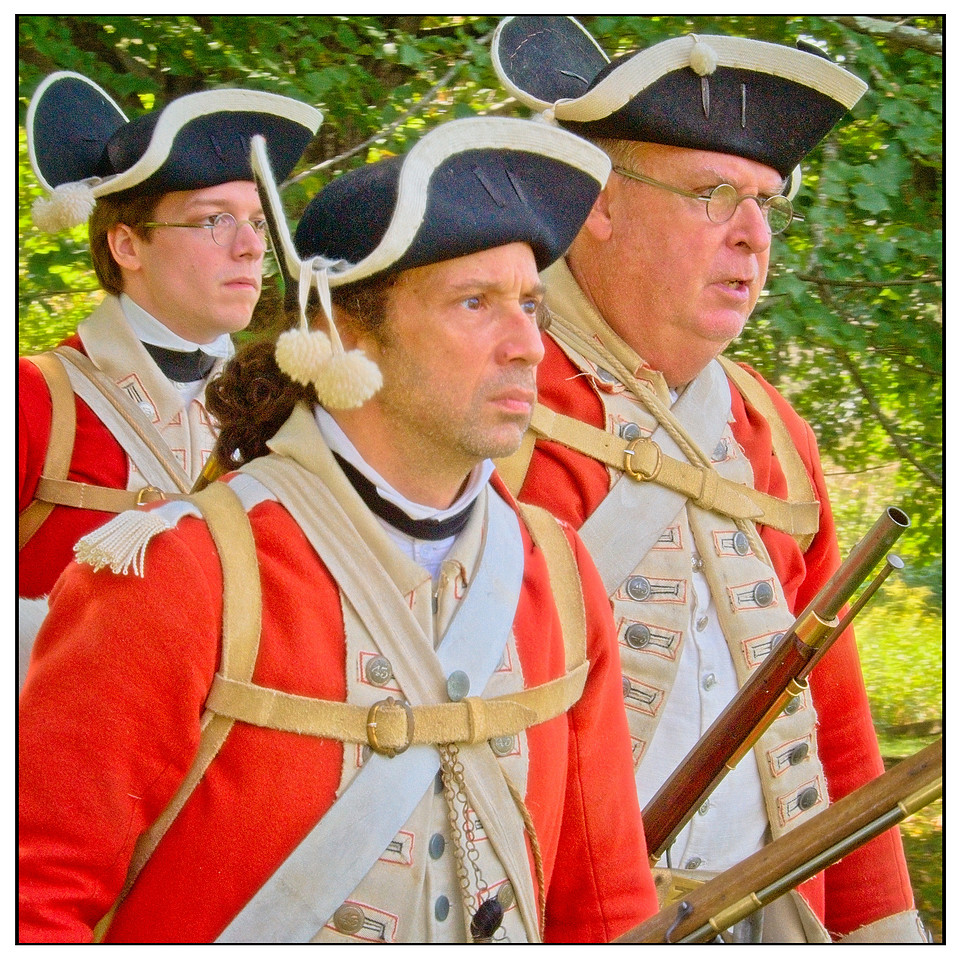 2) What is the biggest misconception spectators have about British soldiers during the American Revolution?
Well, don’t let anyone ever tell you wool is cool and breathable in July, it’s not. I find most of the misconceptions come from a place of curiosity and the spectator wants to know more. Spectators have different reasons for attending reenactments. Whether it’s a family day out or a military veteran, the questions vary by audience. It’s important, as a reenactor, to recognize this and give answers to questions accordingly. You don’t want to give a full lecture to the father holding his baby, so you give short direct answers. The military vet will want to know those details, so you spend more time covering more information with them.
I talk a lot about the musket a lot, it seems to be a focal point among most of the audience. There is a lot of debate over whether the musket was aimed downrange or just pointed in the same direction as the rest of the line. In fact, the answer is both. A full battalion firing a volley sends a terrifying curtain of lead downrange. Anything in the path of that curtain is in fatal danger. Knowing that, there is no need to aim. However, if you are not in a line and you are in cover behind a rock, you will likely have to aim at your target to neutralize any danger. Such is the case with Light Infantry units who scout ahead of the main battle lines. It’s also debated whether the bayonet lug on the end of a musket was also used as a sight. There weren’t a lot of muskets or rifles at the time with the lug located on the underside of the barrel, it’s not a coincidence. There are so many misconceptions I could go on about including British soldiers sympathizing with the colonists. They were loyal to the King, of course, but understood that the Americans were taxed with no representation in Parliament. Americans weren’t foreigners, they were fellow Britains. In many cases, soldiers and the Americans had family in the same counties back in England.
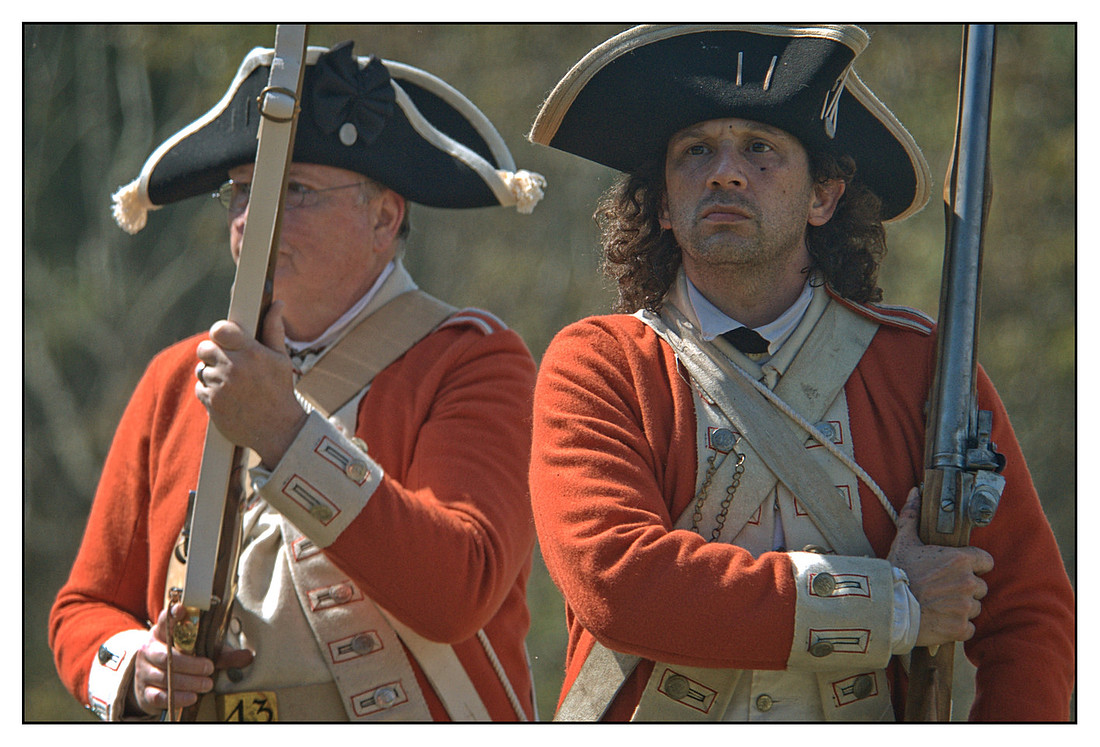 3) How does participating in a battle reenactment compare to what the actual soldiers may have experienced in the 18th century?
I almost feel like I could write a book on this subject alone. There is no comparison to today’s reenactor and the actual soldiers we portray. That was a hard life to lead and there were not a lot of comforts like what we have today. It’s already unfathomable to the youth that there wasn’t anything to plug in that far back in time but for a reenactor and history enthusiast, it goes much deeper. Our work throughout one weekend couldn’t compare to a year’s long campaign. I wake up in a warm bed and eventually go to sleep in a warm bed somewhere inside at the end of the day/weekend. That soldier left his warm bed and slept on the ground in a blanket stamped with the King’s mark for years while the rebellion lasted. I eat as much as I want the morning of a reenactment while that guy took a few bites of bread and passed the rest onto the man next to him. When my drummer signals parade, I do not feel the dread of possible death. My best friend goes down in the heat of the fight, I know he is going to get back up in a few minutes once things are quiet again. The only blood I shed during a reenactment is when I cut my finger on my flint. I carry a bayonet but have no worry of taking a direct score to my midsection sentencing me to a horribly slow and painful death. I can see our 3-pound field gun firing a blank but could never truly imagine grape shot tearing through a line at close range. I march a lot during our events but never come close to the forty-mile round trip the 43rd Regiment made during the skirmishes at Lexington and Concord. The efficiency and speed of that finely tuned military moved so much faster than our guys do today. One of us might catch a cold at the end of a weekend but that is much more enjoyable than Smallpox or Typhoid. In summary, I could attempt to fully immerse myself in this hobby. I could learn an accent, create a profile based on a real British soldier from the time and live “just as they did” during any given event. I could eat the food, sleep under a lean-to, fire four shots under a minute and have the stamina of a Roman soldier running from Marathon but I could never hold a candle to what those men and ladies, on both sides, endured during war in the 18th century.
 4) What piece of equipment, uniform item or weapon do you find most interesting, and why?
The uniform itself is impressive to me. I’ll be the first to admit the breeches do not flatter my figure like modern-day pants, but I do like the final look and fit of the uniform. My favorite piece of equipment is my musket. I heard about people developing relationships with their cars or some farmers having a weird connection to their tractor or truck and I couldn’t understand it until I got my musket. I bought my first and only musket early in my reenactor career. I learned how to fire and clean that musket and I am diligent in making sure it’s well cared for. After a year in the hobby, I ended up out of work for a time and had to consign the musket back to my Quartermaster, so I lost it for a short while. Once I got my feet back under me, I bought that musket back and we’ve been together ever since. I know it sounds funny, but I really feel a connection. That musket has seen every stage of my journey as a reenactor thus far and I hope to keep it many years to come.
5) How much time and effort goes into preparing for a reenactment weekend?
The preparation time decreases as you gain experience in the hobby. At first, I spent hours trying to prepare my gear and shine my brass every time there was an event. I learned there should be a yearly deep clean of all the gear and then light maintenance before an event. Time is valuable to all of us so it’s important to be efficient when gearing up for a weekend. You can easily spend hours rolling cartridges so it’s important to space that out. Instead of rolling three hundred cartridges in a day, just do twenty or so every other day. Next is clothing, it should be a quick load of laundry directly after an event, so your small clothes are clean and ready the morning you get dressed. In short, it should only take an hour or so to truly prepare for a day’s event. Your clothes are already clean and your rounds are rolled so you spend an hour touching up the steel on the musket, do a quick safety check and clear any rust or dust out of the barrel, shine up the bayonet a little, and put your slings in order. Any other prep is usually modern touches like packing a cooler with ice and water for hot days.
Thank you for reading! Blog #122, Part 2 of Joe's interview will be posted on November 15, 2026.
Huzzah,
Ken Bohrer
I’ve enjoyed using ON1 Software on my photos since I began photographing American Revolution reenactments in 2007. Every image on my site is processed with this program. It’s an essential part of my workflow, and I often feature it on my blog because I truly depend on it. I personally edit every photo here, and ON1 remains a reliable post-processing tool. Interested in ON1 Software? Click the image below and enter code AFFILIATE20 to save 20%. Try it—you won’t be disappointed!