Voices of Brandywine 2026-Theatre Company shares stories of the Battle of Brandywine

Last Saturday, Brandywine Battlefield Park hosted Voices of Brandywine 2026. This theatrical program shared personal stories and perspectives connected to the Battle of Brandywine, bringing Revolutionary War history to life for visitors. For me, it was especially meaningful because it was my first event at the park since my knee replacement surgery in April, and the short drive of just over 10 miles made it an easy return to one of my favorite historic sites.
Unfortunately, this battle was not a successful one for George Washington. The Battle of Brandywine, fought on September 11, 1777, was the largest single-day battle of the American Revolution, as General George Washington's Continental Army tried to stop British General Sir William Howe from advancing on Philadelphia. The British won by executing a successful flanking maneuver near Chadds Ford, Pennsylvania, forcing the Americans to retreat and opening the way for the British occupation of Philadelphia.
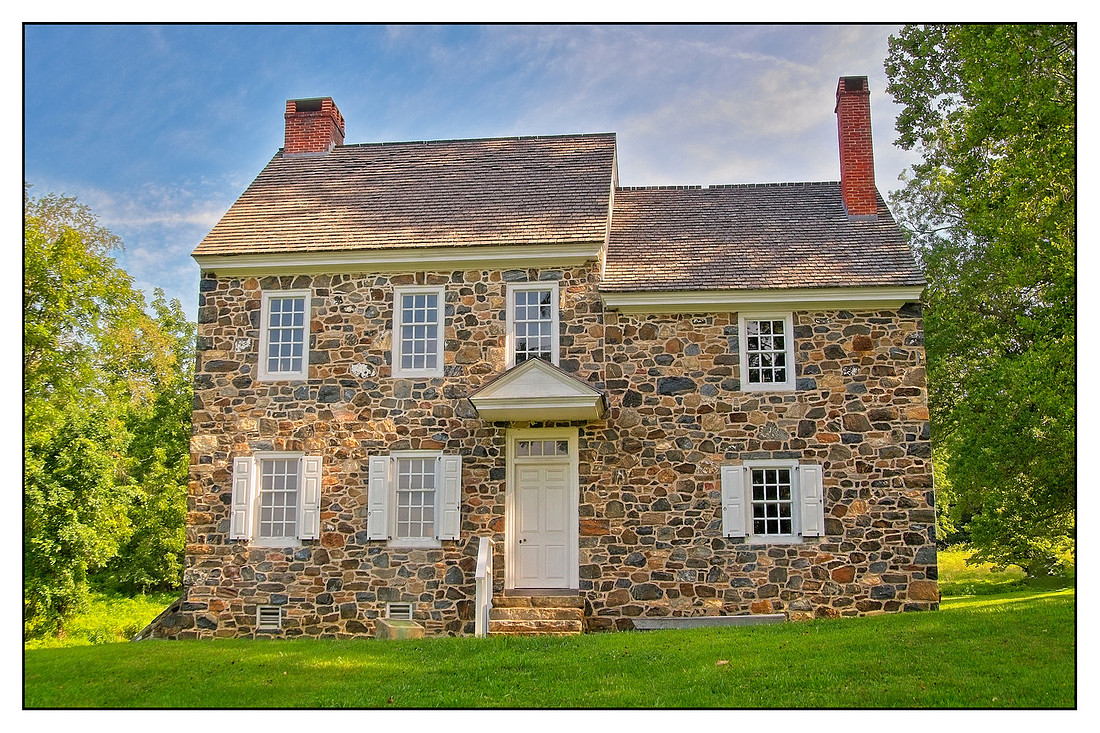
The Ring House at Brandywine Battlefield is a 1731 Quaker farmhouse that served as General George Washington’s headquarters before and during the Battle of Brandywine in 1777. Burned in 1931, it was later reconstructed to its Revolutionary War appearance in 1949, preserving its role as a key planning site for Washington’s war council.
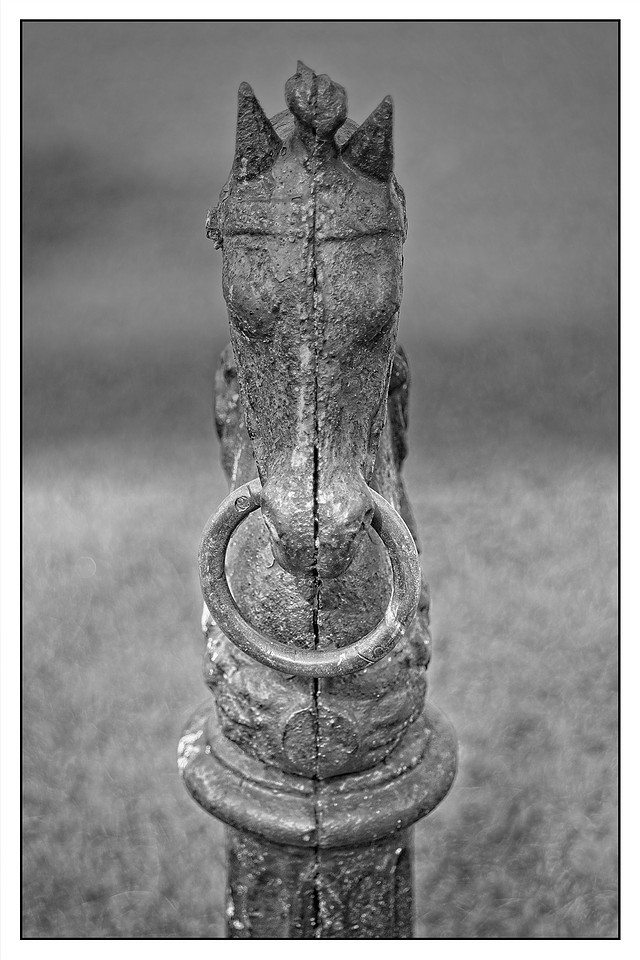
 Sometimes I like to try something a little different and create a unique image rather than taking a standard one. That’s what I did with this horsehead hitching post beside the house shown above. I got as low as I could and photographed it from an upward angle, although that was a challenge since I'm still recovering from knee surgery.
During post-processing in ON1 Photo RAW, I noticed a blown-out sky due to excessive highlights. Rather than fight it, I decided to convert the image to black and white. The conversion transformed the background into something soft, dreamy, and almost fog-like, helping draw attention to the texture and character of the hitching post itself.
In the end, the photograph turned out much better than I had expected and became one of those pleasant surprises that occasionally happen in photography.
On the left side of Gideon Gilpin House (I’ll talk more about it in the next photo), you see a large tent with picnic tables. This is where a living-history theatrical event designed to bring the people of the 1777 Battle of Brandywine to life through short 15-minute dramatic performances. The programming focused on the difficult choices faced by both soldiers and civilians during the Revolutionary War. Rather than simply recounting military history, the performances explored themes such as loyalty, independence, family obligations, sacrifice, and survival during wartime.
Actors, with support from the Delaware Theatre Company, portrayed historical figures including:
- General George Washington
- Captain Johann Ewald (German officer serving with the British)
- Enoch Anderson
- Polly Frazer
- Joseph Townsend
- Dr. Benjamin Rush
The scripts were based on the words and experiences of these individuals, allowing visitors to hear firsthand perspectives from those who lived through the campaign and battle.
I did something differently this time; I put my camera down. Normally I would want to photograph everything that was happening. But I would be so immersed in taking pictures that I couldn't focus on them. I didn't want that to happen this time. I wanted to listen to their personal stories and give them my full attention. I'm glad I did; I learned a lot!
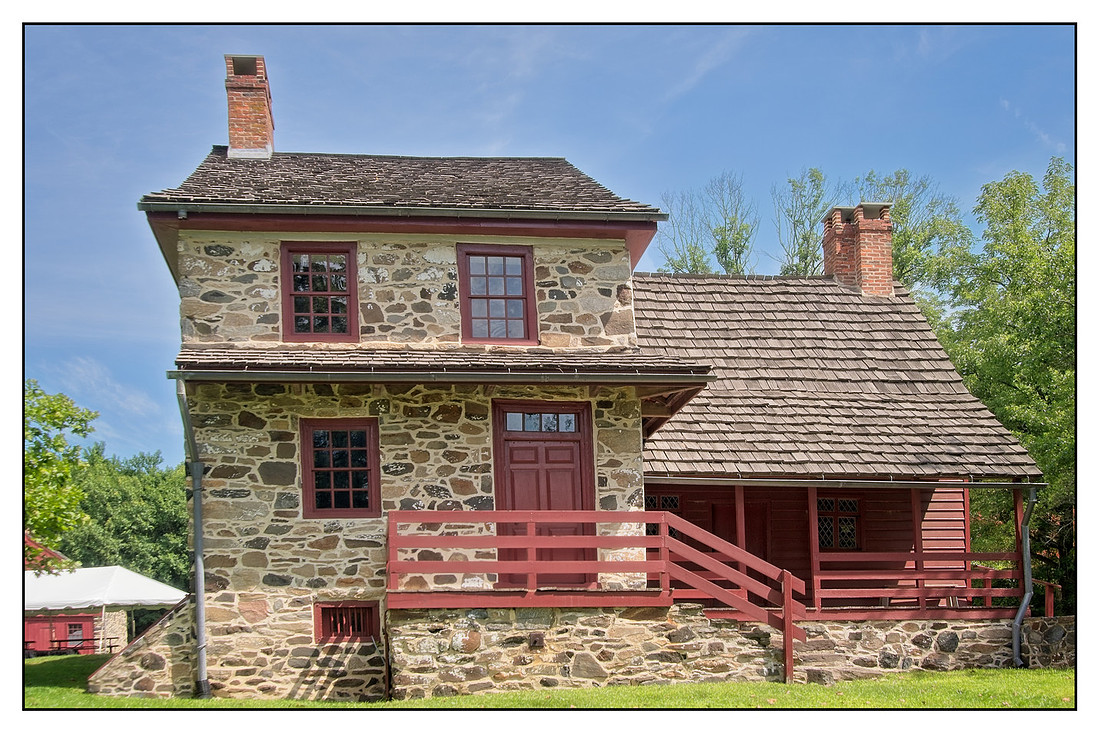 The Gideon Gilpin House is a beautifully preserved 18th-century farmhouse on the Brandywine Battlefield. While the house is often dated to 1754, the stone portion of the structure dates to the mid-18th century. During the Battle of Brandywine on September 11, 1777, the farmhouse stood in the midst of the largest single-day land battle of the American Revolution. It was the home of Quaker farmer Gideon Gilpin, whose family found themselves caught in the turmoil of war as British and Continental forces clashed across the surrounding countryside.
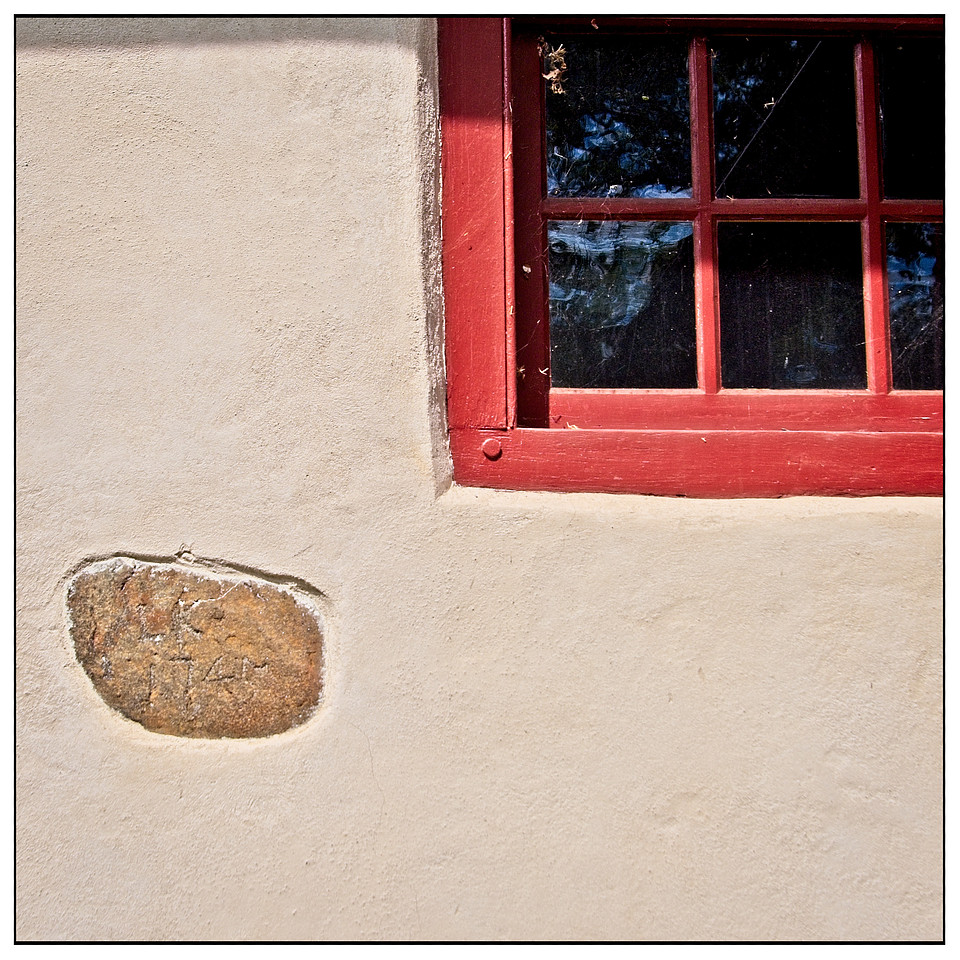
As I walked up the steps toward the front door, I noticed a stone embedded in the whitewashed wall, clearly etched with the year 1745. The date immediately caught my attention. The house is supposedly built in 1754; so how could there be a stone bearing a date nearly a decade earlier?
One possible explanation lies in a common 18th-century Pennsylvania building practice. Families often salvaged and reused carved date stones from older structures, such as barns, mills, or earlier homesteads, when constructing a newer or larger residence. The 1745 stone may have originated from an earlier building on the property or from a structure connected to the Gilpin family.
Perhaps even more remarkable is the fact that the house survived the violence of the battle itself. Following the British victory, Gilpin's farm was heavily plundered, with livestock, crops, and household goods taken by soldiers. Yet the farmhouse endured and remains standing nearly 250 years later.
The house is also traditionally associated with the Marquis de Lafayette, who is believed to have stayed there before the battle. Today, the building is interpreted as "Lafayette's Quarters" at Brandywine Battlefield Park.
 Near the end of my visit, I wanted to meet Major General "Mad" Anthony Wayne of the Continental Army before leaving the battlefield. He was standing near the Visitor Center, speaking with visitors.
Just before I could approach him, a grandmother and her granddaughter, who appeared to be about ten years old, were engaged in conversation with the General. The young girl asked several thoughtful and insightful questions, and Wayne seemed genuinely impressed by how much she knew about the American Revolution.
When it was my turn, I had the opportunity to ask a few questions of my own. First, I asked whether the nickname "Mad Anthony" had ever bothered him. He replied that it really did not. Over the years, he had come to accept it because his soldiers viewed him as intensely strict, fearless, and aggressive, both in enforcing discipline and in leading troops into battle.
I then asked whether he considered Major General Nathanael Greene to be George Washington's most capable commander. His response was immediate and emphatic: "Yes!" He clearly held Greene in the highest regard, recognizing him as one of the most talented and effective generals of the Revolutionary War.
It was a memorable conversation and a fitting way to conclude my visit to Brandywine Battlefield.
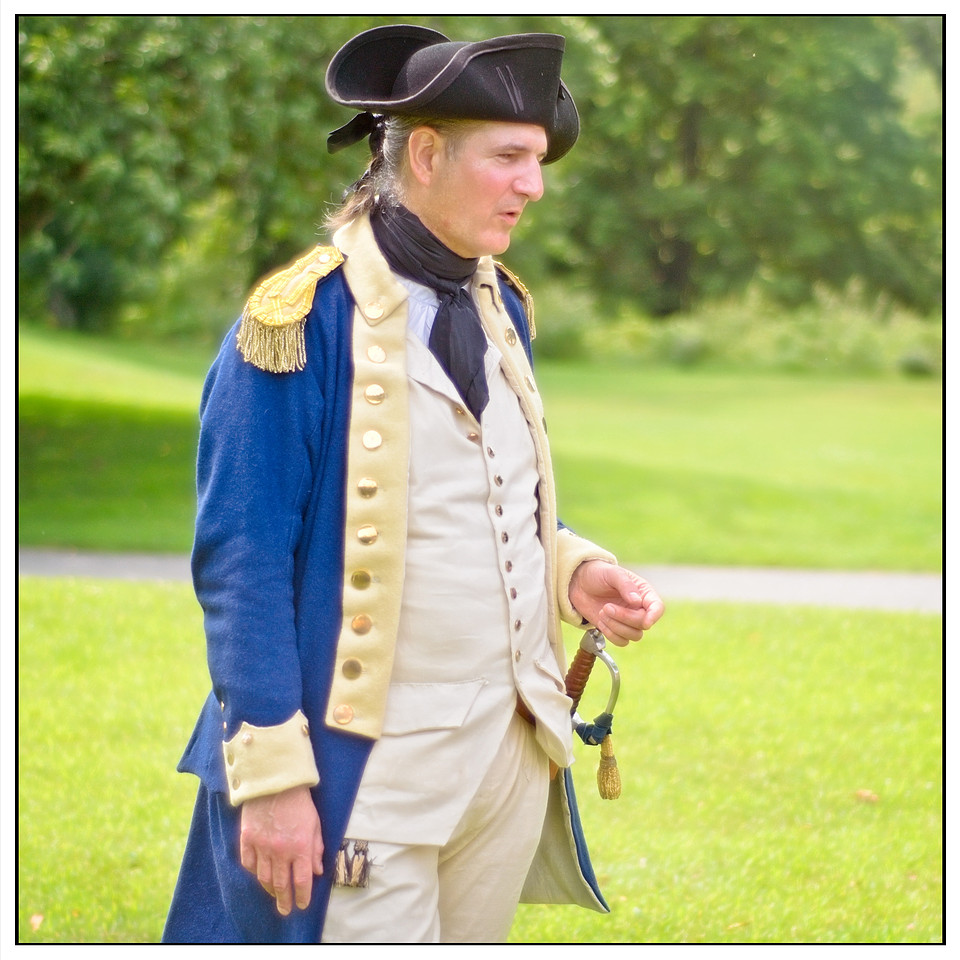 I hadn't visited Brandywine Battlefield Park in many years. As I slowly walked the grounds, I tried to remember if Alexander Hamilton, who was serving as one of George Washington's aides-de-camp, was at this battle. He was!
Then I couldn't help but wonder what Hamilton would make of the Broadway musical phenomenon that bears his name. I suspect he would have been delighted by the success of a production that turned him into one of the most recognizable figures of the Revolutionary era. He might even have appreciated the irony that, centuries later, his greatest popularity would come not from his financial system, but from a musical. The thought brought a smile to my face as I continued my walk across this historic battlefield.
Thank you for reading, today's my birthday-August 15! Blog #117 will be posted on September 1, 2026.
Huzzah,
Ken Bohrer


I’ve enjoyed using ON1 Software on my photos since I began photographing American Revolution reenactments in 2007. Every image on my site is processed with this program. It’s an essential part of my workflow, and I often feature it on my blog because I truly depend on it. I personally edit every photo here, and ON1 remains a reliable post-processing tool.
Interested in ON1 Software? Click the image below and enter code AFFILIATE20 to save 20%. Try it—you won’t be disappointed!