Photography is all about Experimentation-Double Exposures

When I take a photograph, that's only the first step in a much longer creative process. Post-processing in ON1 Photo allows me to use my creative vision to transform an image into the final photograph I envisioned. I shoot exclusively in RAW format, which means the camera applies no enhancements when the image is captured.
A JPEG image is different; when the camera saves a photo in that format, it automatically applies adjustments such as color correction, contrast, sharpening, brightness, and noise reduction. The result is an image that usually looks good right out of the camera without requiring much editing.
Most cameras, including smartphones, save images as JPEGs by default. In those cases, the camera has already made decisions about how the final image should look. When I work with a RAW file, I make those decisions myself. Creating a finished photograph often requires numerous adjustments, including cropping, vibrance, sharpening, selective blur, motion effects, and other creative enhancements.
Recently, ON1 introduced a new filter in one of its software updates, and I wanted to see how it could be used creatively. For my experiment, I wanted to use the same image multiple times within a double-exposure composition. I chose this photograph of George Washington viewed from behind. The image was previously published in the February 2015 Early American Life Magazine, and was immediately recognizable, making it an ideal starting point. I then selected several other photographs that reflected Washington's life, legacy, and association with the American Revolution.
To this to have the effect I was wanting to select the other photo that would be identifiable with George Washington. For my first attempt, I chose a photo of him in a Durham boat crossing the Delaware River. How do we know this is his boat? It's because of Blue Star Flag, a blue field with thirteen white six-pointed stars, associated with the headquarters flag of the Commander-in-Chief during the Revolutionary War.
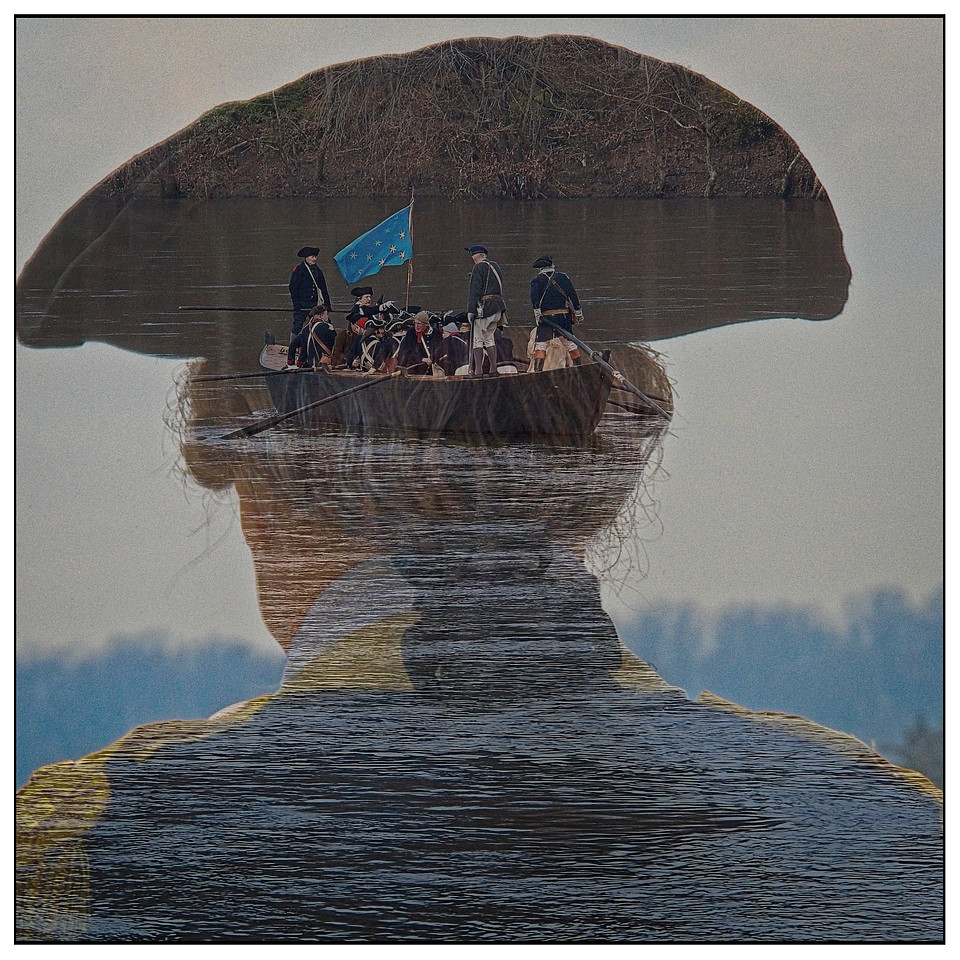
 Double-exposure photography has a fascinating history that dates back to the earliest decades of photography in the mid-1800s. The technique was first discovered largely by accident when photographers reused photographic plates or exposed them more than once, creating overlapping images. By the 1860s, photographers were intentionally using the process to create artistic composites.
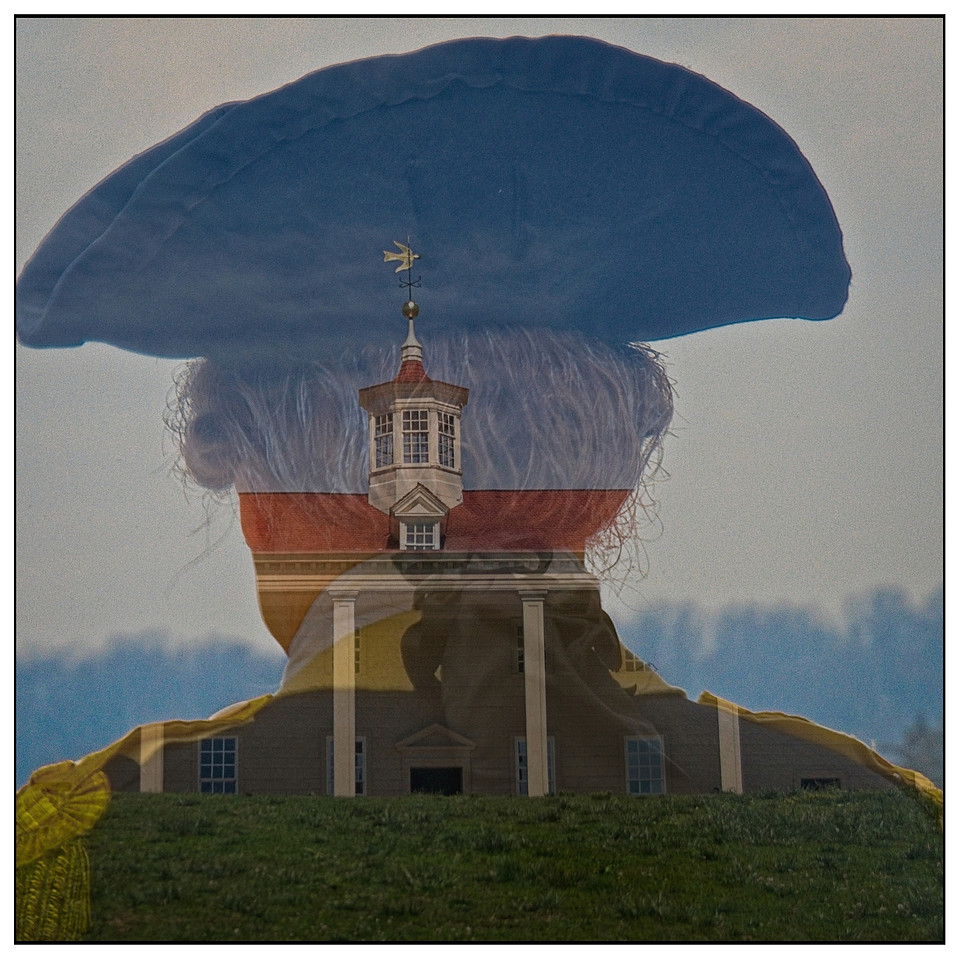
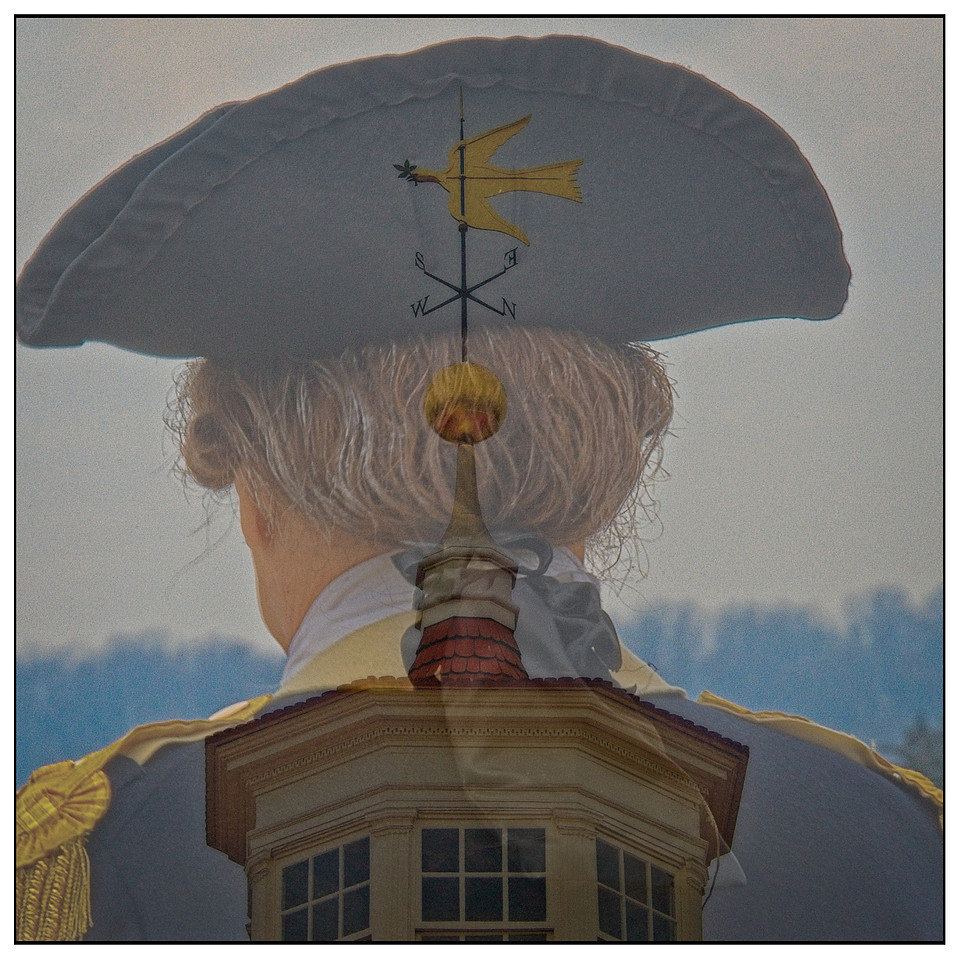
The distinctive cupola atop Mount Vernon rises above the mansion's roofline, crowned by a weather vane that overlooks the Potomac River and the surrounding estate. In this double-exposure image, the tower serves as a symbolic focal point, linking George Washington's silhouette to the home that became both his sanctuary and enduring legacy.
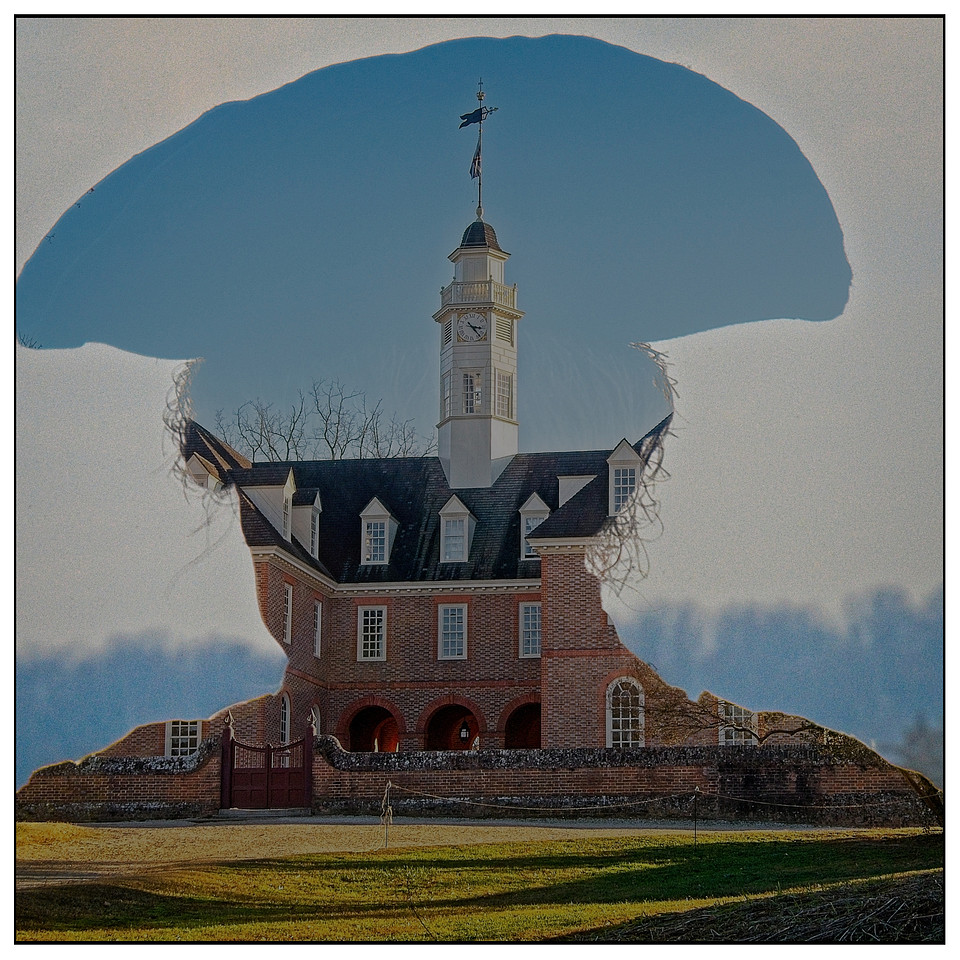
 I selected images that represent significant aspects of George Washington's life and career. In this photograph, the cupola and portions of Colonial Williamsburg's Capitol Building rise above the surrounding rooftops, serving as a distinctive landmark and enduring symbol of civic life in colonial Virginia.
George Washington was intimately familiar with this building and its role in Virginia's government. He served in the Virginia House of Burgesses from 1758 to 1775, frequently traveling to Williamsburg to conduct public business and participate in the colony's legislative affairs. As the center of Virginia's political life, the Capitol reflected the principles of representative government and civic responsibility that shaped Washington's development as a leader and prepared him for the greater responsibilities he would assume during the American Revolution and the founding of the United States.
 The process turned out to be much more challenging than I initially expected. Balancing the individual elements, controlling how the images blended, and creating a composition that felt both seamless and natural required significant trial and error. Even now, I find myself going back and forth on whether I truly like the final result. However, that uncertainty is part of what makes photography so rewarding. Experimentation pushes us beyond our comfort zones, encourages us to learn new techniques, and often leads to creative discoveries we never would have made otherwise.
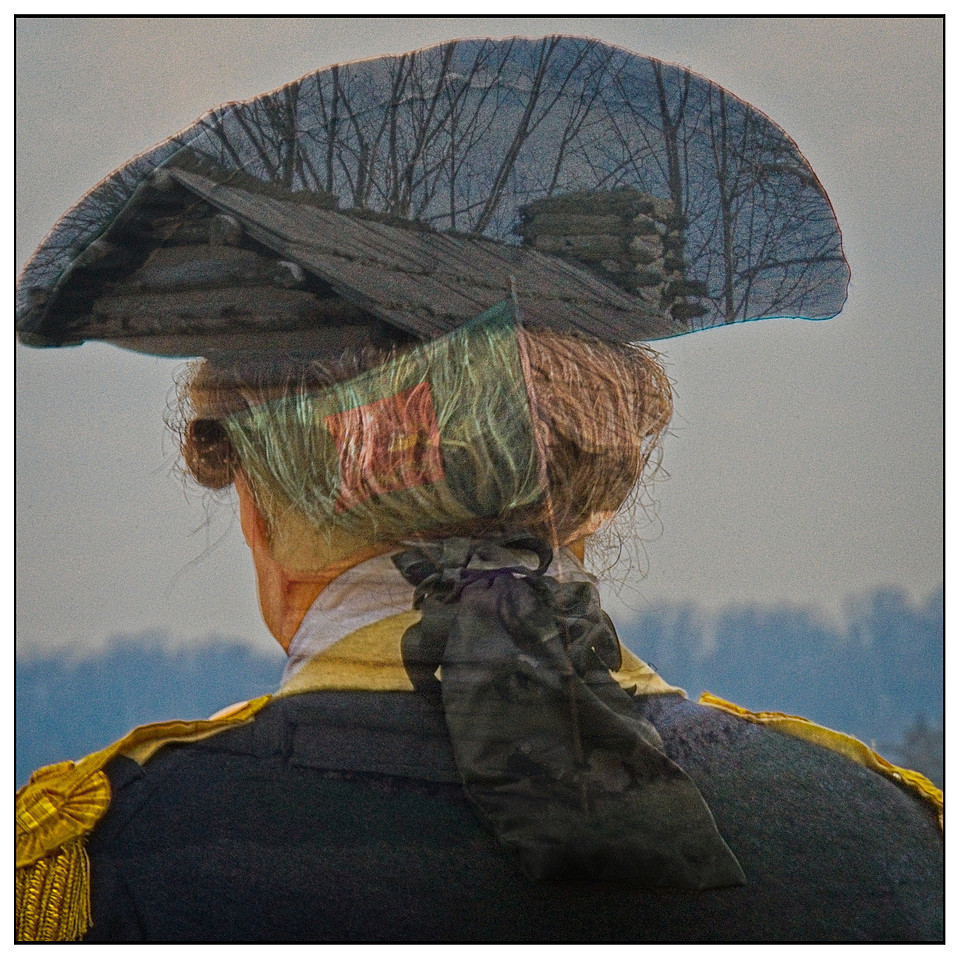
For this double-exposure, I selected one of my log cabin photographs taken at Valley Forge National Historical Park. My original goal was to incorporate another image showing snow falling and covering the ground. However, once together, the final composition appeared washed out and lacked the visual impact I was hoping for. It was a clear reminder that not every creative idea works as planned. After several rounds of experimentation and adjustments, I decided to abandon that version and choose a different image. It reinforced how important trial and error can be in creating a successful photograph.
For my final George Washington double exposure, I chose the golden weathervane at Mount Vernon, which depicts a dove carrying an olive branch, a timeless symbol of peace and hope. Rising above the compass points, it is one of the estate's most distinctive architectural features and a fitting complement to the image.
Whether these photographs become personal favorites or remain part of a learning experience, the journey of creating them was well worth the effort. In the end, the final images were less important than the process itself and the opportunity to experiment, explore, and grow as a photographer. Photography is far from a static art form, especially today. It continues to evolve alongside increasingly powerful post-processing tools that regularly introduce new creative possibilities. Embracing that evolution keeps the craft exciting, and I look forward to discovering where the next experiment will lead.
 As I was writing this blog, I couldn't help but think of one of my favorite 1970s bands, Foreigner, and their classic song Double Vision from the album of the same name. The connection seemed almost perfect. After all, photography and music both capture emotion, tell stories, and fuel creativity. What a great combination!
Thank you for reading! Blog #118 will be posted on September 15, 2026.
Huzzah,
Ken Bohrer


I’ve enjoyed using ON1 Software on my photos since I began photographing American Revolution reenactments in 2007. Every image on my site is processed with this program. It’s an essential part of my workflow, and I often feature it on my blog because I truly depend on it. I personally edit every photo here, and ON1 remains a reliable post-processing tool.
Interested in ON1 Software? Click the image below and enter code AFFILIATE20 to save 20%. Try it—you won’t be disappointed!