
Latest Spring Encampment at Jockey Hollow 2026

Three days before my left knee replacement surgery, I attended the Spring Encampment at Jockey Hollow. It’s always a fun and meaningful event for me. Each visit reminds me that Jockey Hollow—Where a Forgotten Army Persevered to Win America’s Freedom by Rosalie Lauerman—features three of my photographs in the Visitor Center gift shop. That’s something I’m incredibly proud of.
The drive from the Philadelphia suburbs to Morristown, NJ, took longer than usual because of traffic, and my knee didn’t help. Still, I met longtime photography friends and connected with new faces, making the trip worthwhile.
I didn’t stay as long as usual and missed the formation drill. Even so, I captured interesting images—proof there’s always something worth photographing at Jockey Hollow.
I look forward to returning after surgery, when moving around with my new knee will be easier. It’s remarkable to live in a time when we can keep going by replacing worn-out parts. Lately, I joke that I feel like a used car with parts being swapped—but I’m grateful for the tune-up and excited for the miles ahead.
This photo makes me smile. I wondered what the commander could have been pondering so seriously in that moment. At the same time, the scene felt completely different—it looked like a line of baby ducks trailing their mother.
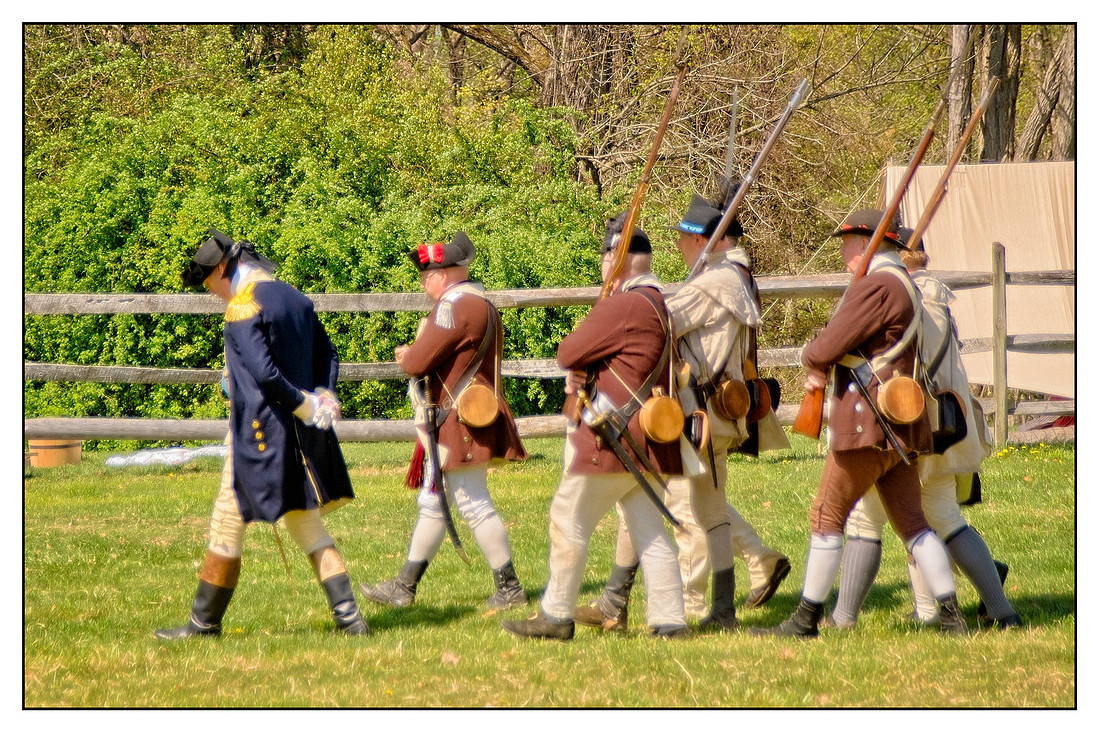
 My photography goal at any event is to capture one remarkable portrait. Walking through the campsites almost ensures some compelling photo opportunities. About half the time, I ask permission before photographing, while the other half I depend on spontaneous, candid shots—like this one. This approach sets the foundation for the moments I strive to capture.
In particular, capturing an authentic moment in real time feels deeply satisfying. When I request a photo, the pose or expression can sometimes appear unnatural, especially since many are uneasy about being photographed. For this reason, those unrehearsed, genuine moments feel most rewarding to me.
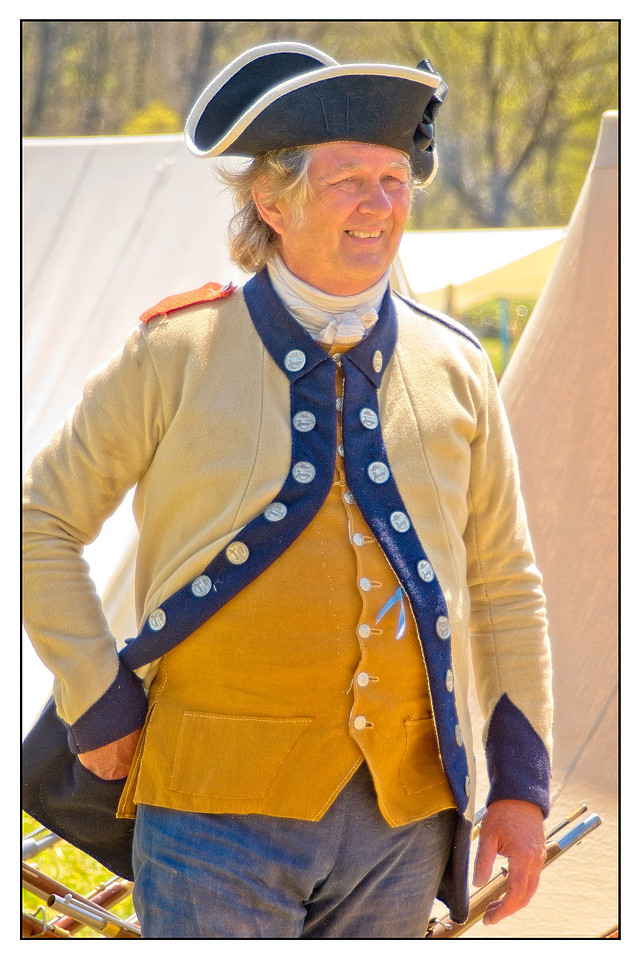
The standard photography technique of leading lines really makes this image work. The alignment of the soldiers and their muskets draws your eye cleanly across the frame, creating a strong sense of structure and unity. What stands out even more is how similar their expressions and overall demeanor appear—it reinforces that feeling of cohesion and discipline. Altogether, those elements combine to make this a very strong and compelling photograph.
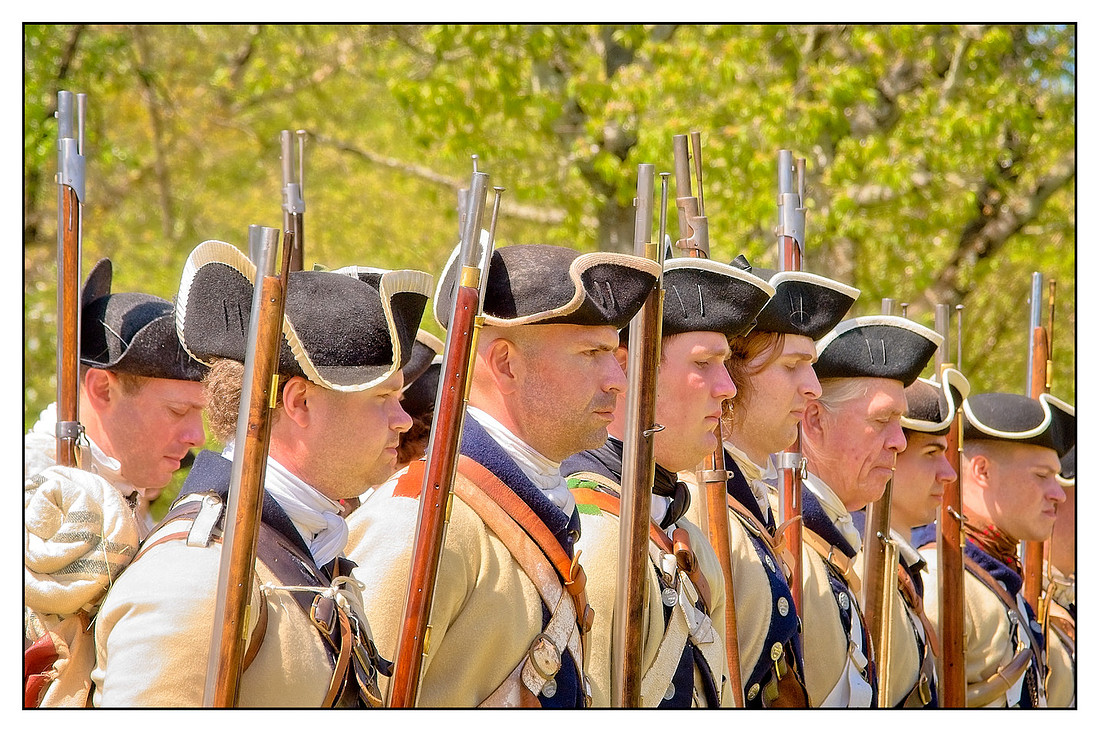 Sometimes, for impact, I turn to ON1 Software filters to add a dynamic edge to an image. That’s exactly what I did here. The soldiers were simply stacking their muskets after formation. On its own, this action doesn’t always make a compelling photograph.
I used a radial blur effect to convey immediacy and movement. These qualities weren’t present in the original capture. The result transforms a routine moment into something far more engaging and powerful.
Post-processing is now essential to my creative process. Experimenting with these techniques isn’t just about doing something. It’s about reimagining the scene and introducing a creative process that the original shot lacks. In many ways, creative exploration like this is now half the fun of photography.
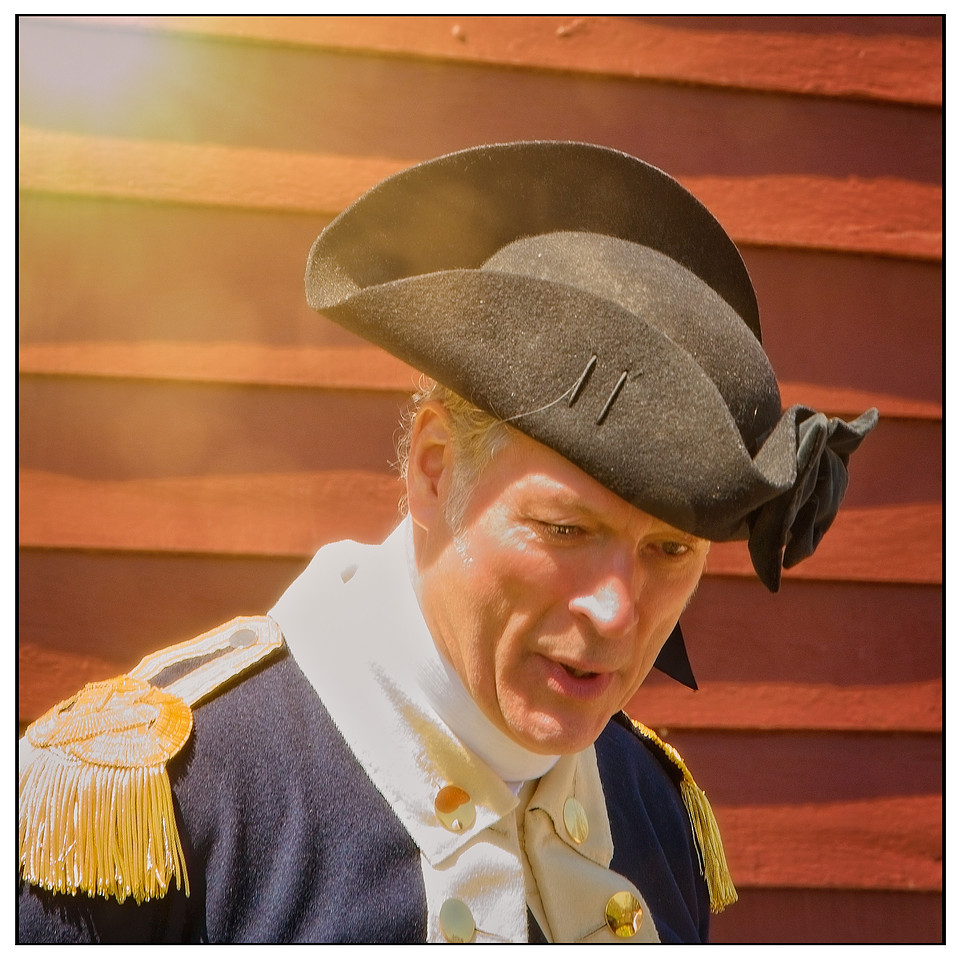
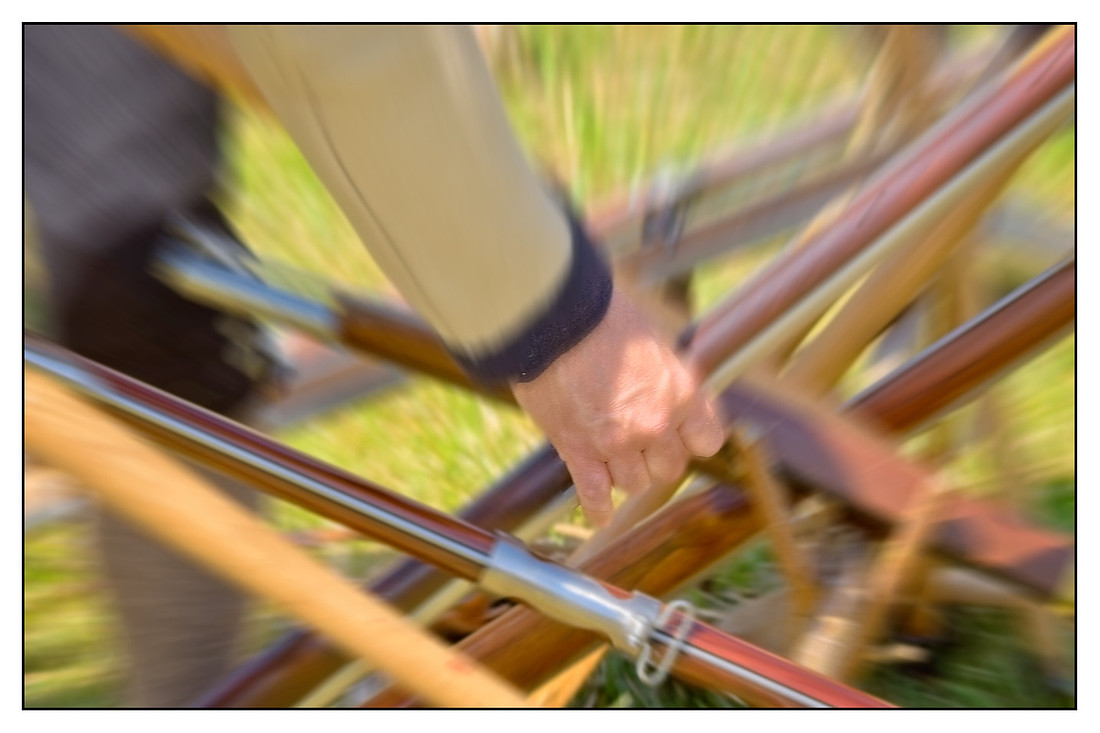 At any event, George Washington naturally becomes the focal point—you almost always come away with at least one compelling image of him. As I rounded the corner near the Henry Wick House, built around 1750, I spotted him speaking with a group of children. I quickly fired off a series of shots, and this frame stood out as the strongest.
The light plays a decisive role in the image. A shaft of concentrated sunlight falls directly on him, functioning like a natural spotlight. It isolates the figure from the surroundings, heightening a sense of authority and presence while lending the scene a painterly, historically evocative quality.
Near the end of the Revolutionary War, King George III reportedly remarked that if George Washington relinquished power and returned to private life, “he would be the greatest man in the world.” At a time when most leaders clung to authority, Washington did the unthinkable—resigning his commission in December 1783 and quietly returning home. Through this act, Washington set an enduring example, suggesting that true greatness is defined more by humility and the ability to surrender power than by retaining control.
A perspective on greatness contrasts with a song from my teenage years—never a hit single. On Ringo Starr's 1973 album, the John Lennon–written “I’m the Greatest” playfully embraces ego and celebrity with a tongue-in-cheek parody of self-importance. In contrast, Washington’s greatness stemmed from surrendering power. Though Lennon’s song satirizes the illusion of greatness, it reminds us that true greatness lies not in boasting but in the humility to step back. This humility is why Washington’s example was essential to founding our nation, as his actions set the standard for leadership rooted in self-restraint rather than self-promotion.
 I’ve enjoyed using ON1 Software on my photos since I began photographing American Revolution reenactments in 2007. Every image on my site is processed with this program. It’s an essential part of my workflow, and I often feature it on my blog because I truly depend on it. I personally edit every photo here, and ON1 remains a reliable post-processing tool.
Interested in ON1 Software? Click the image below and enter code AFFILIATE20 to save 20%. Try it—you won’t be disappointed!

Click here for the Spring Encampment at Jockey Hollow 2026 Photo Gallery!
Thank you for reading! Blog #112 will be posted on June 15, 2026. Be safe & well!
Huzzah,
Ken Bohrer

