Some American Revolution Reenactment Bayonet Photos

My mind wanders from one topic to another. It always has, even back in grade school. I'd be working on an assignment when, suddenly, my thoughts would drift somewhere completely different. Concentrating on a single task for long periods has never come naturally to me. That's why I'm always amazed by musicians who can practice their instruments for hours at a time. Not me.
So why am I mentioning this?
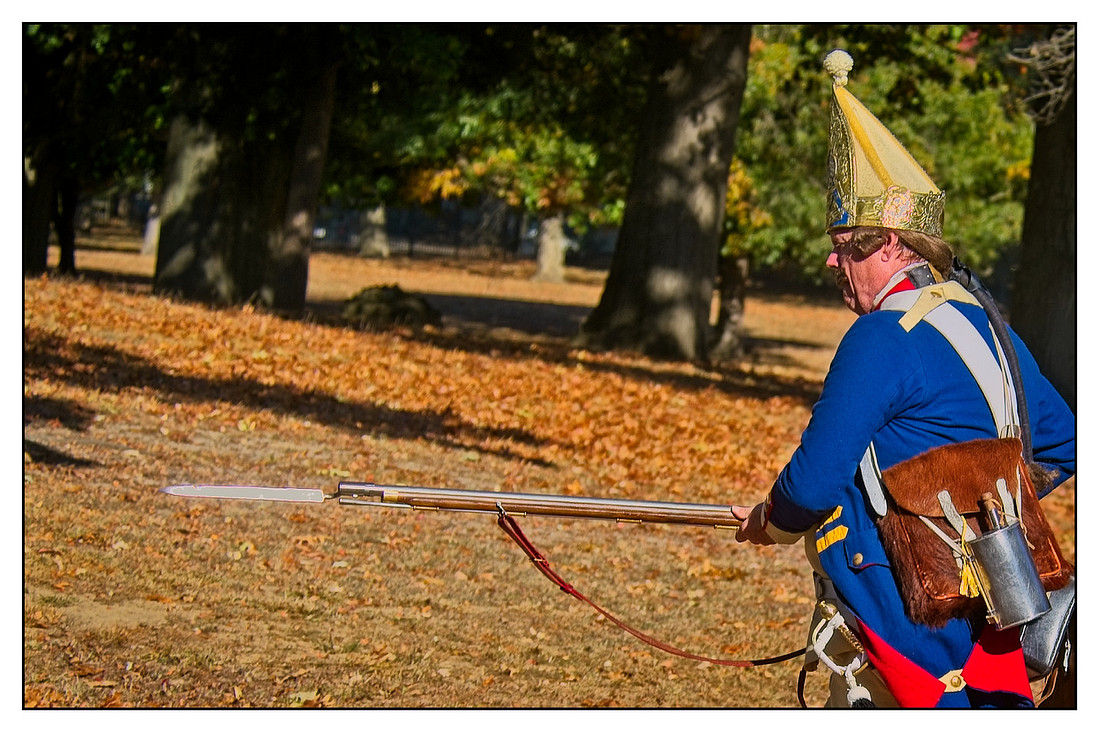
While reviewing my collection of more than 12,000 American Revolution reenactment photographs for a previous blog, I noticed something interesting. Many of the images had one thing in common: the bayonet was the central subject. One thought led to another, and before long I had the idea for this blog.
So, what exactly is a bayonet? During the American Revolution, soldiers carried long steel bayonets that attached to the muzzle of a musket, transforming the firearm into a spear-like weapon for close combat. Bayonets played an important role on 18th-century battlefields because they allowed foot soldiers to charge enemy lines, defend positions, and continue fighting after firing their muskets.
For many years, I believed bayonet wounds were among the leading causes of death during the Revolutionary War. I was surprised to learn otherwise. Disease was by far the greatest killer of soldiers, followed by deaths suffered while held as prisoners of war. Battlefield fatalities caused by musket fire and artillery greatly outnumbered those caused by bayonets. Although bayonets are strongly associated with Revolutionary War combat and remain one of its most recognizable symbols, musket balls accounted for far more casualties on the battlefield.
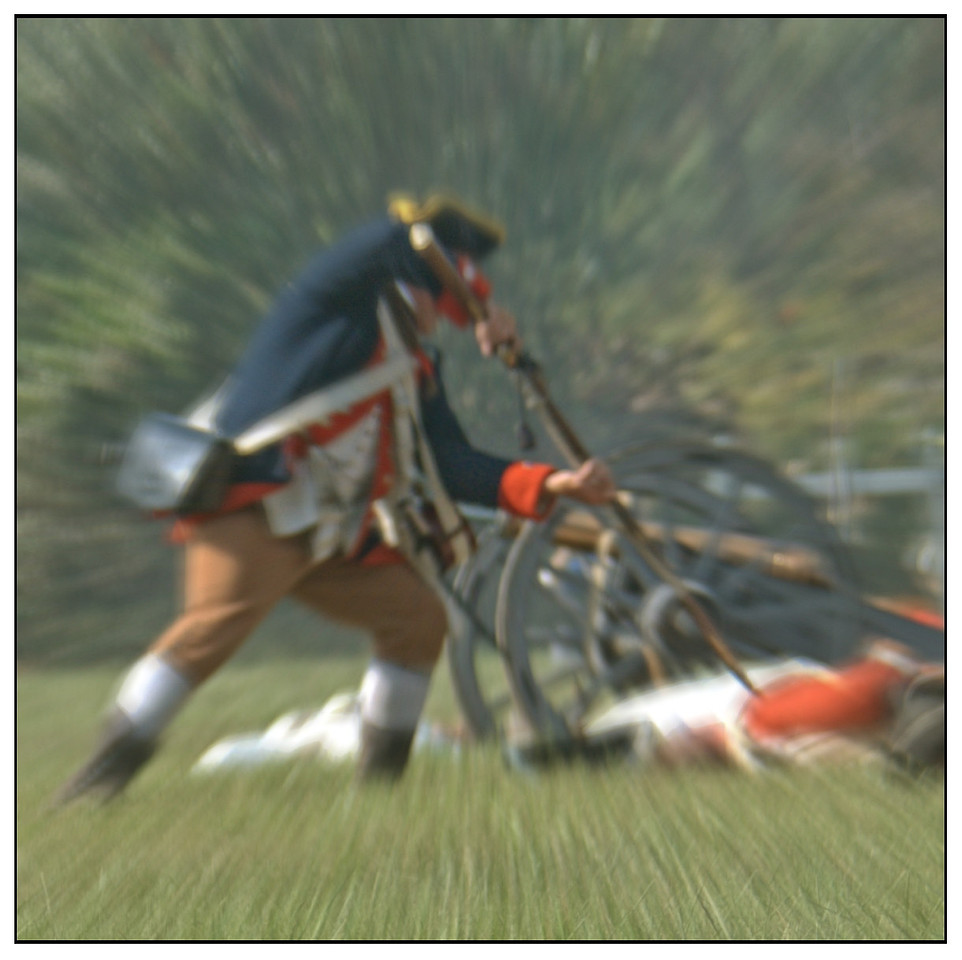
The photograph below, taken during the 2021 Battle of Brandywine (Chadds Ford) reenactment, gave me chills when I first saw it. To me, it resembles an authentic wartime photograph. To enhance the sense of action and movement, I applied a radial blur filter in ON1 Photo RAW to the soldier with the bayonet, killing his enemy.
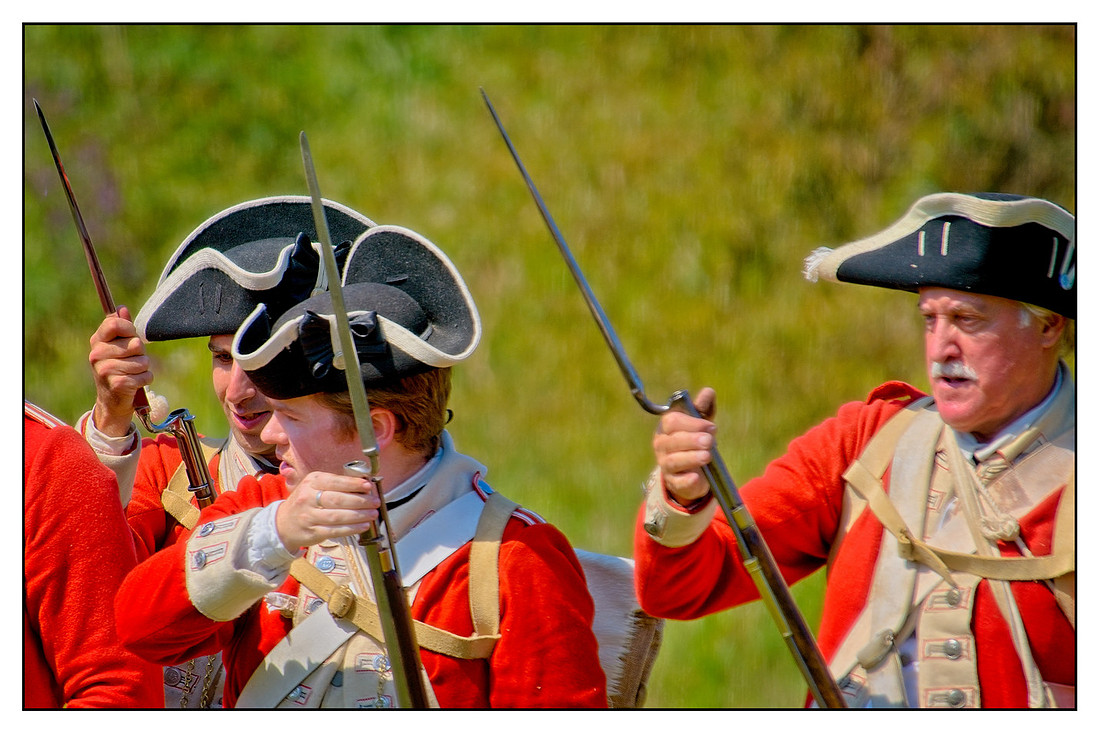
 An American Revolutionary War bayonet was a long, triangular steel blade that attached to the muzzle of a musket, transforming the firearm into a spear-like weapon for close combat. Beyond its practical use on the battlefield, the bayonet also served as a powerful psychological weapon, often employed during charges when opposing forces closed to very short range. In this image, British soldiers can be seen fixing their bayonets in preparation for battle.
 During the American Revolution, the bayonet was often more powerful as a psychological weapon than as a physical one. The sight of disciplined soldiers advancing with fixed bayonets could be enough to break an enemy's nerve, causing men to retreat before the two sides ever came to close combat. Its greatest value was the fear it inspired and the confidence it projected, making opponents question whether they could stand their ground.
Every year at Jockey Hollow, after the soldiers complete their drill, they fix bayonets and charge toward the spectators gathered behind a split-rail farm fence near the Wick House. Even though everyone knows it is only a demonstration, the reaction is always the same: a chorus of gasps, nervous laughter, and wide-eyed amazement as the line surges forward with steel flashing in the sunlight. It is easy to understand the psychological impact such a charge must have had on eighteenth-century soldiers. If a reenactment can still provoke such a reaction today, I can only imagine the fear and uncertainty felt by men facing an actual bayonet charge on a Revolutionary War battlefield.
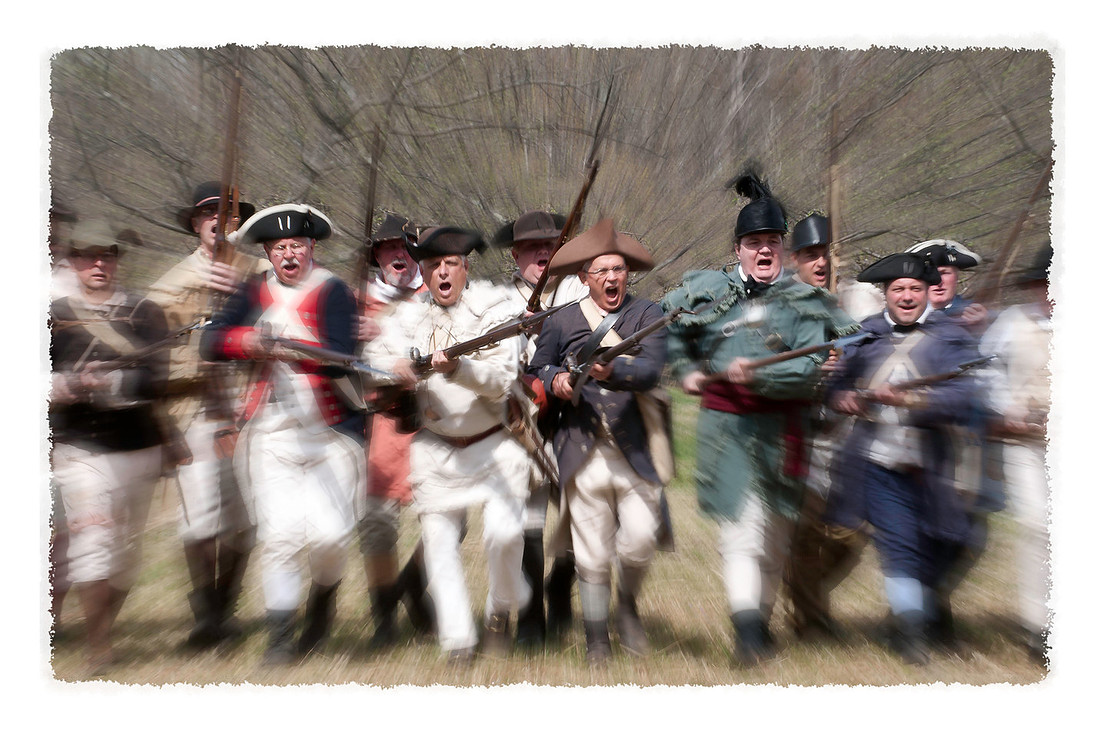 At many reenactments, the British troops finish the battle with a bayonet charge, sweeping the opposing force from the field. This tactic often decided the outcome of real 18th-century battles, making it one of the most dramatic moments to recreate. It is an impressive spectacle to watch, especially since many reenactments take place later in the day as the sun approaches the horizon. The sunlight often glints brightly off the bayonets, creating a striking visual effect. For this photograph, I used a panning technique to emphasize the sense of movement. I am very pleased with the result. The challenge with panning is that you never really know if you've captured a successful shot until you download and review the images afterward.
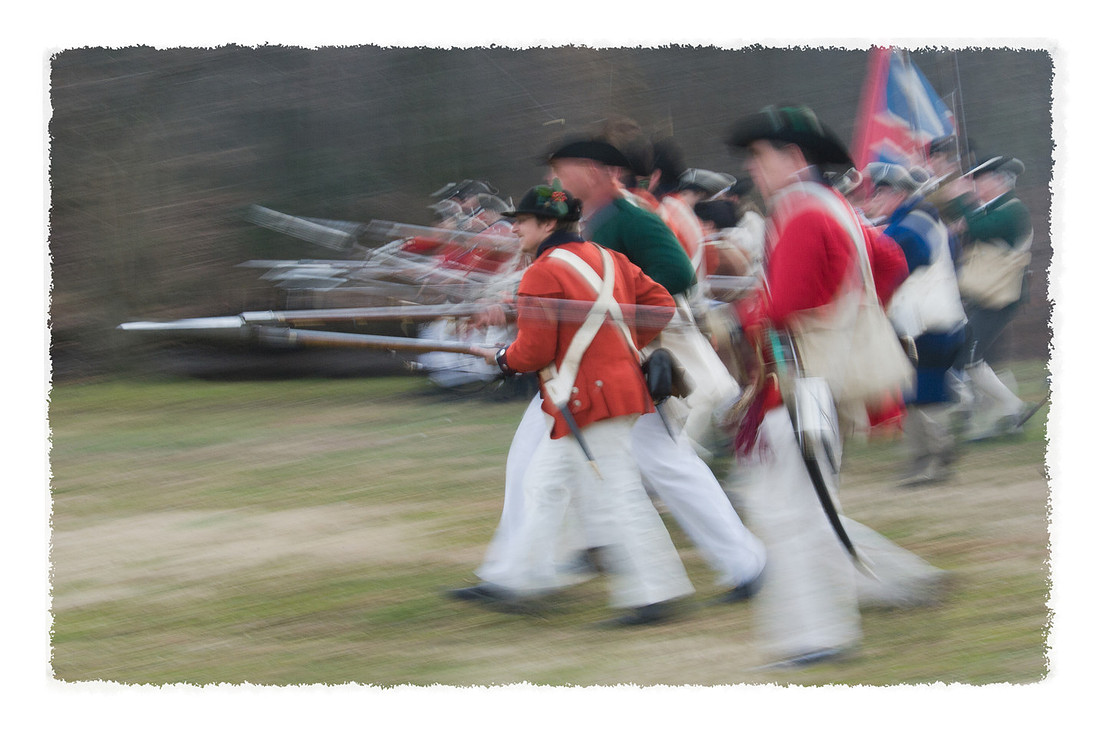 In this photo from a Fort Mercer reenactment, the eye is immediately drawn to the gleaming bayonet of the charging Hessian soldier. The sunlight catches the steel perfectly, creating a brilliant reflection. It is a striking reminder of why the bayonet was such a feared and intimidating weapon on 18th-century battlefields, where its psychological impact could be as powerful as its physical danger.
On October 22, 1777, Hessian troops under Colonel Carl von Donop launched an assault on Fort Mercer-Battle of Red along the Delaware River in an effort to open a vital supply route to British-occupied Philadelphia. Despite being heavily outnumbered, the American defenders under Colonel Christopher Greene held their ground and repelled the attack with devastating effect. The failed assault left hundreds of Hessian casualties, including the mortally wounded von Donop, and enabled the Americans to maintain control of the Delaware River defenses for several more weeks.
The Hessians earned a formidable reputation for bayonet warfare, shaped by the military traditions of the German states from which they were recruited. Their armies emphasized rigorous discipline, precise close-order drill, and aggressive shock tactics, making Hessian infantry among the most respected and feared professional soldiers of the Revolutionary War.
 For this blog, no classic music songs immediately came to mind when writing. But what it got me reminiscing about was an old movie I watched every Thanksgiving growing up: the 1934 movie The Babes in Toyland (March of the Wooden Soldiers), starring Laurel and Hardy. The marching of the toy soldiers near the end of the movie was an instrumental Leon Jessel composed in 1897. In 1922, lyricist Ballard MacDonald added English words.
Funny how you constantly learn new stuff; unbeknownst to me, The Crystals recorded "Parade of the Wooden Soldiers" for Phil Spector's classic Christmas album A Christmas Gift for You from Phil Spector's Records, released in 1963. It wasn't a hit single, but it became known because the album was commercially so successful!
Thank you for reading! Blog #119 will be posted on October 1, 2026.
Huzzah,
Ken Bohrer


I’ve enjoyed using ON1 Software on my photos since I began photographing American Revolution reenactments in 2007. Every image on my site is processed with this program. It’s an essential part of my workflow, and I often feature it on my blog because I truly depend on it. I personally edit every photo here, and ON1 remains a reliable post-processing tool.
Interested in ON1 Software? Click the image below and enter code AFFILIATE20 to save 20%. Try it—you won’t be disappointed!