Interview with Joe DeCello Quartermaster-43rd Regiment of Foot/2nd PA Regiment Part 2

At the recent Chadds Ford (Battle of Brandywine), PA event, I struck up a conversation with someone I had met before. After a few minutes of talking, I asked if he would be willing to be interviewed for this blog. He graciously agreed.
I originally prepared 10 questions, thinking they would provide enough material for a single blog post. Thankfully, I was wrong.
The depth of his knowledge and the insights he shared were too valuable to fit into one article. Last month, I featured his responses to the first five questions. This month, I'm pleased to present the final five.
His answers were so impressive that I suggested he consider writing a book or manual on the subject. He's giving it some thought. In the meantime, enjoy the conclusion of this fascinating interview!
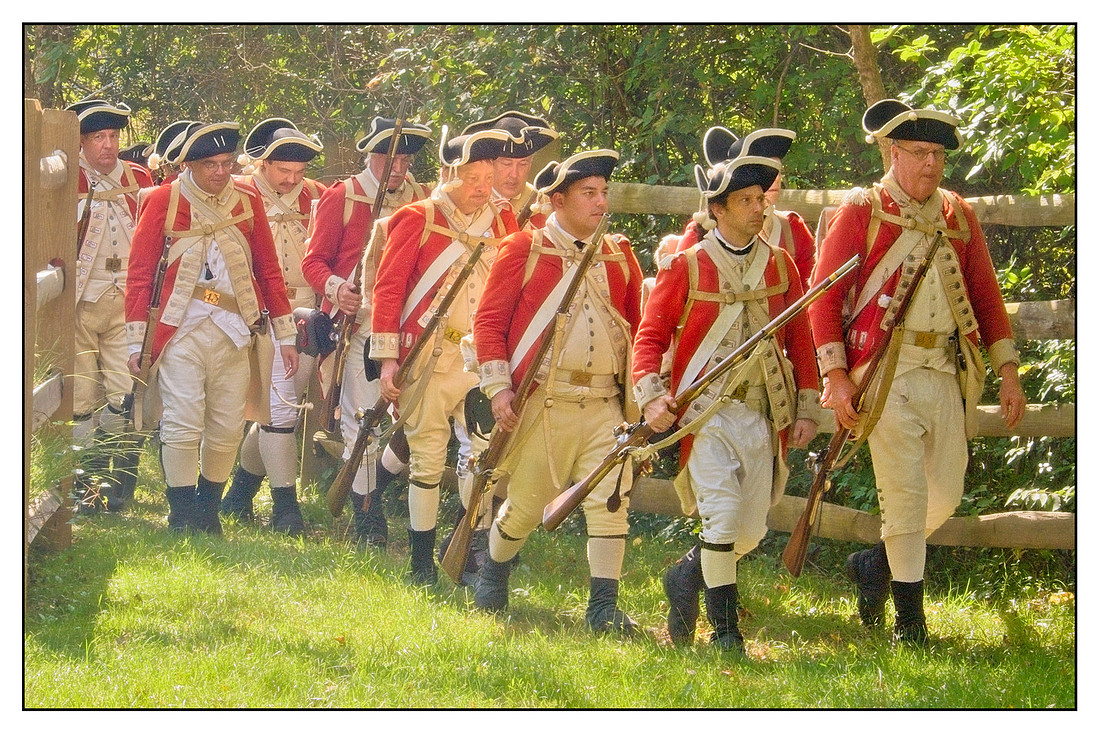

6) What challenges did British soldiers face that you think are often overlooked by historians or the public?
Communication was always a challenge in those days. Coordinating thousands of men while the fog of war blankets a battlefield was nearly impossible. Mid-level commanders would raise espontoons and echo commands from the higher ranks behind them. Sergeants and other non-commissioned officers would relay this command to the men in line and they would act accordingly. It is sometimes hard to hear commanders at a reenactment and there isn’t a fraction of the noise and distraction as in a real battle situation. The raw nerve and focus needed from a British soldier is a testament to how disciplined and dangerous the redcoats were in that age.
I also feel like a huge challenge to the British soldiers was the hubris of their commanders. Soldiers were conditioned to blindly follow orders without question. It was a matter of discipline and efficiency so there was no time for discussion, just obey Command. It gave the British Army a solid reputation for winning wars and establishing colonies all over the world. So, when the American Colonies uprose and the war began, the British Generals treated their opponents as an unfunded and unorganized mob. That miscalculation of the resolve in the American Colonies would cost the Crown dearly. What happened at Lexington and Concord was a slap on the wrist compared to the cost of arrogance at the Battle of Bunker Hill. June 1775, British soldiers, under the command of the legendary General William Howe and the cunning General Thomas Gage, confidently marched uphill in lines preparing to scatter militia embedded at the top. General Howe was certain the militia at the top of the hill had no skill and no training so they would abandon position without a fight. In his arrogance, he failed to account for the battlefield terrain. Of course, I am leaving out a lot of detail, but what followed was a slaughter the likes of which the mighty British Army was unaccustomed. When the militia finally gave up the hill, and only when they ran of ammunition, over 1200 British soldiers lay dead on the ground. It was one of, if not, the largest loss of life suffered by the British Army up until that time. This gross underestimation of the Provincial Forces was repeated several times throughout the war and lots of low-level soldiers in the British Army lost their lives as result.
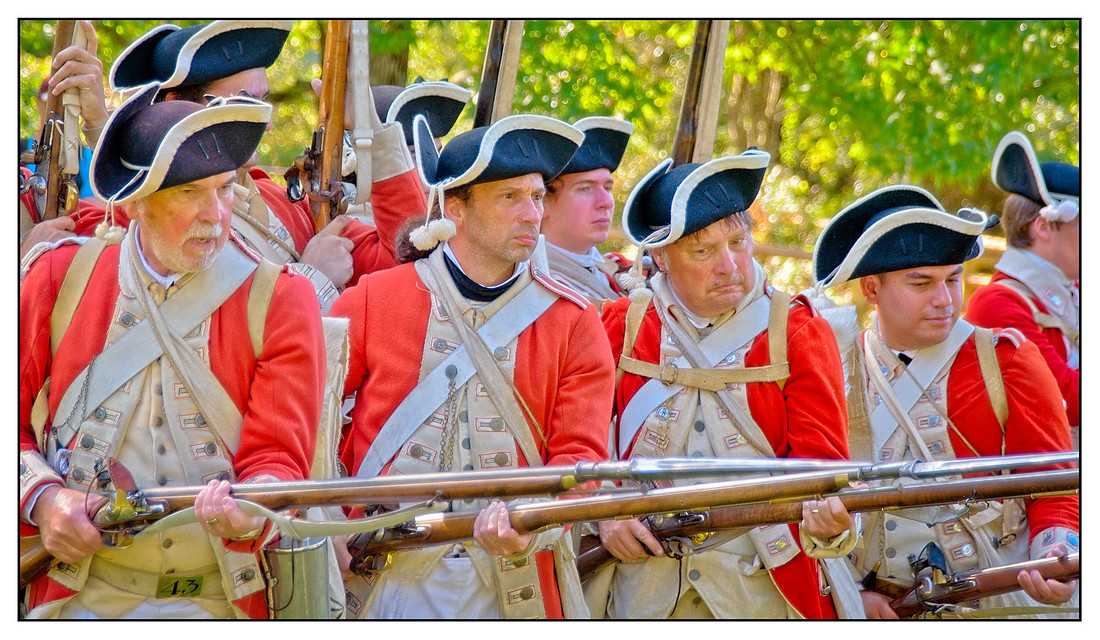
7) Can you share a memorable moment from a reenactment that really brought history to life for you?
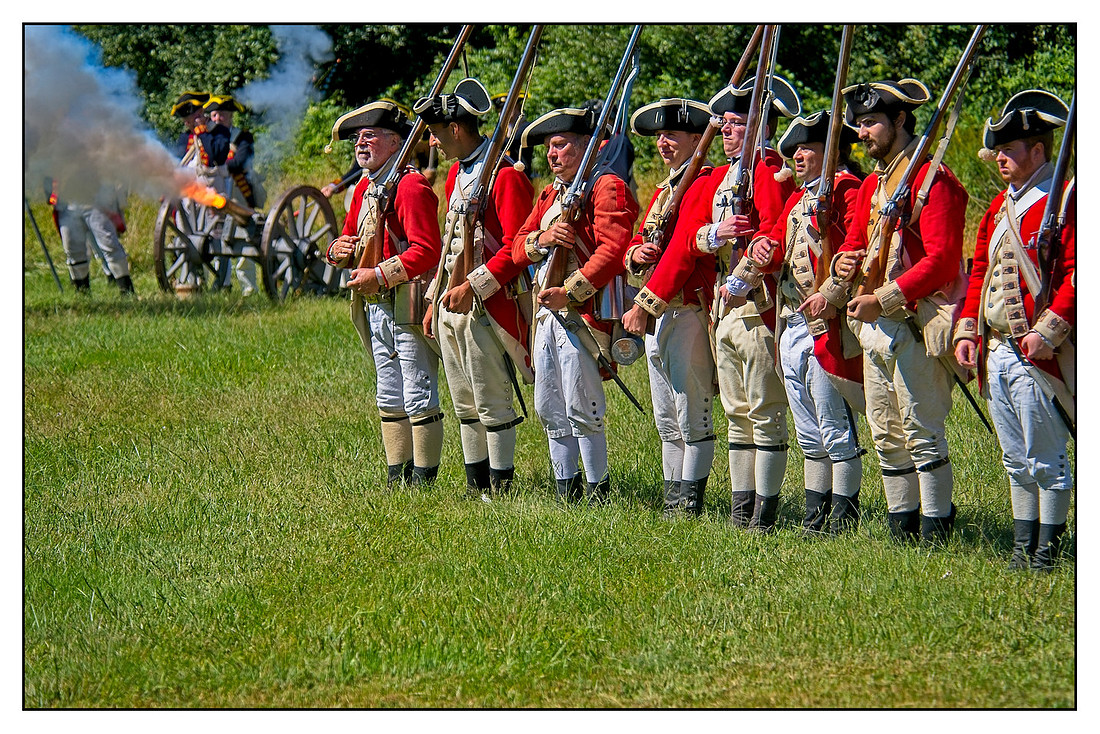
It was the 245th anniversary of the Battle of Brandywine at Sandy Hollow, which is a large parcel of land and woods bordered by farmers’ fields and horse corrals. It was the first day of a two-day event and the 43rd was assigned to, “bring up the left flank when we cleared the woods”. The spectators were lined up along the length of the large field where most of the battle would take place. Our starting position was with the rest of the British Brigade in a separate field with the woods in between. The fighting began in that smaller field, and we pursued the Continental Line into the woods. We fought through the woods and took positions behind trees while advancing on their positions. The Continental Line retreated into the larger field and we re-formed our company. We advanced by files through the clearing and that’s when I saw it. The entire field was alive in an organized mess of infantry, artillery, Jaegers, mounted Dragoons and of course the retreating rebels. The artillery line fired a constant barrage, while all the different units were obliquing and maneuvering. Our position was the left flank, so we made our way. There was a strange rush of adrenaline as the entire British Brigade, in what looked like a choreographed performance, formed a long line, shoulder to shoulder the width of that field. The command to fix bayonets was given. The sound of all that cold steel being unsheathed and fixed onto the ends of almost a thousand muskets at once was 18th century exhilaration in its purest form. We “charged bayonets” and again, my heart skips a beat as the entire line leveled their blades together. Those filthy rebels would stop, turn and shoot before scampering away. Some were in formation, others ran in “profound fear for their life”. I imagined the crowd wasn’t there and I took a moment to close my eyes. We were just about to march forward and clear the field, but this moment was mine. The sound of cannon fire died down as we advanced in range, leaving only the screams and chaos from the rebel line. I could taste the black powder in my mouth it was so thick in the air. I felt the concussion of the rebel cannon blasts as they echoed through the woods and into the surrounding territory. A huge pile of horse manure from one of the Dragoons was piled nearby, that really brought the feeling home. The sights that day were something I had never imagined seeing in all my life. It was more than just a hobby that day. I saw words from history books I’d been reading for years come to life in front of me. I had a first-person view of an archaic style of warfare that not many historians can boast they’ve seen or even experienced as a spectator. I can honestly say, “we lucky few”.
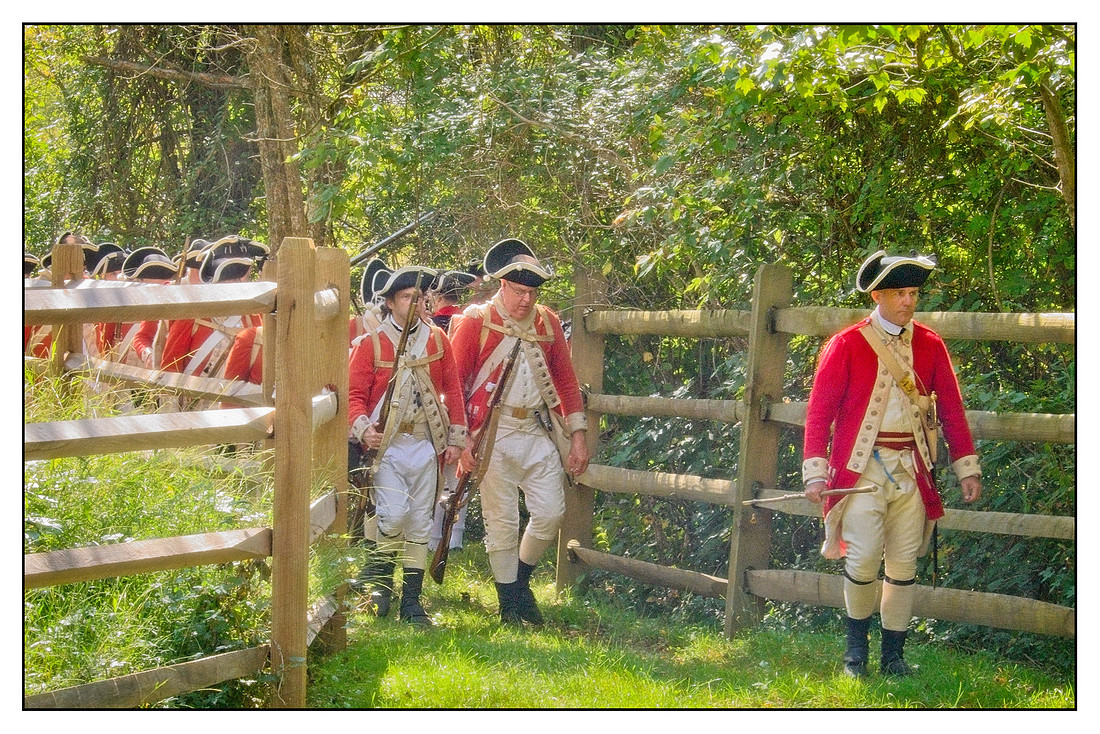
8) What skills have you learned through reenacting, such as drill, camp life, cooking or historical interpretation?
I can build fire using flint and steel, so I’d be a decent contestant on Survivor, right? Sewing must be a side-hustle if you are going to take part in this hobby, so I learned how to do that however, since meeting my wife, she has taken up most of those duties for me. She is saintly and not interested in this hobby whatsoever, so I’ve learned to balance weekends between healthy family time and reenacting. The drill has always been fascinating to me. Not just the 1864 Manual of Arms but all the different drills among all the different units involved are unique and rich with culture. I did learn how to march in a straight line and wheeling is a skill by itself. I learned how to fire the cannon and how to set up camp. I couldn’t pitch the cook-fly or even an enlisted man’s tent without a helper, but I do have a basic idea. You learn a lot about how they lived in those days and utilize the tactics and tools they had available. It’s great for the spectator but there’s a modern solution to all those things now, so I haven’t found a modern application for any of the above.
9) What do you hope visitors take away after talking with the British Brigade at an event?
I want people to understand how special our country is. Attending an event, on either side of the rope, stirs up that elementary school feeling of curiosity. It’s exciting to see the different colored coats, hear about famous first Americans like George Washington and get a general sense of how our country came to be. It’s a fun, stimulating day out for all ages but there is a much deeper reason for my involvement in this hobby. I love this country and I love our story. I want to share that love with people and reenacting is just the channel. The opportunity to divide us is everywhere these days. News outlets will give us reason to turn on our neighbor; political issues have us on the cusp of fighting our uncles during holiday dinner and we dance on the edge of war in various parts of the world. There is so much of the downside being presented to us every day, we forget the pride and determination that got us here. It is not easy to unite a people that are so different from one another, yet the United States found a way and here we are, 250 years strong. We focus so much on the flaws and issues that divide our country, we forget that we needed each other throughout the journey to maintain and preserve this idea of freedom. Our strength lies in our diversity; our longevity is reliant on our unity and preservation is secured with love. Love our country, learn from its struggles and realize we, as Americans, have a vital responsibility to preserve and, if need be, fight for the basic rights and freedoms given and granted to everyone by almighty Providence. It’s a heavy burden but freedom was never easy and nothing that precious should be taken for granted.
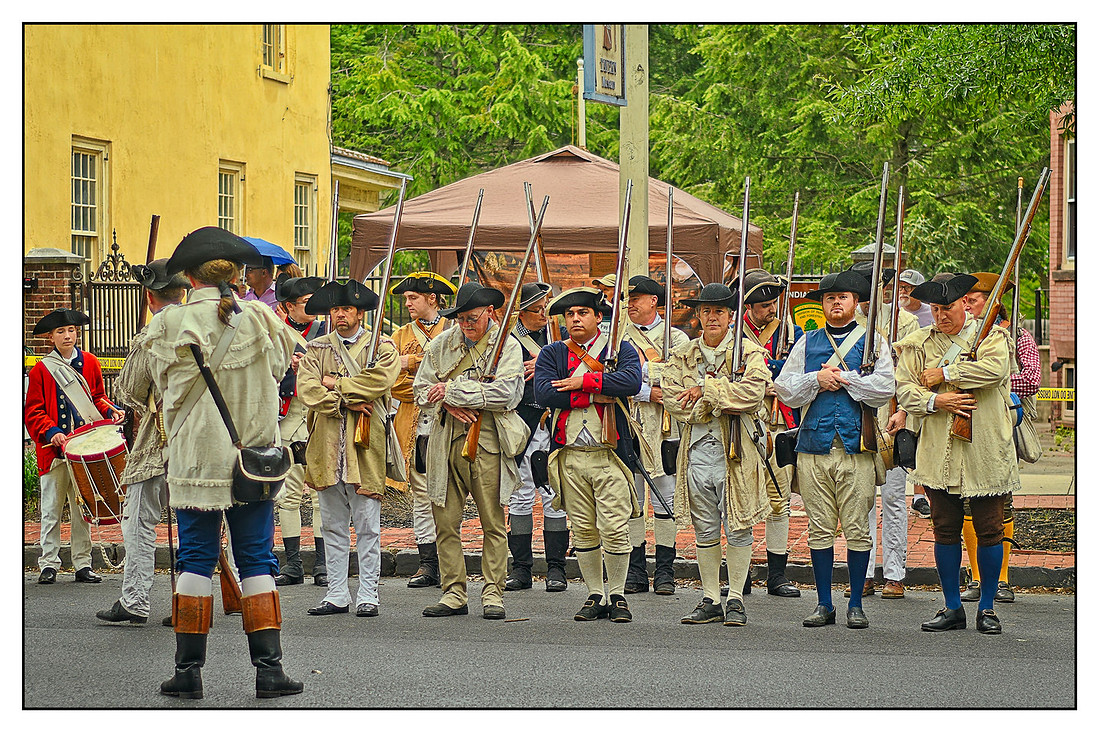 10) Is there a question I should have asked?
These questions were great and really got me thinking about my time as a reenactor, it was great to write some of these thoughts down. Thank you for providing such a platform, I hope you have as much fun reading this as I had writing it. If anything, I can suggest questions around maybe modern safety standards versus those of the day and perhaps some stories of mishaps on the field. Reenacting can be dangerous and we should always practice good firearms safety throughout our day. Another good question would be around spectator reaction to the British units. I remember going to Germantown and before the battle, the Crown Forces would march in parade past the crowd. This one particular year, the crowd was quiet for the most part and just taking pictures. I noticed a young child standing at the edge of the crowd and as we marched by, I made eye contact and growled at him. He jumped slightly and then laughed at the minor scare, but the crowd saw that and went ballistic. They hollered and booed at the entire battalion as we marched on, I’d swear they would have thrown rotten vegetables if they had access. Thanks again for the opportunity, Ken, I appreciate your work on the blog.
Thank you for reading! Blog #123, Part 2 of Joe's interview will be posted on November 15, 2026.
Huzzah,
Ken Bohrer
I’ve enjoyed using ON1 Software on my photos since I began photographing American Revolution reenactments in 2007. Every image on my site is processed with this program. It’s an essential part of my workflow, and I often feature it on my blog because I truly depend on it. I personally edit every photo here, and ON1 remains a reliable post-processing tool. Interested in ON1 Software? Click the image below and enter code AFFILIATE20 to save 20%. Try it—you won’t be disappointed!