
American Revolution Photos 2025 Photo Recap Favorite 10-2of 2


In last month’s blog, I picked 5 of my favorite photos from 2025. And in this blog, I review my 5 other favorites. It wasn’t an easy task—over the year I posted 14 unique galleries and, for the first time ever, a record 1,323 photos on my site.
After reflecting on that process, I realize these selections are simply my favorites of the year, not necessarily the “best” ones. That’s for others to decide. Photographers often wrestle with this distinction: is a photo strong because of its technical merits, or because of the memories and emotions tied to the moment it was taken? I know there are times when an image means far more to me than it might to someone simply viewing it for the first time.
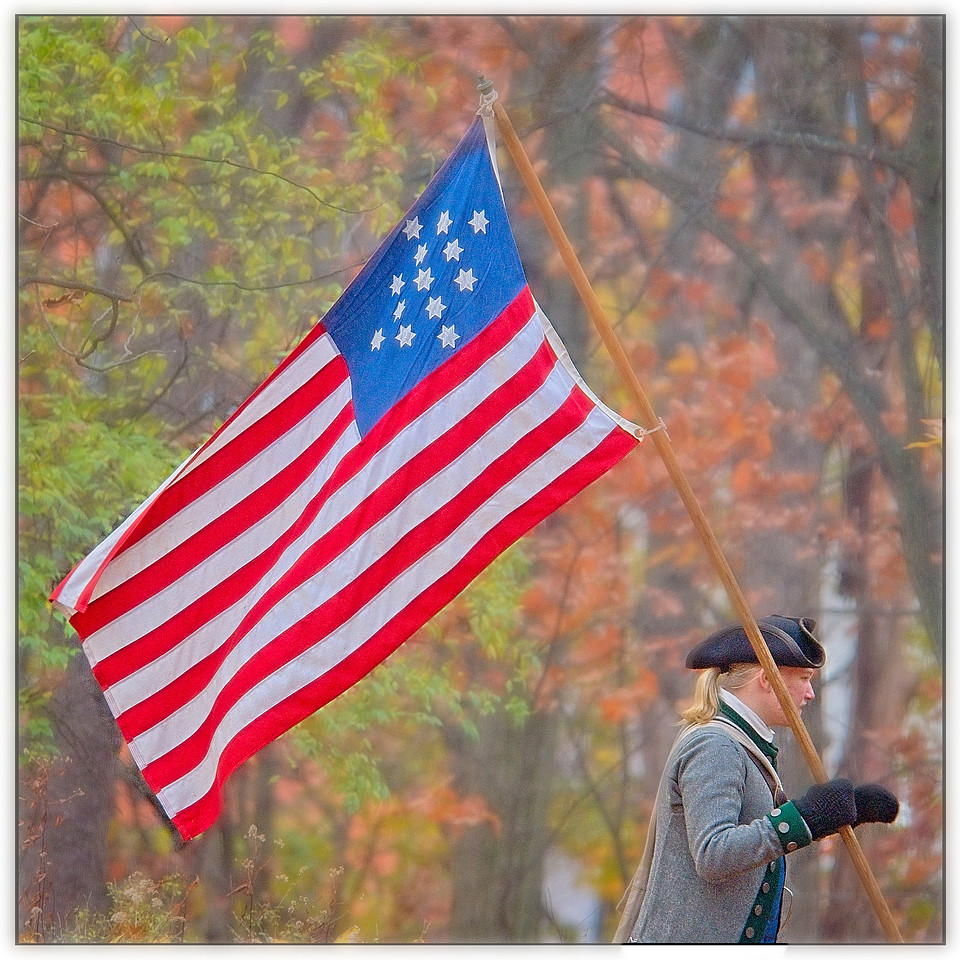
This flag photo is a perfect example of that. I took it and knew it would be good. Some photos just hit you—this one did for me. Simple but powerful, it instantly brought Neil Diamond’s 1980 patriotic song “America” to mind. It's a rousing song that will make you proud to be an American!
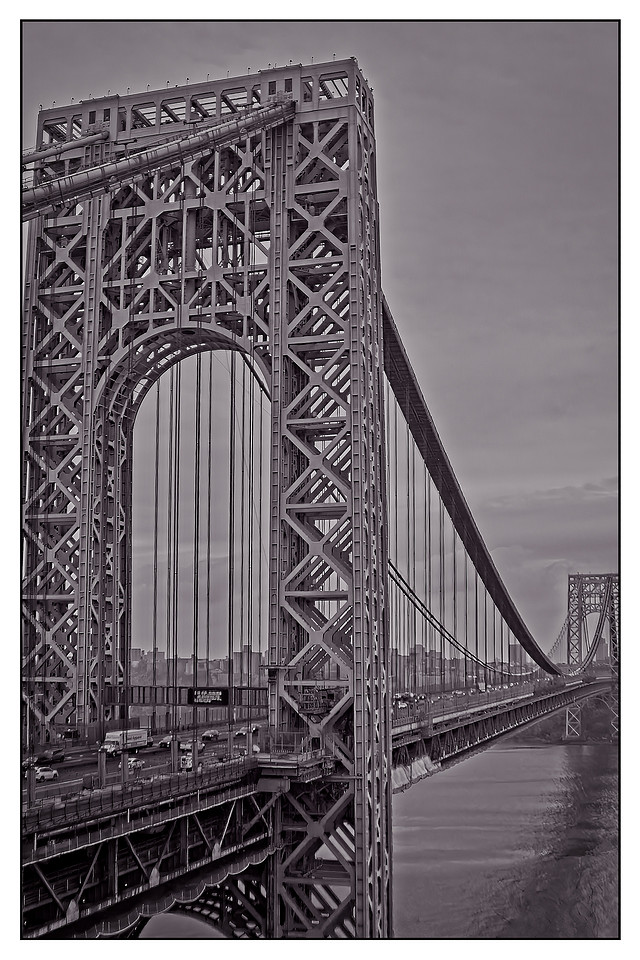
 This photo of the George Washington Bridge was taken from Fort Lee Historical Park. Shrubs and bushes blocked clear sightlines, so I shifted around, found a clear space, and shot wide at 24mm on my Nikon AF-S 24–85mm f/2.8 zoom lens. It’s handheld, but that’s part of the challenge I enjoy.
People often say the gear doesn’t matter; while that’s partly true, some shots—like this one—demand the right lens.
During post‑processing in ON1 Software, the image felt stronger in black and white, giving it a timeless, nostalgic quality. I also cropped it to emphasize the leading lines: your eye begins in New Jersey, travels across to New York, and the shadow on the water pulls you back to where you started—a subtle, pleasing flow.
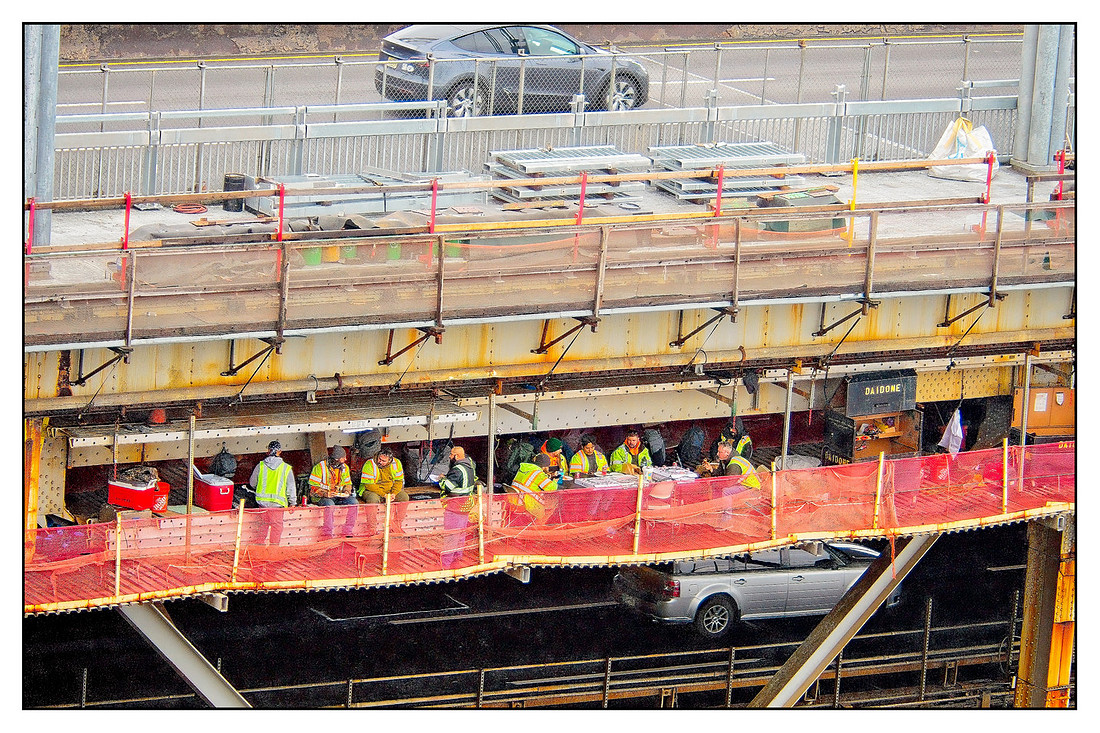
As a photographer, the goal is always to capture a truly unique image—something unexpected, something another photographer wouldn’t have taken before. Many of my photography pals have many excellent, similar reenactment photos. That’s exactly what happened here. I was strolling through the park at Fort Lee around noon, hoping to find a better vantage point of the George Washington Bridge. Then I spotted them: bridge construction workers casually eating lunch, “sandwiched” between the upper and lower decks of the span. What an opportunity!
I quickly reached into my camera bag and swapped lenses, mounting my long Nikon 80–400mm f/4.5–5.6. From there, I fired off numerous shots from different angles and positions. What really makes this image stand out is the timing—catching a visible car on both the upper and lower levels at the same time. The noise from the traffic must have been deafening, but the workers didn’t seem fazed at all.
Without the long lens, this moment would have been impossible to capture. And honestly, I doubt any other photographer at the reenactment could have taken this shot either—no one else that day was carrying a lens this long.
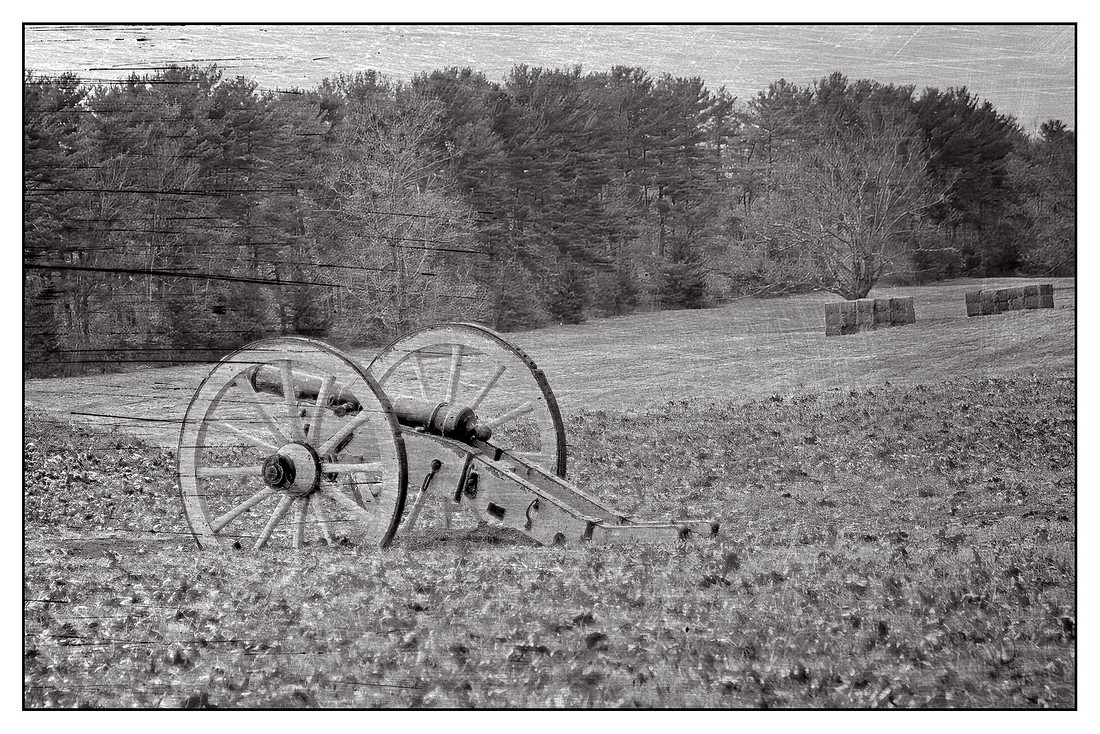
 Across from the Muhlenberg Brigade Huts—just a quarter mile from the Visitors Center—several cannons sit poised on the rise. I pass them every visit, and each time. This time, a set of hay bales scattered in the distance added an unexpected point of interest, a small detail that added a new dimension to the photo. I walked around in the snow searching for the best angles.
Back in ON1 Software, it became immediately clear that the image wanted to live in black and white. I envisioned the photo to be from another century. To add more antique techniques, I added grain (noise) and a subtle scratching overlay to give it an aged appearance. Of course, photography didn’t exist during the Revolutionary War; 1839 is widely recognized as the medium’s official “birth year. The Crimean War (1853–1856) was the first major conflict to feature widely seen photographs, and in the United States, the Civil War introduced the public to the stark realities of war through photographs.
Mathew Brady (1822–1896), the pioneering photographer whose portraits and battlefield images transformed public understanding of conflict, comes to mind here. His work captures destruction and carnage that only a photo can.
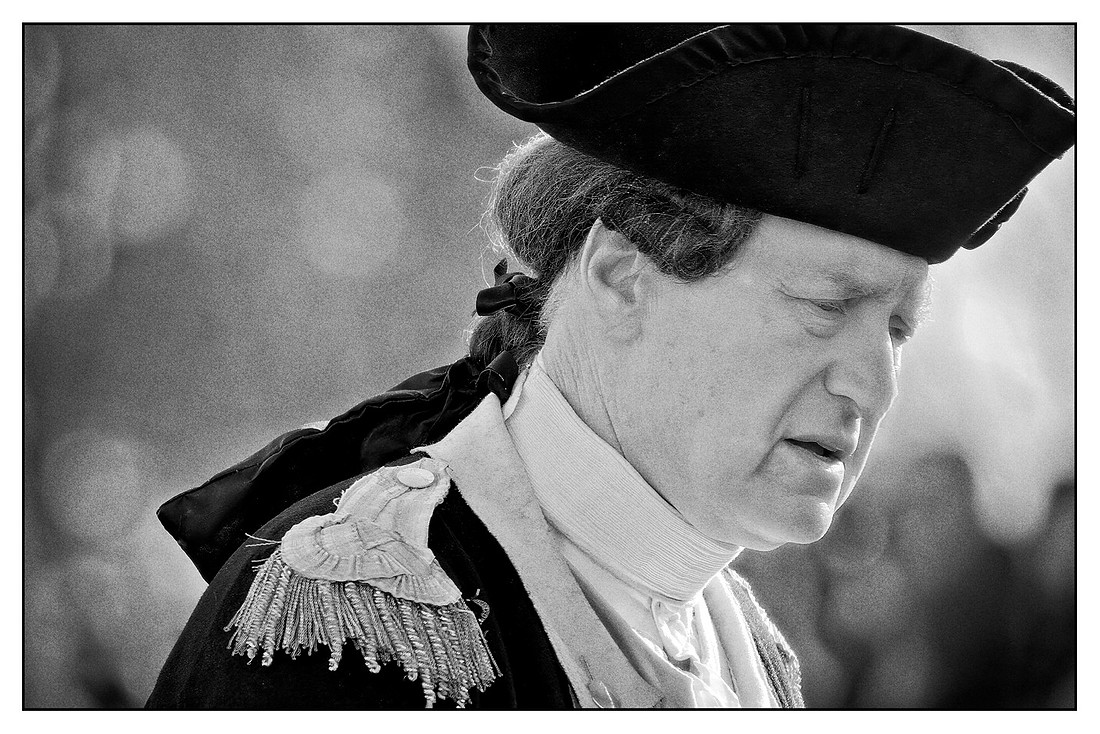
 Amazing—four of my ten favorite photos of 2025 ended up in black and white. I’ll decide final treatments in post‑production, but for this portrait of George Washington at the annual Christmas Washington’s Crossing event, monochrome was unquestionably the right choice. Many of my Washington images work best in B&W; something about the tonal range fits the subject. In ON1 Software, I added grain and a touch of background bokeh (which produces background areas that look silky and non-distracting) to give it a vintage, old‑film character.
Black and white has become a medium I truly love, not just in photography but also in films. I gravitate toward classic B&W films from the 1930s and ’40s—especially film noir (French for “dark film,” pronounced film nwär). Some of my favorites include The Narrow Margin, Double Indemnity, and The Maltese Falcon. If you haven’t seen them yet, they’re absolutely worth exploring.
 Thank you for reading! Blog #104 will be posted on February 15, 2026. Be safe & well!
Huzzah,
Ken Bohrer

