
Valley Forge National Historical Park in the Snow 2026

As I’ve shared before, whenever it snows, I try to make my way to Valley Forge National Historical Park to capture some fun photos. I live only about 30 minutes away, so it’s always an easy and rewarding trip. This visit was a little different, though—along with my camera, I brought my two young boys so they could enjoy some sledding while I explored with my lens.
George Washington chose Valley Forge for the 1777–78 encampment because its high ground and natural defenses made it difficult for the British to attack, while still keeping the Continental Army close enough to Philadelphia to monitor British movements. The location also provided access to crucial roads and surrounding farmland that could help sustain the army through the harsh winter.
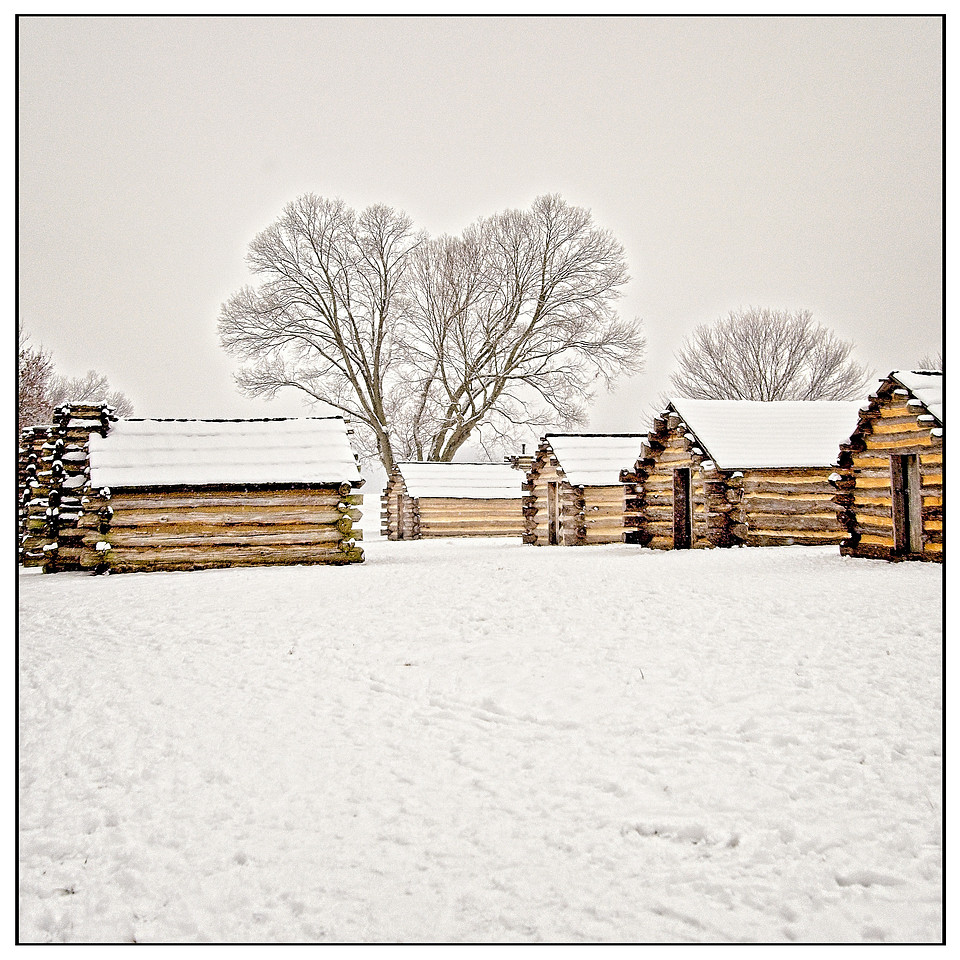
In the photo, this tree near the Muhlenberg Brigade huts caught my attention immediately. It dominates the skyline and creates a striking contrast with the historic structures. Of course, during the encampment in 1777–78, a tree like this wouldn’t have been standing because of the soldiers—any sizable timber would have been quickly turned into hut walls, fortifications, or much‑needed firewood.
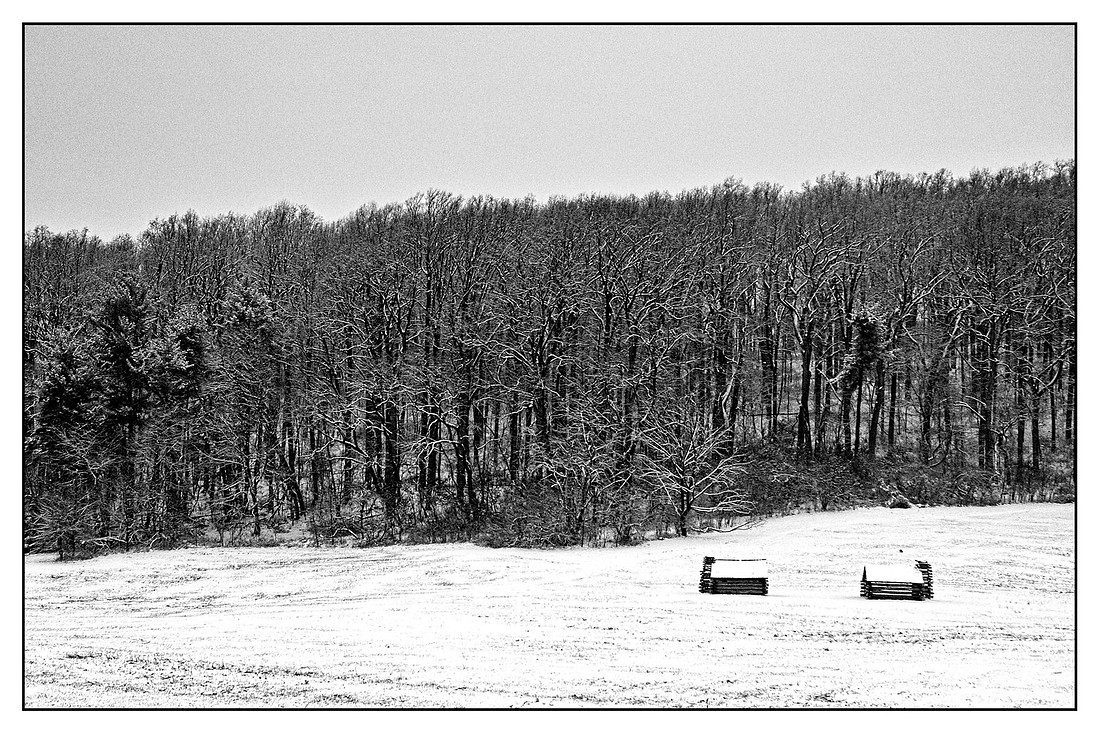
 When chimping this shot—the informal slang photographers use for checking the camera’s LCD screen right after taking a photo—I noticed how deeply dark the middle section of the photo’s tree line was. It immediately grabbed my attention and made me think, this is interesting… this is different.
To really emphasize those deep blacks, I converted the image to black and white using ON1 software. The result brought out a striking tri‑tone effect: the forest’s inky dark trees, the gray streaks of light in the sky, and the clean white foreground. Together they create a dramatic, high‑contrast composition that feels powerful and bold.
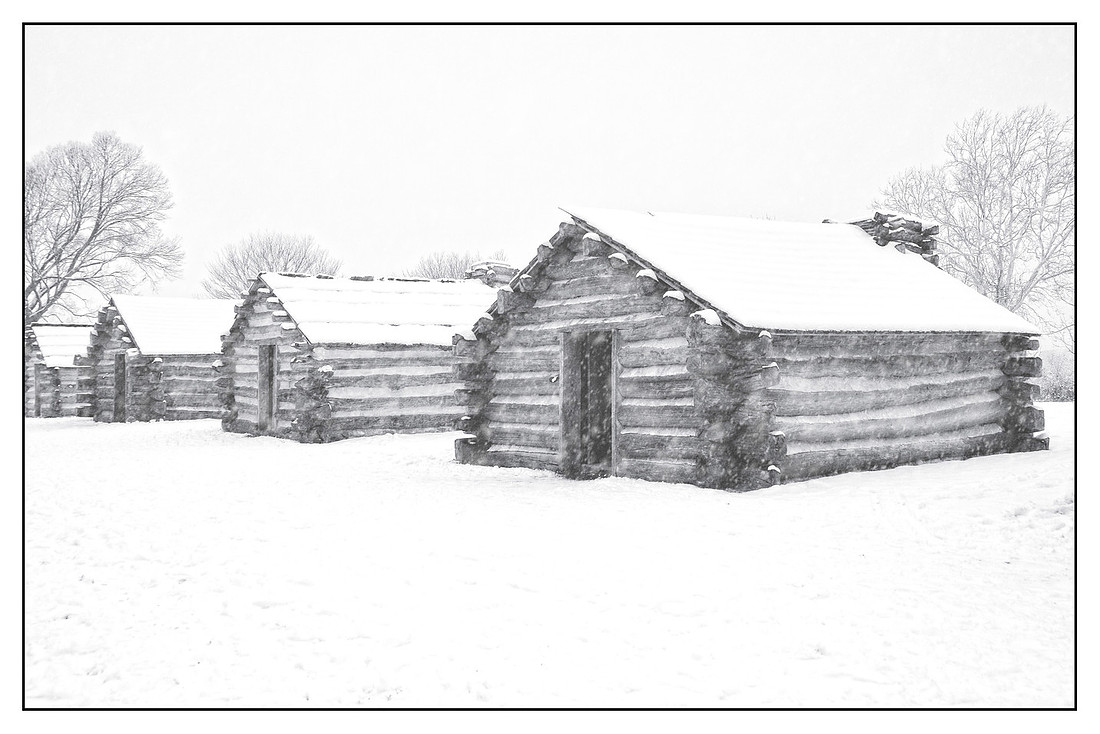
 Here’s another photo that really shines in black and white—there isn’t any color in the scene anyway, with all that snow falling. Just looking at it makes me feel cold. Moments like this always make me reflect on the soldiers and civilians, their belief in the cause, and their physical endurance in unbelievable conditions, which is hard to fathom, who struggled to survive the brutal winter encampment at Valley Forge in 1777–1778.
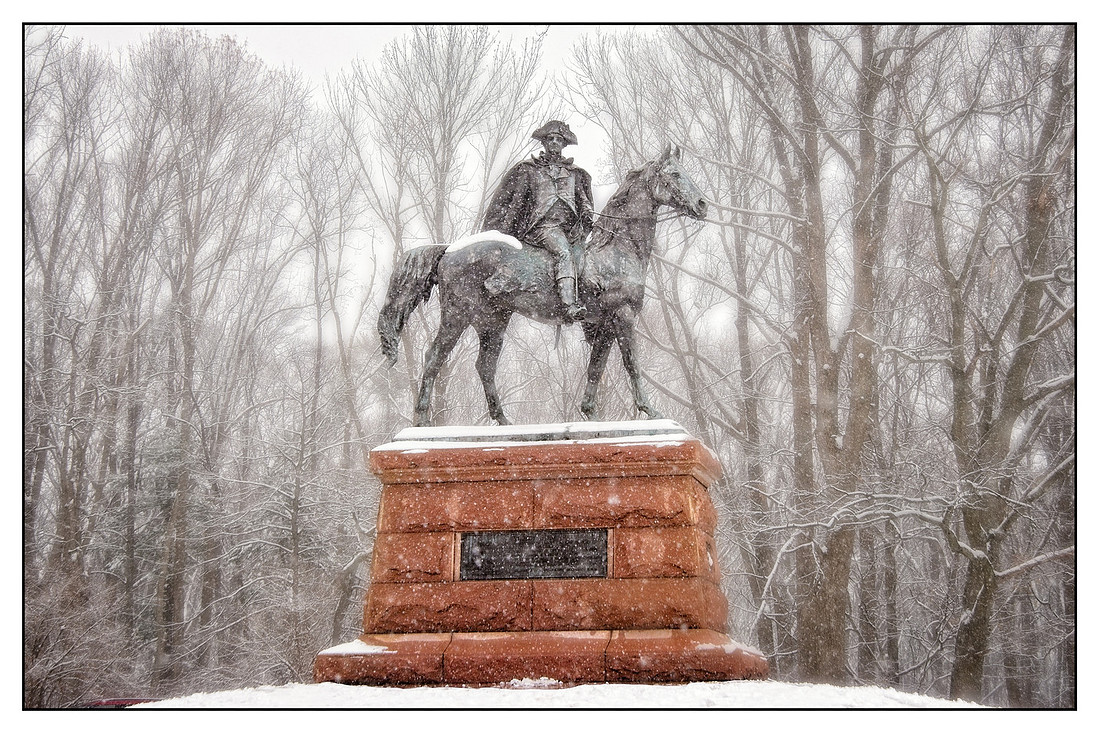
 Near the park's exit stands a monument to “Mad” Anthony Wayne, facing his homestead in Chester County. He earned his nickname from his bold, aggressive leadership style during the American Revolution, where his fearless tactics often seemed almost reckless to others. His soldiers also said he remained cool under intense pressure, which they described as being “mad” in the sense of fiercely brave rather than angry.
I drive by it all the time on my way to Valley Forge. For the longest time, I mistakenly thought the monument depicted Washington—at first glance, it really does look like him.
Using filters in ON1 Software, I gave the finished photo a soft, dreamy, painterly look. The blurred trees in the background help enhance that effect, adding a sense of depth and atmosphere.
Ah, my boys sledding! As you can see from their faces, they’re having an incredible time. I used a panning technique to capture this shot as they zoomed past, and it really brings out the movement and excitement of the moment.
Panning is a photography technique where you move the camera along with a moving subject to keep it sharp while blurring the background. This creates a dynamic sense of motion and speed in the final image. The hills here are pretty steep, and my youngest took a few spills—earning a couple of scratches and a few tears along the way—but overall, they both had an absolute blast!
 Click here for Valley Forge National Historical Park in the Snow 2026 Photo Gallery!
Thank you for reading! Blog #107 will be posted on April 1, 2026. Be safe & well!
Huzzah,
Ken Bohrer

